Wakesurfing 101: A Beginner’s Guide

Founder, TheThinksters.com
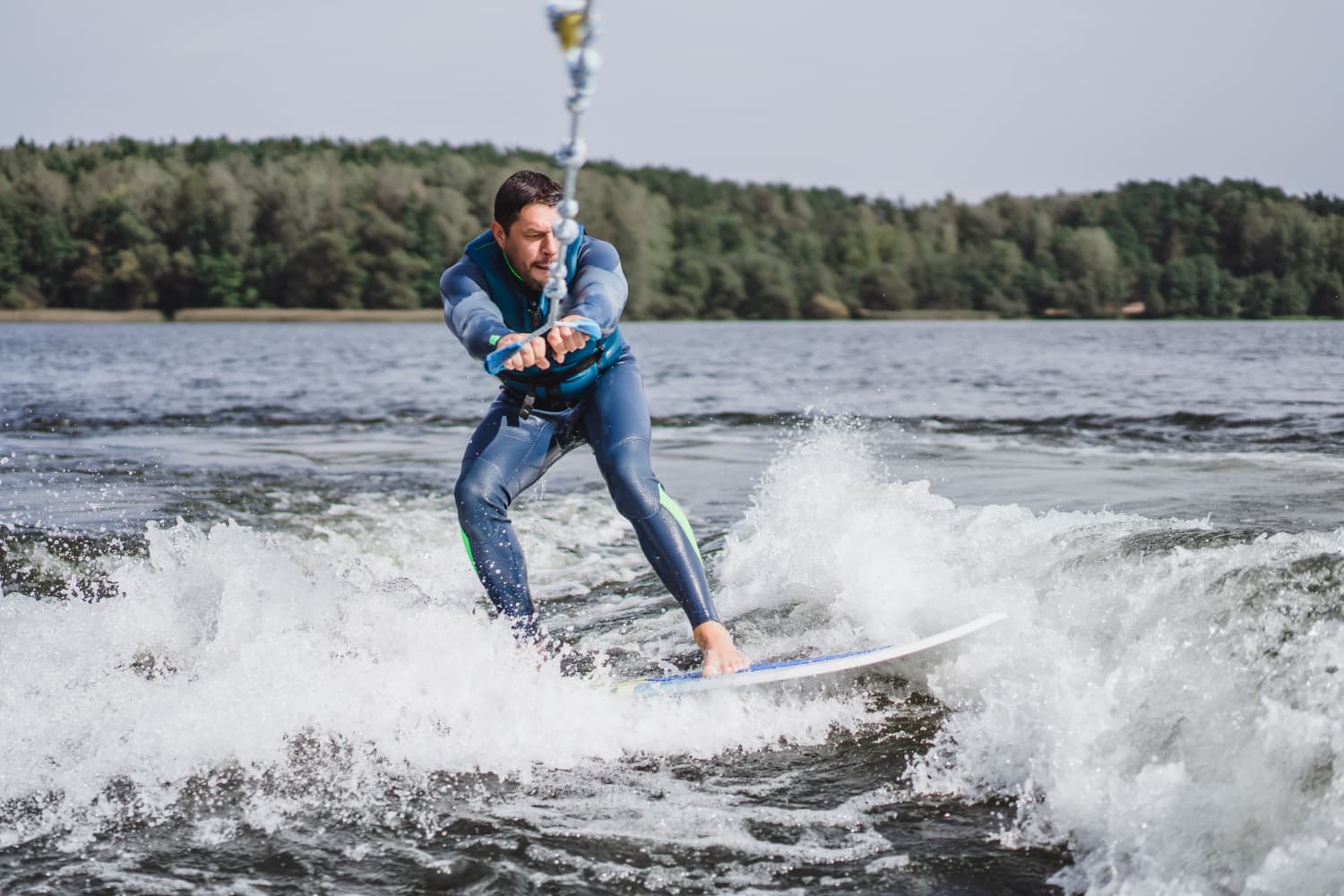
What is Wakesurfing?
Wakesurfing lets a rider follow behind a boat and stay on the wave the hull creates. The tow rope serves only to stand up. Once balanced on the face, the rider releases the handle and rides the same way ocean surfers do on a breaking wave. The sport works behind boats that can push enough water to form a clean, rideable wall, so it suits lakes, rivers, and sheltered coastal areas where ocean swell is absent. Riders of many ages try it because the speeds stay moderate and the learning curve allows quick early progress when the setup matches the rider’s size and experience.
Why Wakesurfing Differs from Wakeboarding
Wakeboarding keeps the rider on the rope the entire run at speeds that often exceed 18 mph. Wakesurfing drops the rope after the initial pull, so the rider moves at the speed of the wave itself, usually several miles per hour slower. That difference reduces strain on the arms and shoulders and lets sessions last longer without fatigue. Wakeboard boats create a taller, sometimes choppier ramp suited to jumps. Surf boats shape a longer, smoother face meant for carving turns. Beginners who want to ride without constant rope tension usually find wakesurfing less tiring on the upper body once they learn the release timing.
Choosing the Right Equipment for Wakesurfing
Choosing the Right Boat for Wakesurfing
Only inboard boats are appropriate. The propeller sits under the hull rather than behind the transom, so a fallen rider stays clear of spinning blades. Look for models with factory or aftermarket ballast tanks that let the crew add several hundred pounds of water on one side. That extra weight lowers the stern and raises the wave height on the opposite side. Removable wake shapers, plates that mount on the hull, further sculpt the wave face and can be swapped from port to starboard depending on which side the rider prefers. When chartering, ask the owner which side the ballast and shaper are set for and confirm the boat has enough capacity to reach the recommended list without exceeding safe limits. Some vessels trade fuel range for larger tanks; others keep tanks smaller to preserve deck space. Either choice works if the operator understands the settings needed for a usable wave.
📚 You may also like
Choosing the Right Board for Wakesurfing
Surf-style boards measure longer and thicker, with more volume under the feet. They plane earlier and forgive small balance errors, which helps new riders stay up longer on their first attempts. Skim-style boards sit lower in the water and turn more quickly, suiting riders who already control their edge and want to try spins or grabs. A first board should match the rider’s weight and the typical wave size produced by the boat; a board that feels too small sinks the tail and stalls, while one that feels oversized can feel sluggish when learning to shift weight. Many riders keep one larger board for practice and add a smaller one later as skill improves.
Essential Wakesurfing Gear
A wakesurf rope is shorter than a wakeboard rope and has a thicker handle so the rider can hold it comfortably while the boat accelerates. The handle often floats if dropped. A Coast Guard-approved life jacket rated for the rider’s weight must be worn at all times; impact vests alone do not replace it. Board shorts or a one-piece swimsuit that stays in place during falls prevents distraction. Water shoes with non-marking soles protect feet from boat surfaces and add grip when stepping onto a wet board. In cooler months a shorty wetsuit or neoprene top extends the season without changing the basic gear list.
Setting Up Your Boat for Wakesurfing
Weight placement determines wave quality. Fill the ballast tanks on the side opposite the intended surf side first, then add people or sandbags to fine-tune. The goal is a clean face without a large white-water section at the top. Attach the wake shaper on the non-surf side so it pushes water outward and lengthens the wave. Most boats produce their best wave between 10 and 12 mph; faster speeds shrink the wave, slower speeds let it collapse. The driver should hold a steady throttle and avoid sharp turns that collapse the face. On a charter boat, confirm the ballast pumps work and ask for a short test run before the session begins so the crew can adjust before the first rider enters the water.
How to Get Up on the Wave
Start floating on your back with the board between you and the boat, toes pointing toward the transom. Place your heels on the board and grip the handle with arms straight. Signal the driver with a clear thumbs-up. As the boat pulls, keep knees bent and let the board slide under your feet. Once the board is flat on the water, shift weight onto the front foot to stand. Keep the handle low and close to the hip until balance feels solid, then release and toss the rope into the boat. Most riders need several tries before the release happens smoothly; the key is waiting until the board is moving at the same speed as the wave rather than fighting the rope.
Tips for Better Wakesurfing
Relax the upper body so shoulders stay level with the wave. Small front-foot pressure increases speed along the face; back-foot pressure slows the board and helps stay in the pocket. Look ahead along the wave rather than down at the board. Early carving practice builds edge control that later supports turns and cutbacks. Sessions improve when the boat repeats the same pass in the same direction so the rider can focus on one variable at a time. In warmer months the water itself provides feedback on balance; in shoulder seasons a wetsuit adds buoyancy that can mask small mistakes until the rider removes it again.
Safety Tips for Wakesurfing
Wakesurfing puts you close to the boat, so basic safety steps matter every time you go out. Wear a USCG-approved life jacket that fits snugly; inflatable models can work but check that they inflate automatically if needed. Choose boats with inboard or V-drive engines so the propeller sits well forward of the swim platform. Never attempt to wakesurf behind an outboard or sterndrive where the prop remains exposed near the rider.
Always have a spotter on board who can watch the rider and signal the driver without distractions. Hand signals for speed changes, stopping, and direction work better than shouting over the engine. Keep the boat passenger count reasonable; extra weight changes the wake shape and can make the boat handle differently when turning. Check local rules on hours and areas, since many lakes restrict wakesurfing to certain times or zones to protect shorelines and other boaters.
Common Mistakes Beginners Make
Most new riders stand too upright with locked knees, which reduces balance when the wave pushes. Bend your knees and keep weight centered over the board so small adjustments happen naturally. Leaning back hard usually ends with a fall backward into the wash; instead, stay slightly forward and let the wave carry you once you release the rope.
Holding the rope too long delays the moment you surf on your own. Practice dropping it early, even if the ride lasts only a few seconds at first. Equipment also matters: a board with too much volume feels sluggish, while one that is too small makes it hard to stay in the wave. Match board size to your weight and the boat’s typical wake height rather than picking by looks alone.
How to Improve Faster at Wakesurfing
A single lesson with a coach often fixes stance and rope-drop timing faster than weeks of trial and error. Many charter operators can arrange an instructor for a half-day session. Record short clips of each run on your phone or a waterproof camera mounted on the boat; watching the footage later shows whether your shoulders are square and whether you are edging correctly.
Try wakes behind different boats when possible. Some hulls produce a taller, steeper wave while others give a longer, mellower one; riding both builds adaptability. Swap boards occasionally too, noting how a skim-style board turns quicker but requires more precise foot placement than a surf-style board with more volume. Consistent short sessions, rather than one long day, usually produce steadier progress because fatigue sets in after an hour or two of repeated falls.
Frequently Asked Questions
What is wakesurfing?
Wakesurfing lets a rider follow behind a boat and stay on the wave the hull creates. The tow rope serves only to stand up. Once balanced on the face, the rider releases the handle and rides the same way ocean surfers do on a breaking wave. The sport works behind boats that can push enough water to form a clean, rideable wall, so it suits lakes, rivers, and sheltered coastal areas where ocean swell is absent. Riders of many ages try it because the speeds stay moderate and the learning curve allows quick early progress when the setup matches the rider’s size and experience.
How does wakesurfing differ from wakeboarding?
Wakeboarding keeps the rider on the rope the entire run at speeds that often exceed 18 mph. Wakesurfing drops the rope after the initial pull, so the rider moves at the speed of the wave itself, usually several miles per hour slower. That difference reduces strain on the arms and shoulders and lets sessions last longer without fatigue. Wakeboard boats create a taller, sometimes choppier ramp suited to jumps. Surf boats shape a longer, smoother face meant for carving turns. Beginners who want to ride without constant rope tension usually find wakesurfing less tiring on the upper body once they learn the release timing.
What boat features matter for wakesurfing?
Only inboard boats are appropriate. The propeller sits under the hull rather than behind the transom, so a fallen rider stays clear of spinning blades. Look for models with factory or aftermarket ballast tanks that let the crew add several hundred pounds of water on one side. That extra weight lowers the stern and raises the wave height on the opposite side. Removable wake shapers, plates that mount on the hull, further sculpt the wave face and can be swapped from port to starboard depending on which side the rider prefers. When chartering, ask the owner which side the ballast and shaper are set for and confirm the boat has enough capacity to reach the recommended list without exceeding safe limits.
Which board type suits new wakesurfers?
Surf-style boards measure longer and thicker, with more volume under the feet. They plane earlier and forgive small balance errors, which helps new riders stay up longer on their first attempts. Skim-style boards sit lower in the water and reward precise foot placement once balance improves. Beginners often start with the surf style because it provides stability while they learn to release the rope and carve along the wave face. Matching board length roughly to the rider’s height keeps the learning process steady on typical setups.


