Top 5 Catamaran Anchorages in the British Virgin Islands
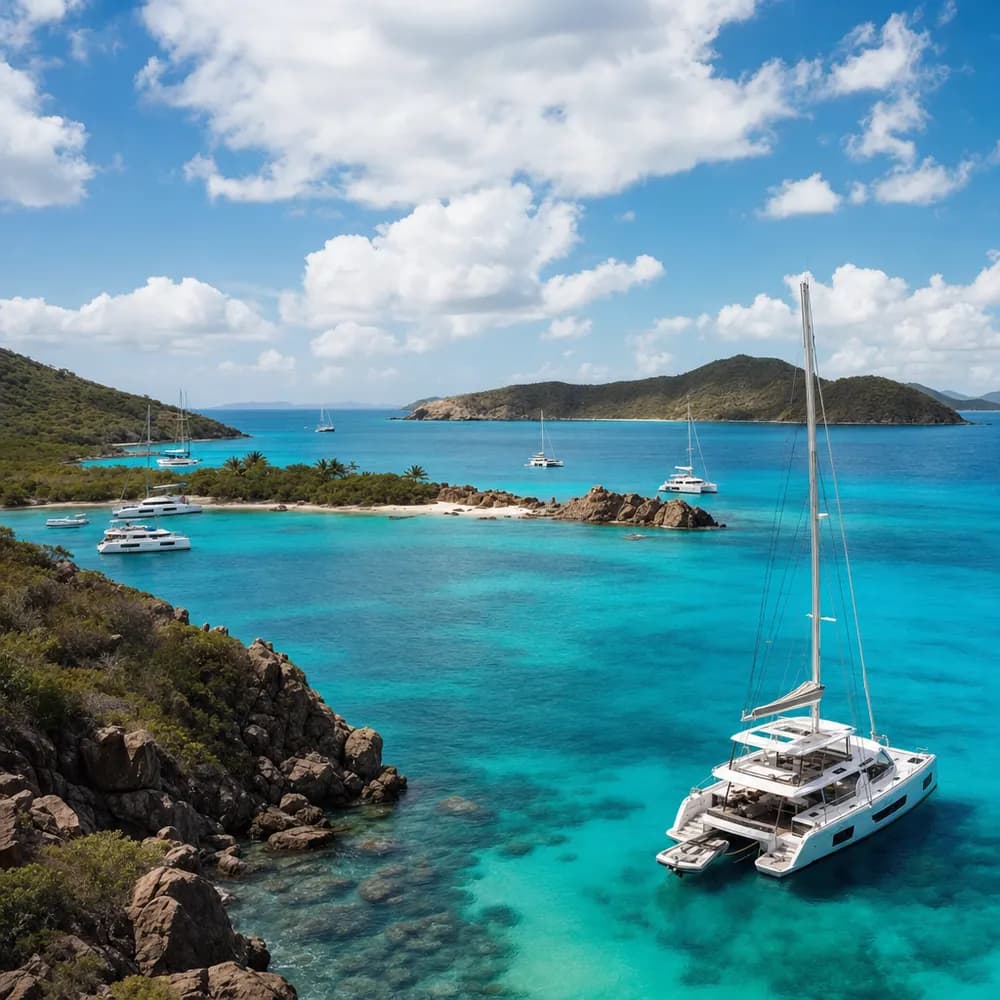
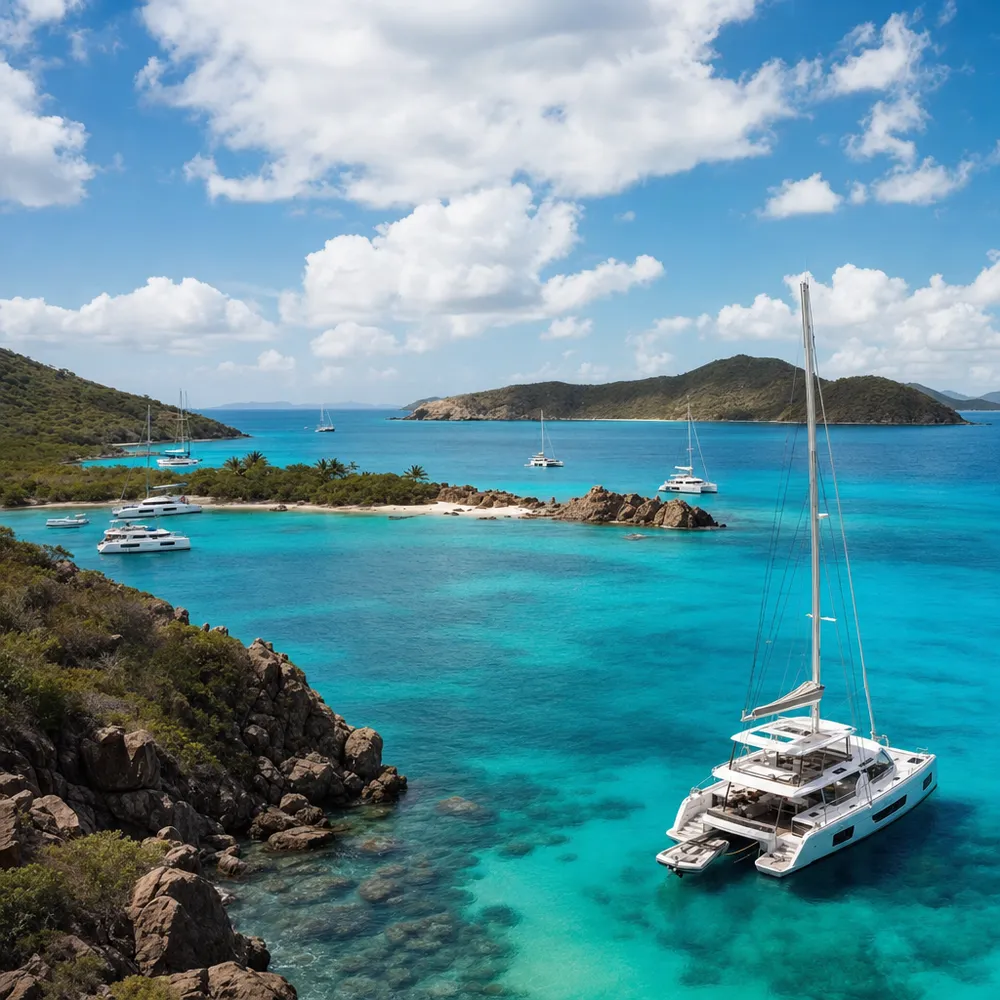
The five best anchorages for a BVI catamaran charter are The Bight at Norman Island, North Sound on Virgin Gorda, Setting Point in Anegada, Cane Garden Bay on Tortola, and The Indians off Pelican Island. Each one offers something distinct — from flat-water mooring fields to dramatic reef snorkelling — and together they form the backbone of any well-planned week sailing the British Virgin Islands. The islands sit close together, with the longest passage (to Anegada) covering roughly 16 nautical miles, or about two hours of sailing, making it easy to move the boat every day without exhausting the crew.
Why Catamarans Suit the BVI So Well
The BVI's Sir Francis Drake Channel acts as a natural inland sea, shielding anchorages from the worst Atlantic swells and giving catamarans the calm, shallow-draft conditions they thrive in. Trade winds deliver a fairly consistent 10–15 knots between November and June — the prime charter season — rising to around 20 knots in winter, when a single reef keeps a catamaran balanced and comfortable. Water temperature hovers around 26 °C year-round, so swimming and snorkelling are on the agenda every day.
1. The Bight, Norman Island
The Bight is the most popular first-night stop for boats leaving Road Town, and for good reason. It is a deep, V-shaped bay that provides excellent protection from the prevailing easterly winds, with an extensive mooring field that suits catamarans of all sizes. coldwellbankerbvi.com The approach is straightforward, the bay is well lit at night, and the surroundings are genuinely beautiful.
📚 You may also like
- Snorkelling: The Caves, just around the headland, are a short dinghy ride away and worth swimming all the way to the back of each cavern.
- Dining and nightlife: Pirates Bight restaurant offers waterfront tables and live island music after dinner. The floating schooner William Thornton — known as Willy T — is a lively floating bar anchored in the bay. Happy hour at Pirates Bight runs 3–5 pm. theluxuryvacationguide.com
- Catamaran tip: Grab a mooring ball early in season — the field fills quickly on Friday and Saturday evenings.
Norman Island is also said to be Robert Louis Stevenson's inspiration for Treasure Island, which adds a pleasing layer of history to an already memorable stop. theluxuryvacationguide.com
2. North Sound, Virgin Gorda
North Sound is arguably the most sheltered anchorage in the entire territory. A long barrier reef and surrounding islands create a massive enclosed body of water where the surface stays completely flat regardless of what the Atlantic is doing outside. Holding is excellent throughout — sticky mud and sand at depths of 30 to 45 feet — and dozens of mooring balls are available if you prefer not to anchor. coldwellbankerbvi.com
- Key stops inside the Sound: Leverick Bay (fuel, provisioning, restaurant), Bitter End Yacht Club (currently being rebuilt post-hurricane), and Saba Rock (bar and small resort).
- Celebrity neighbours: The entrance channel passes Necker Island, Richard Branson's private retreat, and Mosquito Island, reserved for his guests. Eustatia Island, owned by Google co-founder Larry Page, sits nearby. theluxuryvacationguide.com
- Catamaran tip: Squalls can funnel through the surrounding hills and produce sudden 25-knot gusts, so set your anchor carefully or pick up a mooring ball. coldwellbankerbvi.com
For crews who want a secluded corner within North Sound, Eustatia Bay — tucked away from the main mooring fields — offers minimal boat traffic and a genuinely peaceful sunset swim.
3. Setting Point, Anegada
Anegada is the outlier in the BVI chain — a flat, coral-based island that you won't see until you're a few miles away. The passage from the main island group takes roughly 1.5 to 2 hours on a reach, and the sail itself is often one of the highlights of the week: comfortable depth, a sandy seabed, and steady trade winds.
The only safe anchorage for charter boats is Setting Point on the south side of the island. Anegada is encircled by Horseshoe Reef, which has claimed hundreds of vessels over the centuries, so strict adherence to the marked channel on approach is non-negotiable. coldwellbankerbvi.com
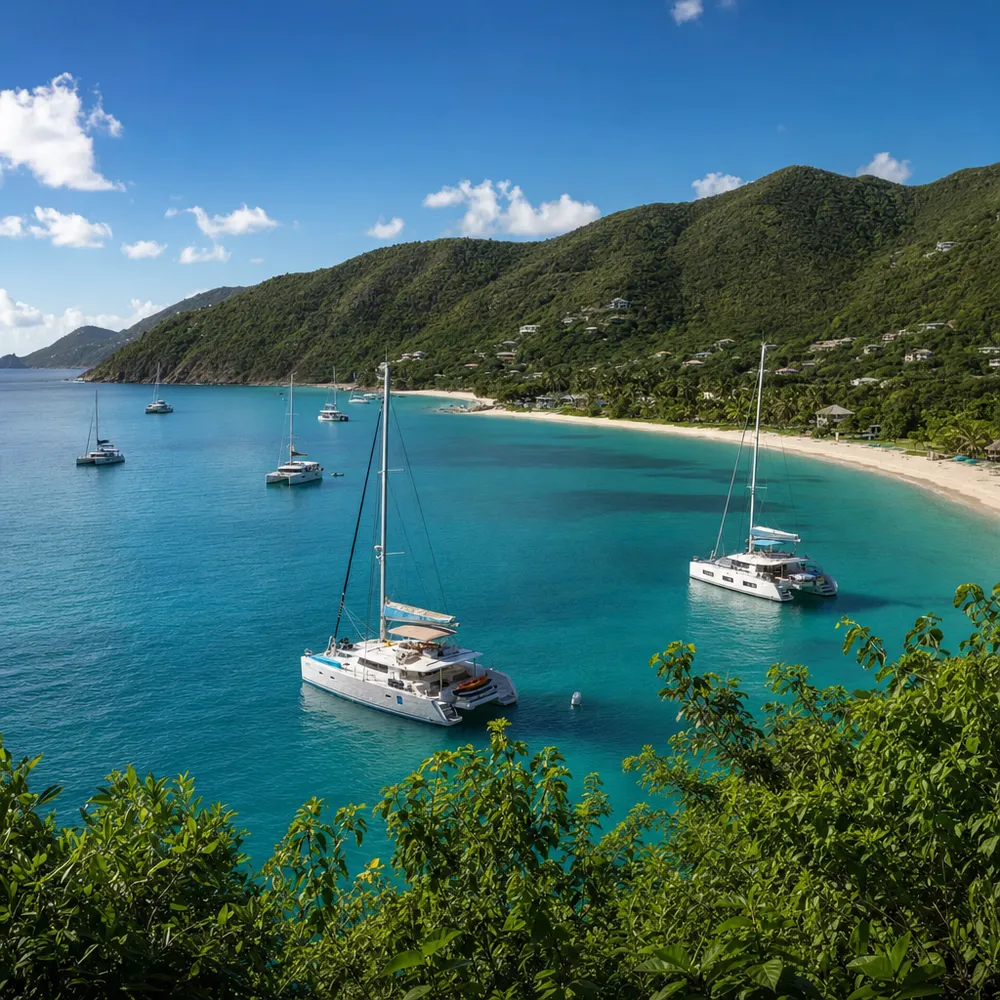
- What awaits: Luminous turquoise water, endless white-sand beaches, flamingos, bonefishing flats, and famously fresh lobster at the beachside restaurants.
- Secluded option: Anchoring west of Pomato Point keeps you close to shore with solid holding and far fewer boats than the main mooring field.
- Catamaran tip: Dive on your anchor to confirm it is set — the sandy bottom can be deceptively loose in places. Plan your departure time to retrace the channel in good light.
4. Cane Garden Bay, Tortola
On the north side of Tortola, Cane Garden Bay offers a completely different atmosphere from the southern anchorages. Sweeping green hills rise on three sides, pelicans patrol the shallows at dawn, and live music drifts across the water from the bars ashore most evenings. It is a favourite spot for paddleboarding and watching the sunset over a cold Carib.
- Important caveat: When northerly swell is forecast, Cane Garden Bay's northern headland becomes a world-class surf break. Even a mild swell makes anchoring overnight uncomfortable, so check the forecast before committing to an overnight stay.
- Best conditions: Calm winter days with light northerlies — the bay is glassy and the holding in sand is reliable.
- Catamaran tip: The wide beam of a catamaran gives you more deck space for sundowners, but also means you need to check swinging room carefully in a bay that can get busy in season.
5. The Indians, off Pelican Island
The Indians — a cluster of rocky pinnacles just southwest of Pelican Island — are not an overnight anchorage, but they deserve a place on this list because the snorkelling here is among the best in the entire territory. Swim all the way around the formation to find fire coral, black coral, brain coral, and a kaleidoscope of reef fish in brilliant colour. theluxuryvacationguide.com
- Logistics: Moorings are limited and the site can be exposed, so treat it as a daytime stop rather than an overnight plan. bestboating.org
- Pair it with: The Caves off Pelican Island, which are a short motor away and allow you to swim all the way into three separate caverns. theluxuryvacationguide.com
- Catamaran tip: Pick up a mooring ball rather than anchoring — the seabed here is protected reef and anchoring is restricted to protect the coral.
Planning Your BVI Catamaran Itinerary
A one-week BVI catamaran charter typically departs from Road Town or Nanny Cay on Tortola. A practical loop might run: Norman Island (Night 1) → Cooper Island (Night 2) → North Sound, Virgin Gorda (Night 3) → Anegada (Night 4) → Jost Van Dyke (Night 5) → Cane Garden Bay or Soper's Hole (Night 6), with The Indians and The Caves as daytime stops along the way. The best charter season runs November through June, when trade winds are consistent and hurricane risk is minimal. The dry season peak — December to April — offers the most settled conditions. coldwellbankerbvi.com
Frequently Asked Questions
Do I need a licence to charter a catamaran in the BVI?
For a bareboat charter you will typically need to demonstrate sailing competence — most charter companies require a recognised certificate (such as RYA Day Skipper or ASA equivalent) or a proven logbook of offshore miles. If you don't hold a formal qualification, booking a skippered charter is a straightforward alternative.
Are mooring balls compulsory in the BVI?
In many protected areas and marine parks, anchoring is restricted or prohibited to protect the coral reefs, and mooring balls must be used. Always check current regulations with your charter company before departure, as rules can change.
What is the best time of year for a BVI catamaran charter?
The best sailing conditions fall between November and June, outside hurricane season. Trade winds average 10–15 knots during this period — ideal for relaxed island-hopping. The driest and most settled months are December through April.
How far apart are the BVI anchorages?
Most anchorages in the main island group are 5–10 nautical miles apart — less than two hours of sailing. The longest passage is to Anegada, approximately 16 nautical miles from its nearest neighbour, which takes around 1.5 to 2 hours in normal trade-wind conditions.