Norway Yacht Charter Summer 2026: Fjords, Midnight Sun & the Right Vessel
GetBoat Blog

A Norway yacht charter in summer 2026 gives you the best version of the fjords: 15–25 °C air temperatures, the midnight sun stretching your cruising days well past 10 pm, and waterfalls at their snowmelt peak in June. The season runs mid-June to late August, with crewed charters starting from around US $50,000 per week for a capable motor yacht and rising past US $1,000,000 for the largest expedition vessels. Budget an additional 30–40% above the base rate to cover Norwegian VAT, the Advance Provisioning Allowance (APA) for fuel, food and dockage, and crew gratuity. If you are planning a Norway yacht charter summer 2026 booking, the window to secure the best inventory is now — the season is short and the pool of suitable yachts is small.
Why Summer 2026 Is the Window to Book
Norway's charter season is one of the tightest in European waters. According to charter specialists at Exotica Charters, June to August delivers the warmest and most settled conditions, with the midnight sun barely setting in the far north and cruising days that stretch enormously. April and May are possible with a heated vessel, but the experience is more rugged and expectations need careful management. By contrast, July and August offer the warmest air, while mid-to-late June captures the snowmelt peak — the single best moment to see the Seven Sisters waterfall at Geirangerfjord and the cascades tumbling into Nærøyfjord at full volume.
The inventory reality is equally important. Yachts for Kings notes that the 30–40 m bracket in Norway runs to only roughly 6–10 yachts at peak across the fjord and Lofoten circuit, because the season is short and the repositioning leg from the Mediterranean is expensive. Early booking is not a sales tactic — it is the only reliable way to access the right vessel.
📚 You may also like
Which Fjords Are Worth Your Week?
Not every fjord delivers the same experience from a yacht. Exotica Charters recommends building most first-time itineraries around two UNESCO-listed fjords — Geirangerfjord and Nærøyfjord — with Sognefjord as the spine connecting the wider route.
Geirangerfjord
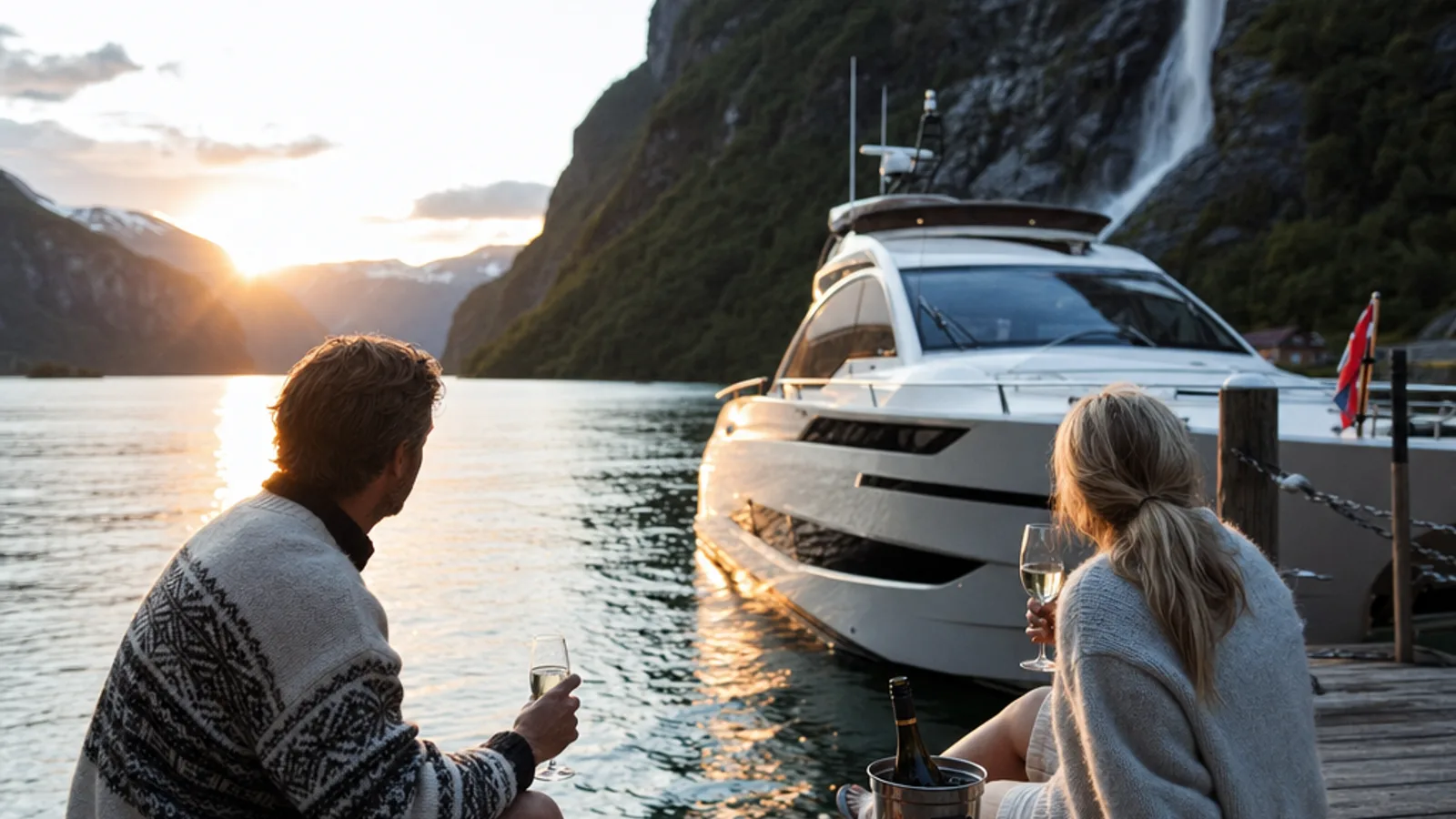
This is the fjord people picture: sheer walls, the Seven Sisters waterfall, and a sense of scale that photographs cannot capture. A luxury yacht with a good tender lets you slip into corners the cruise ships cannot reach. The practical caution is timing — cruise traffic peaks in the main basin during July and August, so experienced captains schedule arrival early or late in the day to preserve the sense of solitude.
Nærøyfjord
An arm of Sognefjord, Nærøyfjord is in many ways the more impressive of the two UNESCO sites — tighter, steeper, and far less trafficked. Exotica Charters describes it as the tightest and most cinematic stretch of water in Norway. Wide-beam motor yachts need a sensible captain for the narrowest sections, which is the kind of vessel-specific detail a good broker checks before committing a route.
Sognefjord
At over 200 km, Sognefjord is the longest fjord in Norway and the natural spine of most charters. It holds Nærøyfjord plus a string of side arms — Aurlandsfjord, Lustrafjord, and others — so a week based here never feels repetitive. Deep water throughout (Sognefjord runs to 1,300 metres at some anchor stations, according to Yachts for Kings) means even larger vessels can anchor freely.
Hardangerfjord
The world's third-largest fjord and Norway's second largest, Hardangerfjord is beautiful — orchards, broad water, quiet anchorages — but diffuse. Exotica Charters advises using it as a supporting leg rather than the centrepiece of a short charter. The Bergen to Hardangerfjord passage is only around 30 nautical miles, making it a logical first night out before pushing north.
A Practical 7-Night Itinerary
The classic Bergen rotation, as outlined by both Exotica Charters and Yachts for Kings, works as follows:
- Day 1 — Bergen: Board, provision, and settle in. Short first leg toward the mouth of Sognefjord.
- Day 2 — Hardangerfjord: Two nights here captures the apple orchards (early June) or the waterfalls in full flow.
- Day 3 — Sognefjord: Run east up the main fjord, anchoring in a quiet side arm beneath the cliffs.
- Day 4 — Nærøyfjord: The tightest, most cinematic arm. Tender into the narrows, kayak the still water at dawn.
- Day 5 — Aurlandsfjord and Flåm: Waterfalls, a village stop, hiking and paddleboarding from the boat.
- Day 6 — Reposition north to Geiranger: A longer cruising day — the kind of leg where a motor yacht earns its keep.
- Day 7 — Geirangerfjord: The Seven Sisters falls and the sheer walls, timed early or late to avoid cruise traffic. Final calm anchorage before return.
Seven nights is the minimum that does the two headline fjords justice. Ten nights allows Hardangerfjord as a full supporting leg without rushing the spine.
Choosing the Right Vessel
Vessel selection is more consequential in Norway than in most charter regions. Three factors dominate: heating, tender capability, and hull type.
Heating
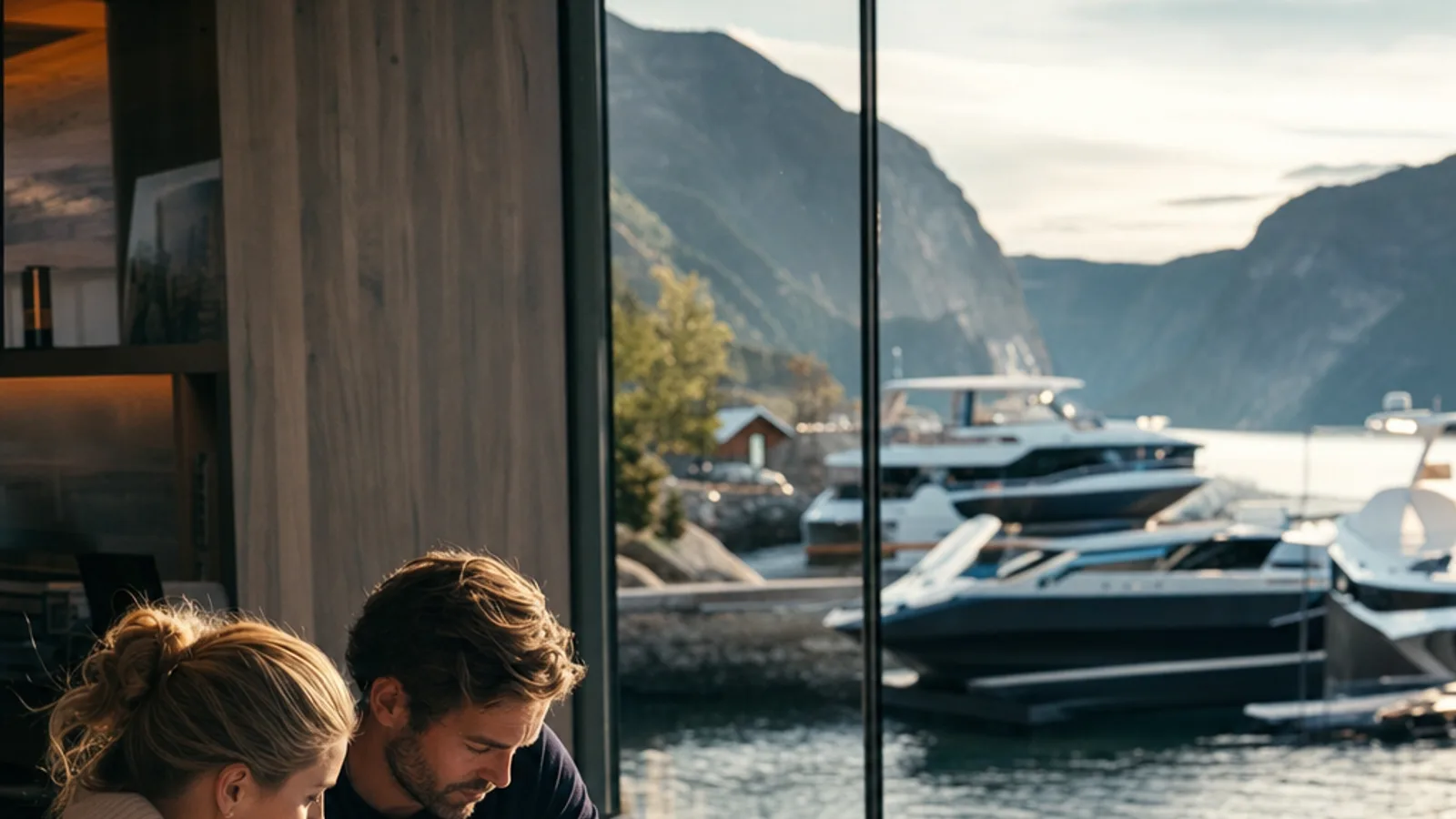
Yachts for Kings is explicit on this point: cabin heating to a minimum of 22 °C is mandatory at the 30–40 m bracket. Norway cabin nights run 10–14 °C and the on-board heating system is the trip's operational margin. Any yacht without documented cabin heating should be passed over.
Tender Programme
Village access at Flåm, Gudvangen, Olden, and Geiranger is tender-led. A single-tender programme creates rotation bottlenecks. Two tenders is the minimum sensible specification, with a jet-sled or kayak set as the standard add-on for the fjord arms.
Motor Yacht vs Sailing Yacht vs Expedition Vessel
Exotica Charters recommends a motor yacht for range, warmth, and comfort on longer repositioning legs. A sailing yacht is worth considering only if you genuinely intend to use Norway's summer winds. For the most remote itineraries — Lofoten, Svalbard, or deep fjord exploration — a purpose-built expedition vessel is the right platform, offering the structural specification and range that cold-water cruising demands.
At the 30–40 m bracket, Yachts for Kings notes that peak-season (July–August) rates run from US $95,000 to US $155,000 per week for motor yachts and US $105,000 to US $175,000 for explorer yachts, before the APA and taxes. Below 30 m, the full-service charter inventory thins to near zero in Norway.
Getting There: Embarkation Ports
Bergen Flesland (BGO) is the primary gateway, served by British Airways, KLM, Lufthansa, and Norwegian with connections across Europe. Ålesund (AES) is the alternative embarkation point for charters focused on Geirangerfjord and the northern rotation. Most brokers build the itinerary around a Bergen embarkation and Bergen disembarkation to keep repositioning costs predictable.
Frequently Asked Questions
How much does a Norway yacht charter cost in summer 2026?
Crewed luxury charters start from around US $50,000 per week and run past US $1,000,000 for the largest yachts, according to Exotica Charters. At the popular 30–40 m bracket, expect US $95,000–$175,000 per week depending on vessel type and length. Add 30–40% above the base rate for Norwegian VAT, APA (fuel, food, dockage), and crew gratuity.
When is the best time for a Norway fjord yacht charter?
June to August is the consensus window. Mid-to-late June captures the snowmelt waterfall peak; July and August deliver the warmest air temperatures (15–25 °C) and the most settled weather. The midnight sun in the far north means cruising days stretch well into the evening throughout the season.
Is Geirangerfjord too crowded for a private yacht charter?
The main basin does see cruise-ship traffic in July and August. However, a private yacht with a good tender programme can access corners and timings unavailable to larger vessels. Experienced captains schedule the main fjord passage for early morning or evening to preserve the sense of privacy.
How far in advance should I book a Norway charter for summer 2026?
The inventory of suitable crewed yachts in Norway is genuinely small — Yachts for Kings puts the 30–40 m bracket at roughly 6–10 vessels at peak. Booking 9–12 months ahead is strongly advisable for July and August departures. The best captains and the most capable vessels are committed first.