How to Host a Wedding on a Yacht

Founder, TheThinksters.com
Choose the Right Yacht for Your Wedding
Start by matching the yacht to your guest count and the kind of day you want. A vessel that sleeps eight and carries twenty works for a small ceremony with close family, while anything under 80 feet will feel tight once you add catering staff and a photographer. Larger motor yachts or catamarans in the 100-foot range give you separate spaces for the ceremony, dinner, and dancing without guests constantly stepping around each other. Motor yachts offer more interior volume and easier movement in chop, but they burn more fuel and can feel less stable at anchor than a sailing catamaran. If your wedding falls in shoulder season, you may find better availability on mid-size boats that owners prefer to keep in commission rather than lay up.
Look at the actual deck layout in person or through detailed photos and video. You need one level area large enough for chairs or a small arch, plus shade or cover in case of sun or rain. Check whether the swim platform or foredeck can serve as a backup if the main deck is too windy. Cabins matter less for the event itself but become useful if anyone needs a quiet place to change or rest. When you compare listings, note the generator capacity and air-conditioning output; these determine whether the interior stays comfortable once the boat is full of people and catering equipment.
Confirm Capacity and Safety Features
Ask the charter company for the exact certificate of inspection or local equivalent that states maximum passengers. This number already includes crew, so subtract the captain, mate, and any service staff before you finalize your list. Overloading can result in the captain refusing to leave the dock or, in some jurisdictions, fines that fall on the charterer. Walk through the safety briefing yourself before the wedding day. Confirm that life jackets are stored where guests can reach them without crew help, that fire extinguishers are current, and that the crew has completed a man-overboard drill recently.
📚 You may also like
Seasonal conditions change what you need. In the Caribbean winter months, trade winds can make open decks cooler than expected, so ask about windbreaks or enclosed areas. In the Mediterranean summer, heat and glare become the main issues, and you may want to confirm that the yacht carries enough fresh water for extra showers and ice. If children are attending, request extra child-size life jackets in advance rather than assuming the standard adult set will cover everyone.
Plan the Ceremony on the Water
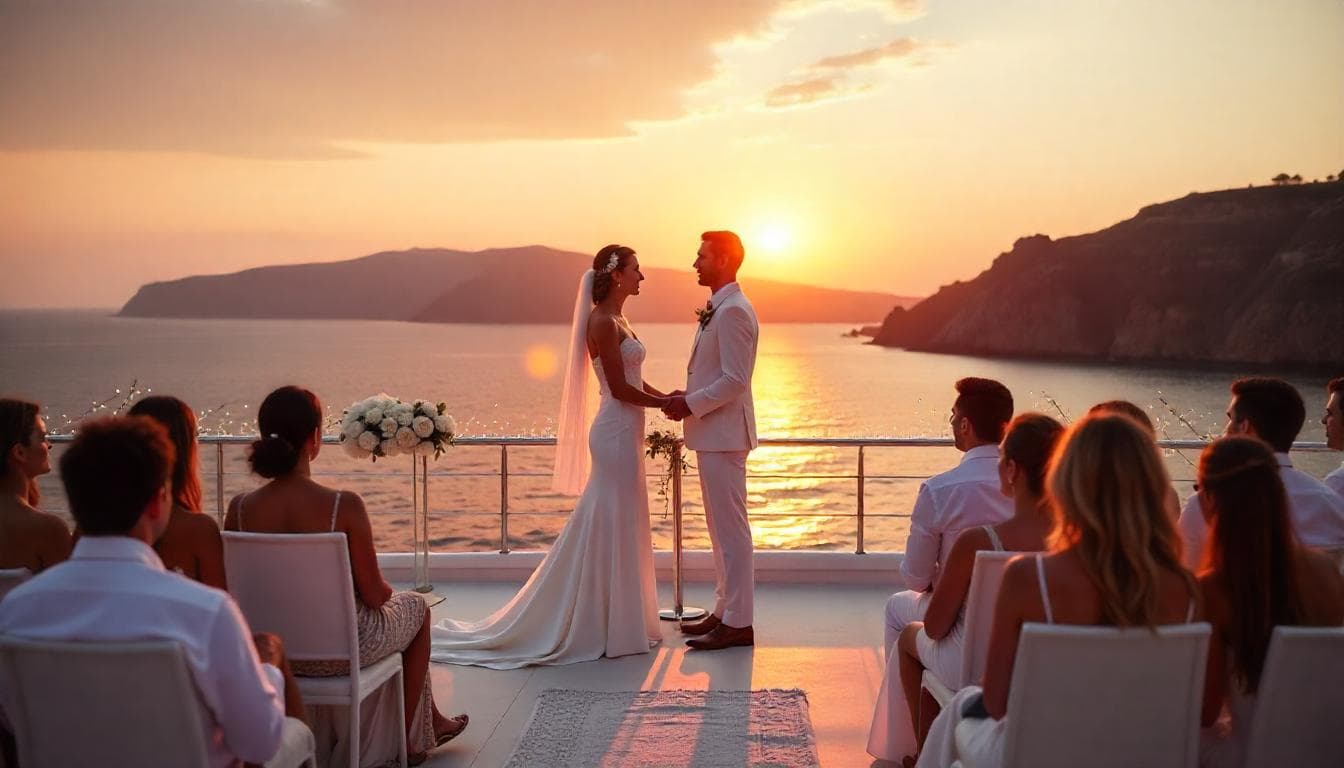
Decide early whether you want to remain at anchor or move during the vows. Anchored ceremonies allow guests to stand and move more freely, but you lose the changing scenery. A slow cruise works well when the route passes a notable landmark, yet it requires everyone to stay seated or hold handrails. Sunset timing is popular, but check the actual sunset time for your date and allow an extra 30 minutes for photos before the light drops too far for safe movement on deck.
Wind and boat motion affect sound. A portable microphone and small speaker often work better than relying on the captain’s PA system. Test the setup the day before if possible, or at least ask the crew where they have placed speakers successfully on past events. If you plan to anchor near a sensitive area such as a marine park, confirm with the captain that the holding ground is reliable and that local regulations permit stationary vessels for the duration of the ceremony.
Arrange for an Officiant and Permits
Most jurisdictions require a locally licensed officiant for the marriage to be recognized. Some captains hold the necessary credentials; others do not. If you bring your own officiant, budget for travel, lodging, and any port fees the person incurs. In places such as the British Virgin Islands, both partners must appear in person at the registry office before the ceremony, which may require an extra day ashore. France and Italy impose additional paperwork for ceremonies performed on vessels flagged outside the EU. Start the permit process at least eight weeks ahead, because some harbor masters limit the number of events per week in busy anchorages.
Manage Catering and Dining Options
Most yachts that accept events already work with a preferred caterer or have an onboard chef. Review the menu for items that hold up well in motion—sauced dishes can slide, while plated proteins and sturdy salads travel better. Ask how many refrigeration units are available and whether the crew can run a separate ice machine for the bar without affecting the galley. If you have guests with allergies, send the full list to the chef at least ten days before departure so substitutions can be sourced at the local market rather than on short notice.
External catering is sometimes allowed but adds coordination. The delivery must arrive before the yacht leaves the dock, and any remaining food must be stored or disposed of according to the captain’s waste plan. Some ports charge extra for late-evening tender transfers of equipment, so build that cost into the budget when you compare in-house versus outside options.
Plan for Beverage Service and Bar Setup
Confirm whether the yacht’s bar is stocked or if you need to supply liquor. Many vessels allow you to bring your own bottles but charge a corkage fee per opened container. Calculate ice needs for the full duration; a 100-guest event on a warm evening can require several hundred pounds. Ask the crew where they place the bar so it does not block the main walkway yet remains accessible to both guests and staff. Non-alcoholic options should include more than water—flavored sparkling water and a non-alcoholic sparkling wine alternative keep the toast inclusive.
Decorate the Yacht for Your Wedding
Focus on items that can be secured with zip ties, command hooks, or weights rather than tape that may leave residue on varnish. Floral arrangements should sit in low, heavy vases or be wired to railings. Battery-powered string lights avoid the need for extension cords across wet decks. Discuss the timeline with the crew so decorations go up after the final safety check but before guests board. Some yachts keep a small stock of white linens and lanterns that have already proven stable in their particular motion; using those can save both money and last-minute adjustments.
Incorporate a Theme with Personal Touches
A simple color scheme—navy and white, or soft greens and sand—usually photographs cleanly against the water and hull. Custom signage should be printed on rigid board or canvas so it does not flap. A small table with printed photos or a guest book works if it is placed against a bulkhead rather than in the middle of foot traffic. Keep any theme elements proportional to the space; one large arrangement on the main deck often looks better than many small items scattered where they can be knocked over. You can explore suitable yachts and charter through GetBoat to see which vessels already carry the layout and equipment that support the details you have planned.
Arrange Entertainment and Activities
Live music works best when the performers have already worked on boats. Ask the captain how much deck space is available once tables and seating are set, and confirm the yacht’s generator can handle amplifiers without tripping breakers. A four-piece band often fits on a 60-foot flybridge; anything larger usually needs the main salon cleared. DJs take less room but can still create vibration issues on lightweight hulls, so request a sound check the day before.
If dancing is not the priority, a solo guitarist or violinist during the cocktail hour keeps volume low enough for conversation. Schedule the set around sunset when guests naturally gather on the foredeck. For a daytime charter, consider a short anchored stop where guests can swim or paddleboard; the crew will need to deploy the ladder and have life vests ready, so build that time into the timeline rather than adding it as an afterthought.
Group photos are simplest before guests board or during a slow pass by a landmark. A jet-ski or tender ride can entertain a smaller group, but it removes them from the main deck for 20–30 minutes and requires an extra crew member on watch. Match the activity level to the average age of the guest list and the season—afternoon water sports work better in the Caribbean shoulder months than in peak summer heat.
Consider Weather and Guest Comfort
Check the long-range forecast two weeks out and again 48 hours before departure. In the Mediterranean, meltemi winds pick up most afternoons from June through August; a yacht with a protected aft deck or roll-down sides gives guests a place to sit without constant spray. Caribbean charters from late June through October carry a higher chance of brief showers, so confirm the yacht has a fully enclosed salon or air-conditioned lower deck that can seat everyone if needed.
Provide a basket of lightweight wraps or fleece blankets for evening sails; even in warm climates the wind cools quickly once the sun drops. Portable misting fans help on the hook in the Caribbean, but they need a 12-volt outlet and spare batteries. Shade is harder on sailing yachts than on motor yachts because of rigging and boom placement—ask for photos of the actual deck layout at the angle the sun will hit during your ceremony time.
Have the captain identify the nearest sheltered anchorage in case conditions change. Most charter contracts allow a route adjustment for safety without penalty, but the decision must be made before the tender is launched or the cake is brought aboard. Clear communication with the crew on these points prevents last-minute surprises for both the couple and their guests.
Frequently Asked Questions
How do I choose the right yacht size for my wedding?
Match the yacht to your guest count and the kind of day you want. A vessel that sleeps eight and carries twenty often works for a small ceremony with close family. Larger motor yachts or catamarans give separate spaces for the ceremony, dinner, and dancing without guests stepping around each other. Check the actual deck layout in person or through detailed photos for one level area large enough for chairs or a small arch, plus shade or cover in case of sun or rain.
What capacity and safety details must I confirm with the charter company?
Ask the charter company for the exact certificate of inspection that states maximum passengers. This number already includes crew, so subtract the captain, mate, and service staff before finalizing your list. Walk through the safety briefing yourself. Confirm life jackets are stored where guests can reach them without crew help, fire extinguishers are current, and the crew has completed a man-overboard drill recently.
How do seasonal conditions affect a yacht wedding?
Seasonal conditions change what you need. In the Caribbean winter months, trade winds often make open decks cooler than expected, so ask about windbreaks or enclosed areas. In the Mediterranean summer, heat and glare become the main issues, and you may want to confirm the yacht carries enough fresh water for extra showers and ice. Request extra child-size life jackets in advance if children are attending.
Why should I inspect the deck layout and generator capacity before booking?
Look at the actual deck layout for one level area suitable for chairs or an arch, plus shade or cover options. The swim platform or foredeck can serve as a backup if the main deck is too windy. Note the generator capacity and air-conditioning output, as these determine whether the interior stays comfortable once the boat is full of people and catering equipment.