How a scow-bow stirred the IRC at the Caribbean 600
Alexandra
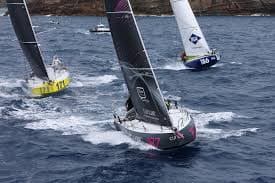
The RORC Caribbean 600’s routing around 11 islands forces tight logistics: provisioning windows, sail inventories, spare-rig caches and crew-change plans must all account for rapidly changing wind angles and restricted stopover options. When the trades shifted more south-easterly in 2026, race managers and shore teams had to adapt sail plans and passage tactics on the fly, and that operational pressure exposed how hull form and handicap rules interact under real-world fleet logistics.
Race results that raised eyebrows
The scow-bowed Mach 50 Palanad 4, designed by Sam Manuard and fresh off a win in the RORC Transatlantic Race, repeated strong results at the RORC Caribbean 600, taking her class and finishing runner-up overall. That outcome prompted designer and former editor Julian Everitt to publicly wonder whether IRC needs a reset. Fleet performance in the Caribbean swung more toward upwind and tight-reaching work than many expected, and that played directly into race outcomes.
Why the wind shift mattered
According to navigator Will Harris, roughly 60 percent of the race sailed into upwind or tight-reaching conditions. For a boat optimized for reaching speed, that’s a monkey wrench — and yet Palanad 4 still excelled despite an early setback when a halyard issue dropped their J1 and put them a mile behind the fleet. That resilience exposed questions about whether the handicap system is keeping pace with novel hull shapes.
📚 También te puede interesar
Scow-bow performance vs. conventional hulls
The scow-bow geometry has delivered speed gains in classes like the Mini 6.50 and Class40. Inshore or mixed-wind offshore races where reaching power and downwind form matter, the scow can generate early planing and carry higher average speeds. But handicap systems that try to equalize diverse designs must account for different wind-angle envelopes — and that’s the crux of the recent debate.
| Hull Type | Strengths | Weaknesses |
|---|---|---|
| Scow-bow (Mach 50) | Superior reaching, early planning, power downwind | Potentially less efficient dead-upwind, sensitivity to heavy chopping |
| Conventional hull | Predictable upwind VMG, often lighter displacement | Less peak downwind speed in certain sea states |
| Modern high-aspect racer | Good upwind VMG, efficient in narrow wind angles | May lack the planing surface for wide-reaching speed |
Practical implications for sailors and charter operators
For charter companies and yacht owners who rent boats or manage flotillas, the lesson is operational: ensure spare sails for mixed wind angles, and brief captains on how novel hull shapes handle the full wind envelope. Marina staff and provisioning teams should expect altered turnaround times when a race or charter fleet encounters unexpected trade-wind patterns — a simple delay for a dropped halyard can cascade into tight provisioning windows.
Checklist for race and charter prep
- Inventory sails for upwind and reaching configurations.
- Stock critical rig spares and practice quick repairs ashore.
- Plan provisioning with contingency windows for weather shifts.
- Brief charter skippers on unique handling traits of scow-bowed boats.
- Coordinate with marinas for flexible docking when schedules slip.
Handicap systems and potential adjustments
The conversation around IRC centers on whether time-correction factors accurately reflect the performance envelope of boats like Palanad 4. Handicap authorities regularly review polars and observed performance data; when a disruptive design repeatedly outperforms in mixed conditions, it triggers formal scrutiny. Any adjustment process must balance two aims: keep racing fair while not stifling design innovation.
There’s also a match between measurement and logistics: race committees and shore teams need transparent, timely rating updates so charter fleets and owners can plan refits or sail inventories without guessing. Nobody wants to be halfway to a Caribbean anchorage wondering if their boat will be competitive — or worse, if the rating will make the charter a liability.
What this means for GetBoat.com users
Customers searching for a yacht or boat charter should ask owners whether a specific hull is optimized for certain wind angles and check that captains have experience handling modern scow-like forms. For marinas and brokers, advertising clearwater advantages or Gulf-local expertise can shape demand: renters tend to favor boats whose strengths match destination wind patterns and activities like fishing, island hopping, or bluewater cruising.
At the end of the day, the story of Palanad 4 is a reminder that design evolution, race routing and logistics all talk to one another. When a new hull form wins in varied conditions, the handicap world shifts into high gear — literally and bureaucratically — and operators from charter brokers to marina managers feel the ripples.
In summary: the 2026 RORC Caribbean 600 and the success of the Mach 50 Palanad 4 highlighted interactions between hull form, trade-wind routing and race logistics that have reignited discussion about IRC fairness. Fleet managers, captains and charter operators should update checklists, provisioning plans and briefings to reflect such design shifts. Whether you’re booking a yacht or renting a boat for a beach-to-island adventure, pay attention to hull type, captain experience and nearby marinas — the right match of boat, destination and crew makes all the difference for sailing, yachting and boating activities on the sea or ocean, from a lake-style escape to superyacht-level charters; think captain, sunseeker vibes, fishing stops, marinas in clearwater gulfs, and smart decisions about sale or rent when choosing your next water-bound getaway.


