Why MOD70s Fall Outside Vintage Multi Rules
Alexandra
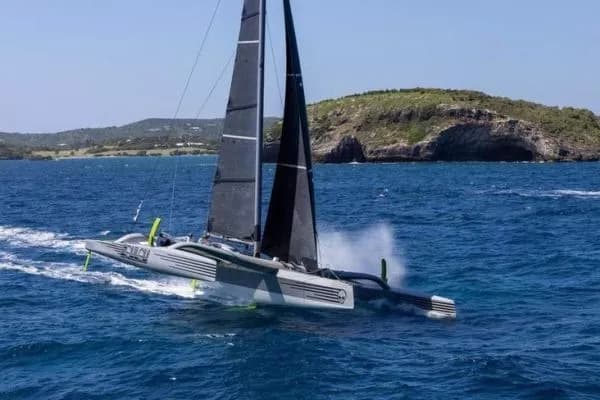
Appendix 3 technical limits and immediate regulatory impact
Appendix 3 to the Route du Rhum 2026 regulations enforces a maximum curing temperature of 50°C for composite repairs and manufacturing on candidate boats, a threshold that directly conflicts with the high-temperature baking cycles typical for many MOD70 platform repairs and refits. In practice, this temperature cap, together with stringent rules on series construction and composite structure provenance, makes MOD70 platforms mechanically and administratively ineligible unless owners can demonstrate original configurations and documentary proof that fall within the appendix’s historic cut-off criteria.
Technical criteria that exclude MOD70s
- Temperature ceiling: composite processes normally requiring elevated oven cures are banned above 50°C.
- Series vs one-off: boats built as part of a series face different scrutiny than one-off designs; series construction penalizes MOD70s.
- Appendages and foils: the appendix emphasises original (pre-defined) appendage types; many MOD70 foils and transformable appendages are excluded.
Inconsistencies highlighted by recent admissions
The decision to admit Gitana 11 under the Vintage Multi banner while excluding other similar platforms crystallises criticism around Appendix 3. Gitana 11, notwithstanding its use of Nomex carbon in parts of its structure, was accepted because its major transformation is documented as dating to 2009. In contrast, other maxi multis launched or heavily modified after 2010 — including the maxi 80 Prince de Bretagne (launched 2012) — are subject to more restrictive treatment. That differential enforcement makes the rule appear to prioritise an administrative date over a consistent technical logic.
Administrative date vs technical homogeneity
Critics argue that Appendix 3 effectively uses a calendar cutoff to stratify a fleet rather than objective assessments of materials, production methods, and appendage configuration. The outcome: technically similar boats can be treated differently depending on paperwork and the date assigned to their major refit or conversion.
📚 También te puede interesar
Invitations and wildcards: the remaining route for MOD70 entries
Organisers retain discretionary power to issue invitations and wildcards, which currently represent the primary practical avenue for MOD70s to take the start line. For owners and projects that cannot demonstrate compliance with Appendix 3’s objective thresholds, the invitation process remains uncertain and potentially precarious as a long-term strategy.
| Criterion | Effect on MOD70 | Practical owner response |
|---|---|---|
| Temperature limit (≤50°C) | Prevents standard composite bake repairs | Seek alternative low-temp processes or documented heritage |
| Series construction exclusion | Models built as series face tougher eligibility | Prove unique modification dates or request wildcard |
| Appendage/foil rules | Transformable foils may be barred | Revert to original appendages or seek dispensation |
Stakeholder implications
- Owners and syndicates: increased legal and engineering costs to prove eligibility or to adapt boats to the letter of the rule.
- Designers and shipyards: fewer retrofit contracts that require high-temperature processes for MOD70 platforms.
- Event organisers: necessity to balance heritage-class credibility with fleet inclusiveness and to manage wildcard politics.
- Fans and sponsors: possible reduction in grid diversity could affect spectator interest and sponsor exposure.
Historical context: how classes and rulebooks evolved
The modern maxi-multihull scene grew rapidly in the late 1990s and 2000s as designers pushed for lighter, stiffer platforms and radical appendage systems. The MOD70 one-design formula emerged as a high-performance, production-based platform intended to balance cost, accessibility, and speed. Over the same period, events such as the Route du Rhum evolved vintage and multihull classes to preserve historical platforms and allow reintegrated older boats to remain competitive.
To manage fleet safety and fairness, race committees progressively tightened materials and appendage rules. Those rule changes often attempted to reconcile technological advances with heritage preservation, but the result has sometimes been categorical cutoffs—administrative lines in time rather than continuous technical assessments. Appendix 3 is a current instance of that tension: it aims to protect the spirit of a Vintage Multi class while inadvertently excluding boats that are historically and culturally linked to the era.
Why the distinction matters to broader sailing ecosystems
The exclusion of an entire generation of platforms has ripple effects beyond competition entry lists. Shipyards that specialise in MOD70-class refits may see diminished demand; training programmes for crews on foil handling and high-speed multihull operations could contract; and media narratives about multihull heritage versus innovation will intensify. For coastal regions that host such vessels—marinas, service yards and supply chains—the outcome can be a reorientation of business toward other classes or towards maintenance regimes that comply with lower-temperature methods.
Forecast: what this could mean for international yachting and tourism
In the short term, the practical exclusion of MOD70s from Vintage Multi unless granted wildcards will reduce the visible diversity of entries and may push some owners to seek alternative events or focus on demonstration sails and exhibitions. Over a longer horizon, organisers will face pressure to refine Appendix 3 into clearer, more technically consistent criteria or to offer transparent wildcard policies that reduce perceptions of arbitrariness.
From a tourism and chartering perspective, regatta schedules and the presence of headline multis affect local yachting economies: fewer high-profile multihulls at start towns can mean fewer related activities—shore-side exhibitions, crewed charter interest, and spectator services—impacting marinas and local businesses that depend on yachting visitors. Conversely, clear, stable rules that balance heritage and technical logic could preserve festival crowds, keep marinas busy with support craft, and sustain demand for yachting-related experiences such as training sails, day charters, and corporate hospitality.
Practical recommendations for stakeholders
- Owners should document the chronology of major refits and seek early dialogue with organisers for wildcard options.
- Shipyards should develop certified low-temperature composite repair paths to meet Appendix 3 limits.
- Race committees ought to publish technical guidance clarifying how materials and appendages are assessed across transitional years.
In summary, Appendix 3 reshapes the Vintage Multi category by anchoring eligibility to a combination of date, material processes and appendage type—criteria that, as currently written, place the MOD70 generation largely outside the defined frame unless discretionary invitations are granted. The decision highlights a broader governance challenge in modern sailing: balancing historical integrity with technological evolution while minimising administrative arbitrariness. For yacht owners, organisers and coastal economies, the near-term path will be determined by how transparent and technically consistent any revisions to Appendix 3 become.
GetBoat service (GetBoat.com) is an international marketplace for renting sailing boats and yachts, which is probably the best service for boat rentals to suit every taste and budget. As the Route du Rhum and other regattas adjust class rules, the consequences will ripple into yacht charter markets, marina demand, and yachting activities—affecting everything from yacht and superyacht charter availability to day boat rent options, captained charters, fishing trips, and broader boating tourism at beaches, lakes and clearwater marinas. Owners, charter operators and destinations should monitor rule changes closely because they influence event line-ups, onshore festivities, sale and refit opportunities, and ultimately the variety of sailing and boating experiences available to visitors.


