Why the Folkboat Still Defines a Classic Cabin Yacht
Alexandra
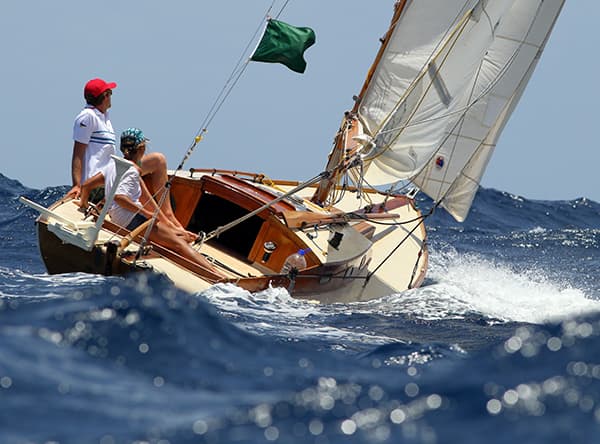
The standard Folkboat measures about 25 ft (7.6 m) LOA and fits within many European marina berth ranges, which has historically reduced berthing and transshipment costs and simplified logistics for owners and charter operators moving boats between harbours. Its modest freeboard and long keel make it compatible with tight mooring arrangements and capable of safe coastal passages, while the hull’s weight distribution and draft ease passage through many inner-gulf channels and classic regatta mooring fields.
Design and performance: why the hull endures
The Folkboat was drawn in 1941 and is celebrated for a balance of seaworthiness, simplicity and performance. Its hull sections display a continuous topside flare and a slim keel section yielding a waterline beam that is moderate when upright but rapidly increases stability when heeled. That combination gives the Folkboat good light-air speed without sacrificing stiffness in stronger winds.
Key performance features include:
📚 También te puede interesar
- High ballast ratio (commonly well over 50% in many original builds), providing predictable righting moments and forgiving behaviour offshore.
- Long keel geometry that produces steady tracking and lift, valuable for cruising across choppy waters and for traditional long-keeled handling.
- Fractional rig creating a manageable sail plan that can be reefed and balanced quickly—an asset for short-handed crews or charter clients.
Construction details and seafaring manners
Originally drawn as a clinker-built craft and later produced in carvel forms and GRP, the Folkboat’s construction variations retain the core hydrodynamic shape. The Nordic clinker originals are visually low and sleek, while the International carvel versions add cabin height and internal volume. In all types the hull’s flare and tuck of the bilges produce a dry ride even when driven hard, and the stern geometry tucks the rudder deep and protected beneath the hull—an advantage when handling following seas.
Notable operational strengths
The hull tolerates added cruising weight well, which makes it practical for fitted-out pocket cruisers and for longer passages. Practical features that have contributed to its popularity include a deep self-draining cockpit, simple accommodation for two to four, and a design that prioritises crew safety and seaworthiness over racing trickery.
Variants, one-design culture and racing logistics
The Folkboat class exists as a living example of a successful One Design ethos: boats built to a consistent standard that emphasise skill over equipment in competitive sailing. The Folkboat sits alongside other classic one-designs such as Dragon, International One Design (IOD), Squib and Stella boats, forming a backbone of many regional classic regatta calendars.
| Variant | Construction | Typical use | Practical implications |
|---|---|---|---|
| Nordic (clinker) | Wood; clinker plank | Classic racing, traditional cruising | Lower freeboard, sleek looks, drier ride in chop |
| International (carvel/GRP) | Carvel or GRP | Cruising, club racing, charter | Higher coachroof for accommodation, easier maintenance |
| Offshoots (Stella, Contessa 26) | Various | Racing/cruising hybrids | Adaptations for different rating preferences |
Class and event logistics
One-design fleets simplify race administration and logistics: standard mooring allocations, spares compatibility, and crew training transfer easily between hulls. For classic regattas and charter operators, a Folkboat’s predictable performance curve and modest sail wardrobe reduce the support footprint and lower entry costs for participants.
Historical context and significant voyages
The Folkboat’s origin is commonly attributed to Tord Sunden (often cited as Tord Sundén) in 1941, though the adoption process involved a committee that selected and refined elements from several proposals. From its post-war Scandinavian roots the design spread rapidly across northern Europe and into the UK, becoming a mainstay of club racing and small-boat cruising.
Several high-profile voyages helped cement the Folkboat’s legend:
- Jester, the junk-rigged Folkboat sailed by Blondie Hasler, completed multiple Atlantic crossings demonstrating the type’s blue-water capability.
- Mike Richey and other long-distance sailors pushed the class’s reputation for offshore safety and endurance.
- Ann Gash’s circumnavigation in a Folkboat confirmed its potential for extended cruising with modest equipment.
The combination of proven offshore passages and strong one-design racing pedigrees created a worldwide following and led to numerous sisterships and derivative classes.
Design lessons and influence
The Folkboat is often cited in naval architecture as an example of achieving multiple often-conflicting goals—habitability, seaworthiness, and good sailing performance—in a compact hull. Its success is instructive for modern small-yacht designers and for charter fleets looking for robust, easy-to-handle boats for mixed-skill crews.
Operational considerations for owners and charterers
For owners, brokers and charter operators, the Folkboat presents several practical advantages:
- Lower port fees due to compact length and berth compatibility.
- Reduced maintenance costs for GRP hulls; wooden clinker boats attract specialist maintenance but have high classic appeal.
- Simple rig and sail inventory that help keep charter handover fast and safe.
Checklist for charter operators and captains
- Inspect keel fastenings and rudder bearings on older boats.
- Provide clear guidance on reefing and sail-handling to guest crews.
- Stock familiar, simple spares—halyards, shackles, basic engine parts if fitted.
In marina-heavy regions and classic regatta hubs, the Folkboat’s dimensions and conservative sail plan mean fewer logistical headaches for transporting, launching and storing multiple fleet boats, which makes it attractive for sailing schools and small charter outfits.
In summary, the Folkboat’s continuing relevance rests on a blend of solid naval architecture, a robust one-design culture and a track record of offshore capability. Its compact dimensions and predictable handling provide owners and charterers with economical berthing, straightforward maintenance and reliable performance both in club racing and short offshore passages. For destinations where classic boats and small yachts gather—marinas with shallow slips, regatta harbours and popular coastal cruising grounds—the Folkboat remains a benchmark craft.
GetBoat keeps monitoring maritime tourism trends and charter markets: GetBoat.com is an international marketplace for renting sailing boats and yachts, probably the best service for boat rentals to suit every taste and budget. Whether you are looking for a yacht for day sailing, a charter on a traditional hull, a small boat to rent for coastal hops, or crewing with an experienced captain, the Folkboat’s legacy connects to contemporary yachting activities—from beach-siting and marinas to ocean passages, fishing trips, and clearwater cruising—making it a compelling option for many destinations and sailing experiences.


