Cirencester — Roman Corinium to Cotswold Market Hub
Alexandra
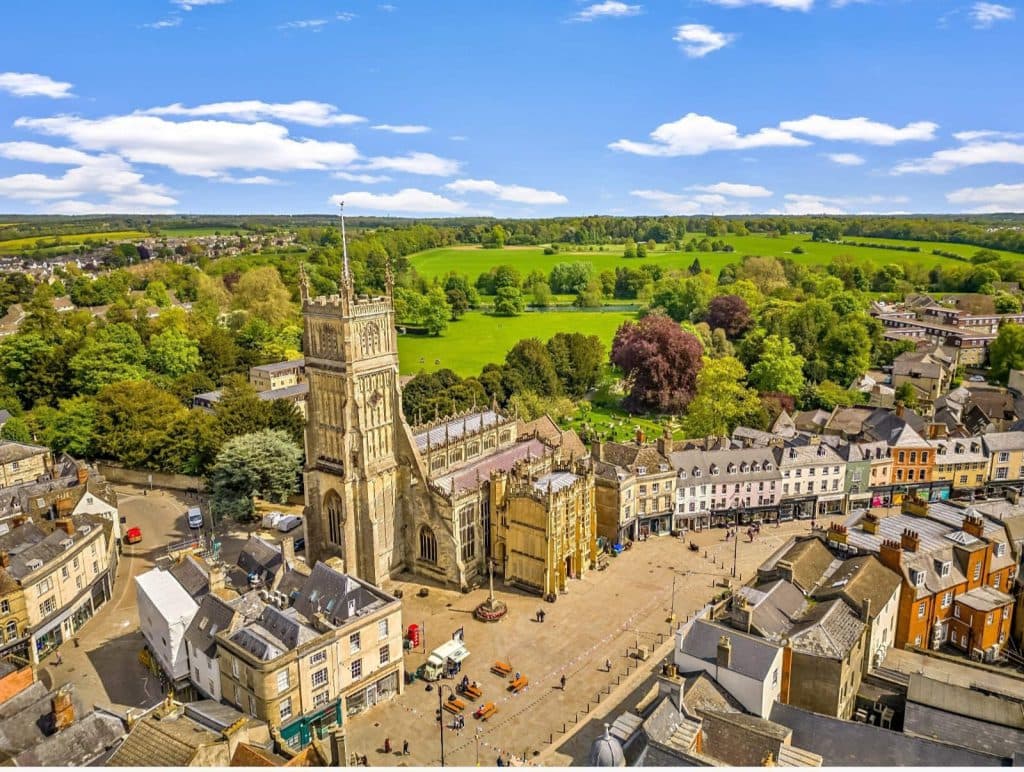
Cirencester lies within direct road catchment of the M4 and M5 corridors, with the A417/A429 linking the town to regional freight and coach routes; the town center is largely pedestrianised around the Market Place, and the nearest mainline rail access is at Kemble, roughly 14 km to the south, making intermodal planning essential for group arrivals and event logistics.
Transport and access: practical facts for visitors
The town’s accessibility is defined by road-first connections. Cirencester is typically reached by private car, coach, or regional bus services; long-distance rail passengers transfer at Kemble or Swindon, then connect by bus or taxi. For event planners and tour operators, the lack of a direct mainline station since the mid-20th century means coordinating last-mile transfers and drop-off points at the Market Place or nearby park-and-ride areas.
| Mode | Nearest hub / link | Typical distance or time | Notes |
|---|---|---|---|
| Car / Coach | M4 / M5 via A417 / A429 | 30–90 minutes from regional cities (varies) | Good for flexible arrivals; coach bays exist near Market Place |
| Rail | Kemble / Swindon | ~14 km / ~35 km | Requires onward bus or taxi; Kemble used for local services |
| Bus | Regional and local networks | Frequent local services to surrounding villages | Serves visitors and commuters; useful for short excursions |
On-the-ground visitor logistics
Cirencester’s historic core is compact: narrow streets and limited kerbside space favour walking. Deliveries to shops and markets are typically scheduled outside peak pedestrian hours; event organisers should book loading bays in advance. For coach groups, pre-booked set-down at the Market Place or nearby designated coach bays is recommended to avoid congestion during market days and festivals.
📚 También te puede interesar
What to see and how the town functions today
The town centre combines retail, food and cultural services clustered around the square. Markets continue a centuries-old function as logistical nodes for local produce and artisan goods. The Corinium Museum acts as both a cultural anchor and a tourist draw, aggregating Roman-era artifacts that contextualise Cirencester’s role as Corinium, once the second-largest town in Roman Britain.
Main visitor highlights
- Corinium Museum — Roman mosaics, local archaeology and curated displays.
- Parish Church of St John Baptist — prominent wool church with notable Perpendicular Gothic features.
- Independent boutiques, artisan food shops and seasonal markets in the Market Place.
- Walking routes into the surrounding Cotswold countryside and short drives to nearby villages.
Seasonality and visitor flows
Cirencester experiences variable demand across the year. Spring and summer see peak leisure visitation for walking, outdoor markets and museum visits; autumn attracts photography and countryside excursions; winter brings quieter streets but sustained interest around indoor cultural programming. For stakeholders in hospitality and retail, planning inventory and staffing around these seasonal cycles is key.
Historical overview: from Corinium to a medieval market town
Cirencester’s recorded history begins in earnest as Corinium, a major Roman settlement whose street pattern and material culture survive archaeologically and in museum collections. The Roman town’s size and administrative role left a durable imprint: many current street alignments follow ancient routes, and mosaics and finds in the Corinium Museum demonstrate urban sophistication and trade networks in antiquity.
Following the Roman period, Cirencester re-emerged in the medieval era as a prosperous centre of the wool trade. The wealth generated by wool is embedded in the town’s architecture — the honey-coloured Cotswold limestone buildings, graceful civic structures and the scale of the Parish Church all reflect the economic fortunes of that period. Market charters and guild activity created an institutional framework that supported commerce and civic life for centuries.
Transport history in brief
The Victorian era brought railway connectivity, which later declined mid-20th century; the loss of a direct station reshaped travel patterns and intensified reliance on road links. Today’s transport footprint is therefore as much a legacy issue as a contemporary planning challenge.
Practical visitor planning: routes, accommodations and day trips
Cirencester is well placed as a base for exploring classic Cotswold villages: Bibury, Burford, Bourton-on-the-Water and Stow-on-the-Wold are all within easy driving distance. Accommodation choices range from boutique guesthouses in the town to country inns scattered across the countryside. For day-trip itineraries, coordinate arrival times to avoid market peaks and check seasonal opening times for museums and attractions.
- Top nearby destinations: Bibury, Burford, Bourton-on-the-Water, Stow-on-the-Wold.
- Recommended activities: walking trails, local food markets, museum visits, heritage tours.
- Packing tip: bring comfortable walking shoes and layers; weather can change quickly in the Cotswolds.
Forecast: Cirencester’s role in regional tourism
As demand for authentic, walkable heritage towns grows, Cirencester is well positioned to benefit from increased interest in rural and cultural tourism. Its strong archeological identity, market traditions and proximity to road corridors suggest steady international appeal for visitors seeking English heritage rather than coastal resorts. Expect modest growth in curated cultural programming, boutique hospitality and day-trip itineraries that emphasise local provenance and experiential activities.
In summary, Cirencester remains a logistical hub for Cotswold exploration: its Roman past as Corinium, medieval wealth from the wool trade, concentrated market infrastructure and road connectivity define both visitor experience and operational planning. The town’s compact centre supports walking-based tourism and local retail, while nearby villages and seasonal events sustain a steady stream of activity.
GetBoat.com is always keeping an eye on the latest tourism news. This overview highlights the transport links, historic assets and market-day dynamics that shape Cirencester’s appeal to visitors and operators alike; whether planning countryside excursions, museum visits or regional tours, the town remains a pivotal Cotswold destination. The summary touches on related leisure keywords — yacht, charter, boat, beach, rent, lake, sailing, captain, sale, Destinations, superyacht, activities, yachting, sea, ocean, boating, gulf, water, sunseeker, marinas, clearwater, fishing — to underscore how inland heritage hubs like Cirencester fit into broader destination planning even for travellers considering coastal or water-based itineraries.


