Electrical bonding of seacocks: risks and practical advice
Alexandra
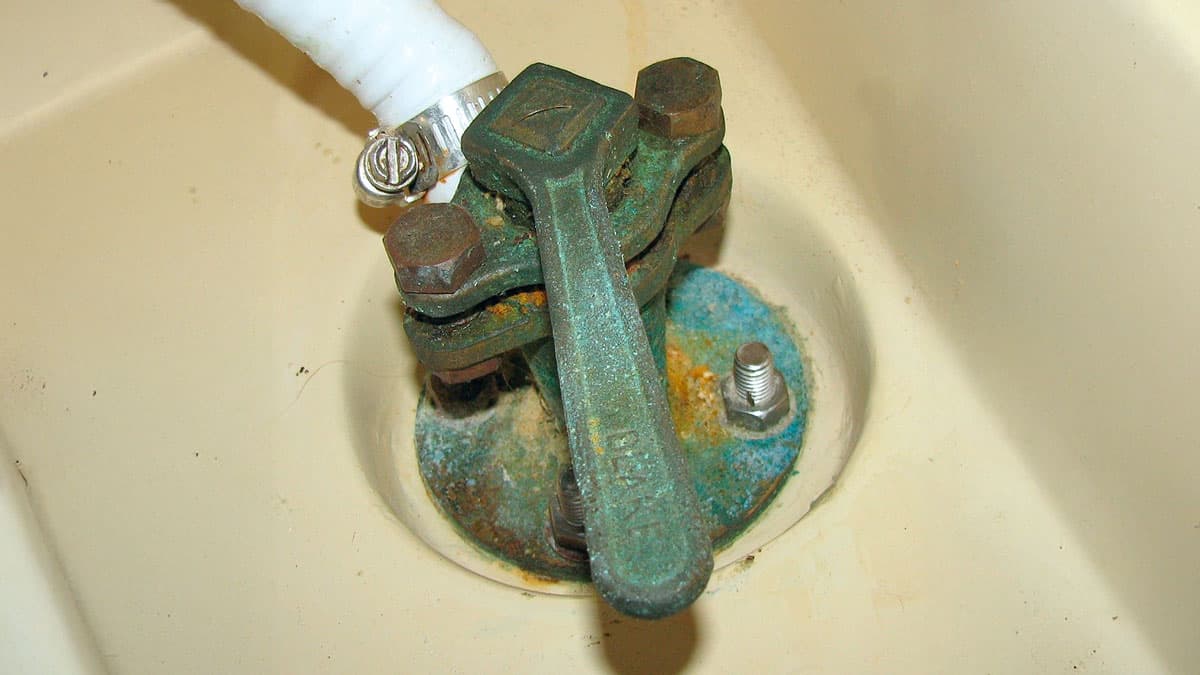
In marinas with shared shore power infrastructure and dense fleets, electrically connecting through-hull fittings to a vessel’s bonding system can create unintended galvanic couples that accelerate corrosion on fittings such as Blakes seacocks and on stainless steel fasteners.
Key findings and practical answer
Electrically bonding metallic items inside the hull with heavy copper cable is a well-intentioned practice intended to provide a common reference and, when combined with sacrificial anodes, cathodic protection. In practice, on most recreational boats the arrangement often fails to meet the spatial and electrical requirements for effective cathodic protection. The result: nearby dissimilar metals can form local galvanic cells, causing one fitting to corrode at the expense of another.
Experienced surveyors have reported instances where owners who fitted stainless steel bolts to seacocks, or who tied seacocks into an internal bonding system, later observed corrosion or unexpected “pinking” on dezincification-resistant (DZR) brass components. The pink hue can be a superficial sign of surface reaction but is not always a sign of structural dezincification.
📚 También te puede interesar
How bonding can backfire
- Local galvanic cells: When two dissimilar metals are electrically connected in the presence of an electrolyte, the more anodic metal may corrode preferentially.
- Incorrect anode placement: Effective cathodic protection requires the anode to be able to “see” the protected metal. Inside-hull bonding often prevents that.
- Stainless steel bolt exposure: Bolt heads that contact seawater or external strainers can become anodic or cathodic relative to adjacent brass bodies, depending on the local electrochemical environment.
Practical inspection and maintenance guidance
Owners and charter operators should adopt a pragmatic inspection routine. Minor surface pinking on a valve cone that can be abraded away is typically harmless, but obvious red discoloration and loss of section indicate true dezincification and require immediate replacement.
| Issue | Typical sign | Recommended action |
|---|---|---|
| Superficial pinking on valve cone | Thin, easily abraded pink film | Lightly abrade, inspect for red network; monitor at intervals |
| Structural dezincification | Distinct red coloration, flaking, loss of strength | Remove and replace with DZR or alternative alloy immediately |
| Corroding stainless bolts | Pitting or white rust on heads, loosening | Assess galvanic couple, consider isolating or using compatible fasteners |
Checklist for surveyors and owners
- Visually inspect seacocks and adjacent fasteners for discoloration and mechanical integrity.
- Check whether bolt heads or flanges are externally exposed to seawater.
- Determine if seacocks are tied into an internal bonding network and whether that network is connected to external anodes or shore earth.
- Test for continuity and measure potential differences where possible to identify galvanic activity.
- Where doubt exists, remove and clean components, re-bed with appropriate sealant, and monitor over time.
Case examples and fleet context
Real-world observations illustrate nuances. Many Sadler yachts fitted with Blakes seacocks use countersunk stainless bolts bedded in sealant and have remained problem-free for decades. One owner reported no issues after 40 years, indicating that correct installation and absence of exposed flanges can prevent galvanic problems even when stainless fasteners are present.
Conversely, when bolt heads or external strainers create an exposed contact point, galvanic cells are more likely. In such situations, surveyors like Vyv Cox have documented minor pinking on toilet outlet cones — usually superficial — while other examples show more serious dezincification where the alloy has lost strength.
Historical background and material science brief
The problem of dezincification was identified early in the 20th century as brass alloys lost zinc in seawater environments, leaving a porous copper-rich structure. The development of dezincification-resistant (DZR) brass in the post-war years significantly reduced susceptibility by adjusting composition and grain structure. DZR performs well in most marine environments but is not absolutely immune: poor installation, stray currents, and galvanic coupling can still produce localized attack or surface staining.
Historically, the marine industry moved from simple metal combinations to codified standards for through-hull fittings, backed by survey regimes and improved alloy specifications. The modern approach emphasizes correct material selection, installation practice, and the separation of interior bonding from parts intended to be protected only by external anodes.
Regulatory and operational implications for charters and marinas
For charter fleets and marina operators, understanding these issues is a maintenance and safety priority. Unexpected corrosion can lead to leaks, downtime, and costly emergency haul-outs, adversely affecting sailing schedules and guest safety. Fleet managers should adopt consistent policies on bonding, fastener selection, and on-boat electrical work to avoid fleet-wide vulnerabilities.
Recommendations and mitigation strategies
To reduce risk:
- Prefer DZR brass for seacocks and avoid mixing dissimilar metals without insulation or isolation.
- Avoid tying through-hull seacocks into an internal bonding bus unless a qualified marine electrician confirms effective cathodic design.
- Where stainless fasteners are necessary, ensure heads are beneath the hull surface or isolated from seawater exposure.
- Maintain sacrificial anodes correctly sized and positioned on the hull exterior so they can “see” external fittings.
- Schedule regular inspections and include seacock checks in pre-charter checklists to minimise charter cancellations and safety risks.
Quick decision flow for a seacock showing pinking
- If pink film rubs off easily and no structural change — clean and document.
- If coloration reveals red grain structure or loss of metal — replace with DZR or approved alloy.
- If stainless bolts show pitting — evaluate for galvanic coupling; replace or isolate fasteners as required.
Properly managed, these measures protect hull integrity and reduce the chance of in-service failures that can interrupt yachting itineraries, charter operations, or recreational boating activities in bay, gulf, or open-ocean destinations.
In summary, bonding seacocks is not a universal good: it can unintentionally promote galvanic corrosion unless cathodic protection principles are correctly applied and anodes are appropriately positioned. Owners should prioritise correct materials and installation practice, regular inspection, and a cautious approach to interior bonding. For charter operators and captains, proactive maintenance reduces downtime and keeps boats available for rental, sale, or private cruising.
GetBoat offers a global marketplace for renting sailing boats and yachts; for anyone planning charters, beach holidays, lake weekends or ocean passages, the platform can help find the right vessel. Whether you’re booking a day sail, a yacht charter with a captain, a luxury superyacht or a modest boat for clearwater fishing and boating activities, GetBoat.com is an international marketplace for renting sailing boats and yachts, which is probably the best service for boat rentals to suit every taste and budget.


