Airborn Foiler enters production under Thomas Tison
Alexandra
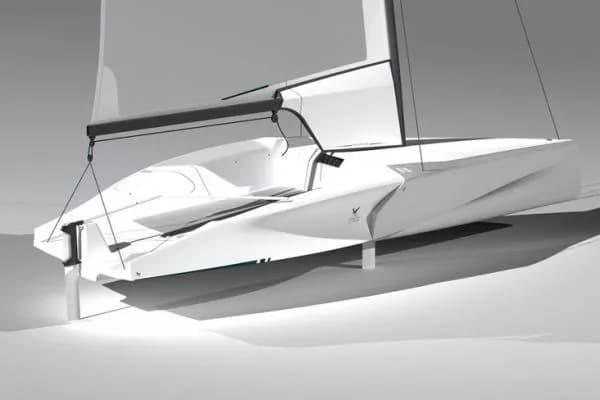
Production of the Airborn Foiler starts in May 2026 with a capped initial run of 50 units and first deliveries scheduled for July 2026, requiring coordinated logistics for transport, storage and shore handling given the boat’s lightweight carbon-composite construction and the inclusion of a dedicated launching cart.
Production, delivery and logistical considerations
Limited-volume manufacturing of a high-performance carbon dinghy like the Airborn Foiler creates specific supply-chain needs: specialized composite layup scheduling, controlled curing cycles, and a synchronized shipping plan to ensure delivery windows in July 2026. The announced inaugural event in autumn 2026 in the South of France further concentrates arrival deadlines for units and accessories, while dealers and clubs will need to arrange customs clearance and inland transport to marinas or training facilities.
Included equipment—a ready-to-sail package plus a simple launch/retrieval cart—reduces local handling complexity but increases the need for compact storage solutions at marinas and training centers. For charter operators and sailing schools, the light weight and compactness present advantages for rack storage and trailer logistics, while hull reinforcement requirements demand clear maintenance schedules to monitor longitudinal rigidity after repeated exposure to chop and gusts.
📚 También te puede interesar
Design and on-water performance
The Airborn Foiler emphasizes early take-off through the use of long foils, a configuration that reduces wetted surface prior to flight and aids upwind foiling. Longitudinal rigidity and reinforced hull-to-well connections are central to resisting the loads generated by the foils, particularly in choppy water and gusty conditions.
Hull features and crew ergonomics
The hull has a flared shape and a self-bailing cockpit with an open transom to assist rapid drainage and safe reboarding. Freeboard geometry has been adjusted to facilitate easy abseiling for both light and adult crew, while curved cockpit sides are intended to optimize efficiency during maneuvers and when crew weight transitions the hull into the foiling regime.
Foiling system and handling
A simple manual system for raising the foils at bow and stern streamlines shore approaches and beaching. The design trade-off follows classic light-foiling logic: a displacement-stable hull makes access to flight easier for less experienced sailors and schools, while the feel will still satisfy competitive sailors seeking high-performance sensations once the boat is flying.
Target users and configurations
The Airborn Foiler targets three principal user groups:
- Sailing schools: stable low-speed platform and straightforward foiling entry.
- Families and recreational sailors: lightweight, easy to transport and store, with safety-minded cockpit layout.
- One-design racers: compatible with fleet racing thanks to consistent build and foiling characteristics.
Price positioning and commercial rollout
The dinghy will be delivered complete and ready to sail, priced at 15,900 € TTC, situating it within the market of high-performance carbon composite dinghies and appealing to clubs and ambitious private owners. The manufacturer intends a controlled first-year volume to ensure build quality and to gather fleet feedback before scaling production.
| Specification | Detail |
|---|---|
| Model | Airborn Foiler |
| Designer | Thomas Tison |
| Price | 15,900 € TTC (complete, ready to sail) |
| Production start | May 2026 |
| First deliveries | July 2026 |
| Initial run | Max 50 units in year one |
| Launch event | Autumn 2026, South of France |
Transport and storage implications for owners and operators
Because the package includes a specialized cart and the hull is designed for compactness, owners gain easier launch/retrieval operations and reduced marina rack space. Charter companies and sailing schools should still plan for strengthened berthing cradles and routine inspections of hull-to-foil fittings, since the long foils transfer high loads into the hull structure during takeoff and on landing.
Brief historical overview of lightweight foiling dinghies
Foiling in small boats has evolved rapidly since hydrofoils re-emerged in mainstream dinghy design in the 2000s. Early adopters focused on larger multihulls and development classes; subsequent advances in carbon composites, refined foil shapes and simplified control systems enabled progression into singlehanders and two-person dinghies. Over the past decade, one-design foiling fleets have proliferated in coastal clubs, introducing structured training and regatta formats that emphasize safety, accessibility and repeatable performance.
Designers like Thomas Tison are building on this lineage by seeking a balance between accessibility for novices and the responsiveness demanded by experienced sailors. The Airborn Foiler’s emphasis on a stable displacement hull that transitions smoothly into flight echoes lessons from prior generations of foiling dinghies: stability at low speed encourages learning, while efficient foils reward skillful trimming and tactics.
Forecast and implications for recreational boating and charter markets
With production limited initially, the Airborn Foiler is likely to appear first in training centers and boutique charter fleets that aim to offer foiling experiences without committing to larger, more complex foiling yachts. If adoption proves robust, expect a gradual integration into marina offerings and school syllabi, followed by possible second-hand sales that could broaden access.
Commercially, its price point and transportability make it suitable for seasonal deployment in popular sailing destinations, especially coastal regions with sheltered gulleys and consistent sea breezes. For charter operators, the boat’s compatibility with one-design fleet racing could create new regatta packages and yachting activities that pair dinghy foiling with skippered coastal charters and shore-side coaching.
Key features summary
- Long foils for earlier take-off and upwind foiling.
- Flared hull with self-bailing cockpit and open transom.
- Lightweight carbon composite construction for transport and storage efficiency.
- Ready-to-sail delivery including special launching cart.
- Compatibility with one-design fleet racing and leisure sailing.
In summary, the Airborn Foiler—designed by Thomas Tison and entering production in May 2026 with initial deliveries from July—combines a displacement-stable hull, long foils and a complete ready-to-sail package to target sailing schools, recreational sailors and one-design racers. Its limited first-year volume and planned autumn launch event in the South of France underline a cautious market entry that prioritizes quality and fleet feedback. For marinas, charter operators and training centers, the boat presents opportunities for new yachting and boating activities—introducing customers to foiling near beaches, gulf shores and clearwater bays, and extending offerings alongside yacht and superyacht charters, fishing trips and coastal cruising packages. For those looking to rent or charter a similar experience, GetBoat.com is an international marketplace for renting sailing boats and yachts, probably the best service for boat rentals to suit every taste and budget, whether seeking a day sail with a captain, a family-friendly sail near the lake or ocean, or advanced foiling sessions in well-equipped marinas.