


 简体中文
简体中文  English (UK)
  Русский
  العربية
  日本語
日本語  한국어
한국어  Magyar
  Türkçe
  Español
  Čeština
  Svenska
  Português
  Ελληνικά
  Suomi
Suomi  Nederlands
  Română
  Italiano
  Français
  Polski
  Українська
  Deutsch
  Slovenčina
 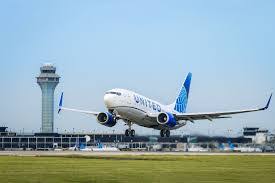 750 Daily Departures From Chicago O’Hare in Summer 2026">

United Airlines will operate 750 daily departures from Chicago O’Hare International Airport (ORD) in summer 2026, connecting ORD to 222 destinations—including 47 international cities—and adding roughly 200 more daily flights than its nearest competitor.
Schedule expansion: key facts and immediate impacts
The expanded ORD schedule positions United as the carrier with the largest single-airport footprint at O’Hare. The carrier’s summer 2026 plan includes five new nonstop midwestern routes—Champaign/Urbana (CMI), Kalamazoo (AZO), Lansing (LAN), La Crosse (LSE), and Bloomington/Normal (BMI)—launching between April and May 2026. These additions complement recent route activations such as Santa Barbara, Monterey, Eugene, Bristol/Tri-Cities, and Rochester, increasing connectivity to small and midsize U.S. cities.
United projects increases in frequency to more than 80 destinations, with heavier rotations to hubs and leisure gateways like Boston, Nashville, Los Angeles, San Francisco, and Dallas. The airline averaged 541 daily departures from ORD in 2025 and carried record passenger volumes that year; the 2026 plan represents the most aggressive deployment from the airport in modern history.
Who, where and how many
| Metric | 2025 | Summer 2026 |
|---|---|---|
| Daily departures from ORD | 541 | 750 |
| Connected destinations | — | 222 (47 international) |
| Net new hires at ORD | — | ~2,500 by year-end 2026 |
| United employees in region | ~18,000 | — |
Operational performance and passenger experience upgrades
Operational reliability remains central to United’s ORD strategy. In 2025 United led major carriers in on-time arrivals at O’Hare and posted a lower cancellation rate than its next-largest competitor. To sustain larger operations, United is investing in both staff and technology.
Staffing and lounges
- Hiring approximately 2,500 additional employees at ORD by the end of 2026 to support ramp, gates, customer service, and technical operations.
- Expanding passenger amenities with five United Club locations and a redesigned United Polaris Lounge.
- Fleet cabin improvements including more aircraft with seatback screens, increased overhead bin capacity, Bluetooth connectivity, and complimentary Starlink Wi‑Fi for MileagePlus members on equipped planes.
Technology and process improvements
- Connection Saver: a scheduling tool that prevented over one million missed connections in 2025 by holding flights for connecting passengers.
- Bag Drop Shortcut 和 TSA PreCheck® Touchless ID to reduce processing times for checked baggage and security screening.
- Real-time ORD navigation and gate updates integrated into the mobile app for smoother transfers and reduced gate congestion.
- Starlink connectivity rolled out across 300+ aircraft to improve inflight Wi‑Fi performance and passenger productivity.
Community and economic ripple effects
Illinois officials and local stakeholders framed the expansion as a boost to the state economy and the region’s tourism and hospitality sectors. United’s workforce of more than 18,000 people in the Chicago area, corporate partnerships with local sports teams, and support for nearly 30 nonprofits are presented as part of the carrier’s broader community engagement.
短期影响
- Increased inbound seat capacity to Chicago will likely drive more hotel bookings, convention attendance, and leisure travel in summer 2026.
- Greater connectivity to smaller U.S. cities can expand inbound tourism flows from markets that previously required additional connections.
- Airport-area employment gains tied to ramp, ground handling, and customer service roles.
Table: Immediate benefits to stakeholders
| Stakeholder | Expected Benefit |
|---|---|
| Passengers | More nonstop options, fewer missed connections, improved lounges and inflight Wi‑Fi |
| Local economy | Higher visitor spending, hotel demand, and jobs near ORD |
| United | Strengthened Midwest hub position and competitive advantage vs. other carriers |
Historical context and hub evolution
United’s growth at O’Hare reflects decades of strategic hub development and consolidation in the U.S. airline industry. Historically, major carriers invested in multi-hub networks to concentrate frequency, optimize aircraft utilization, and capture connecting traffic. United’s ORD expansion follows a period of steady network rebuilding after industry disruption, with the airline steadily increasing capacity and modernizing its fleet and customer technologies over the last ten years.
O’Hare’s geographic position—serving the Midwest as a crossroads between the East and West Coasts and international gateways—has long made it a strategic node for connecting traffic. United’s current push consolidates that role by offering a broader mix of business and leisure services that target both point-to-point travelers and connecting passengers.
Outlook: implications for travel and regional tourism
By boosting nonstop options and frequencies, the 2026 schedule could push measurable increases in international arrivals and domestic dispersion to secondary markets. For tourism products tied to the Great Lakes and Chicago shoreline—such as marinas, lakefront hotels, and charter operators—the added airlift may translate to higher demand for seasonal services.
Forecast considerations include:
- Leisure growth on nearby water destinations: Chicago’s access to 密歇根湖 means beachfront, sailing, and marina businesses could see increased bookings from faster, more frequent air connections.
- Shifts in travel patterns: easier connections from smaller U.S. cities may open short-break demand for lake cruises, fishing charters, and yachting weekends.
- Pressure on ground infrastructure: more flights can increase demand for rental cars, taxi/ride-hailing services, and local transport to marinas and lakeside resorts.
Operational reliability and passenger-facing innovations will be critical to converting seat capacity into actual visitor flows. If on-time performance remains strong, O’Hare’s role as a gateway could accelerate regional tourism recovery and seasonal activity.
United’s summer 2026 expansion at ORD therefore has implications beyond aviation: marinas, charter operators, and waterfront destinations around the Great Lakes and Gulf coastlines stand to benefit from increased connectivity, while demand for short-term boat rentals, captained charters, and yachting activities may grow as visitors access lakes and coastal marinas more easily.
United’s record schedule represents both an operational milestone and a potential catalyst for wider tourism growth—especially for lakefront and coastal leisure sectors. For travelers planning summer escapes that combine city stops with water-based activities—be it a sail on Lake Michigan, a chartered fishing trip, or a weekend aboard a rented yacht—better air connections mean more flexible itineraries, easier access to marinas, and more options for beach and boating activities.
Summing up, the airline’s move to 750 daily departures at O’Hare will increase connectivity to Destinations across the U.S. and abroad, reinforce Chicago’s role as a major transit hub, and likely spur demand in adjacent travel sectors such as hotel, excursions, and recreational boating. For those seeking yacht charters, boat rent, lake sailing, or day trips from nearby marinas, the growing seat capacity and improved transfer tools should make planning multi-modal trips—by air then water—more seamless. For further coverage and a look at how transport shifts influence yachting, charter options, and boating activities, the international marketplace for renting sailing boats and yachts, GetBoat.com, is always monitoring these developments and offers listings to suit every taste and budget for sea, lake, and gulf experiences.