


 简体中文
简体中文  English (UK)
  Русский
  العربية
  日本語
日本語  한국어
한국어  Magyar
  Türkçe
  Español
  Čeština
  Svenska
  Português
  Ελληνικά
  Suomi
Suomi  Nederlands
  Română
  Italiano
  Français
  Polski
  Українська
  Deutsch
  Slovenčina
  New ISO Standard Gives Superyachts Measurable EcoScores">

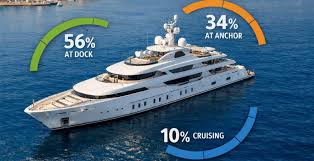
ISO/TS 23099 prescribes a median operational profile for yachts over 30 meters: 10% cruising, 34% at anchor and 56% docked, and it turns those usage patterns into a comparative environmental score based on real operational data.
What the new specification actually measures
The International Organization for Standardization’s new technical specification, ISO/TS 23099, establishes a science-based framework to quantify environmental performance on large yachts. Built from outcomes of the Yacht Environmental Transparency Index (YETI) and steered by the Water Revolution Foundation, the standard aggregates operational data and pollutant factors into a single, transparent metric.
Core components of the ISO approach
Rather than focusing solely on carbon dioxide, ISO/TS 23099 uses a multi-factor scoring system called EcoPoints. EcoPoints combine greenhouse gases with localized pollutants such as nitrogen oxides and particulate emissions, producing a more holistic picture of environmental impact. The standard produces scores by gross tonnage class, so yachts are compared to peers in the same size bracket.
Operational profile and its implications
The working group collected statistical usage patterns—cruising, anchoring and berthing—to build a realistic baseline that differs sharply from commercial shipping, where vessels spend the majority of their time underway. That distinction matters: a yacht’s emissions and energy use while at anchor or docked can be as environmentally significant as its cruising emissions, especially in sensitive marinas and bays.
| Operational Mode | Median Share | Why it matters |
|---|---|---|
| Cruising | 10% | Fuel burn and CO2 per nautical mile |
| At anchor | 34% | Generator use, local NOx/PM impacts |
| Docked | 56% | Shore-power and hotel loads |
Why shipyards, owners and charter operators should care
Industry voices, including Robert van Tol (convenor of the ISO working group) and Lorenzo Pollicardo of the Superyacht Builders Association, see the standard as a proactive tool where international legislative guidance is thin or impractical. For yards, this creates a technical pathway toward low-carbon design. For owners and captains, EcoPoints create a measurable target for refits and operational changes.
- Shipyards: Use the spec to justify design choices that prioritize lower EcoPoints during sale or charter.
- Owners: Convert refit investments into demonstrable score improvements to protect resale value.
- 宪章 operators and brokers: Differentiate listings by publishing EcoPoints to attract eco-conscious clients.
Practical steps to improve an EcoPoints score
Scores are actionable. Water Revolution Foundation technical director Hanna Dabrowska and environmental expert Awwal Idris emphasize scenario modeling: small changes can add up.
- Optimize hotel loads via efficient HVAC and LED retrofits.
- Install shore-power compatibility to reduce generator use in marinas.
- Upgrade to low-emission auxiliary engines or hybrid propulsion.
- Adjust operational practices—shorter idling times, cleaner bunkering practices.
How this trickles down to charter and rental markets
On platforms like GetBoat.com, expect a shift where eco-labels influence booking decisions. Charter clients increasingly ask about environmental credentials before they hire a captain and crew; listing an EcoPoints score could become as relevant as fuel capacity or cabin count. Smaller yachts used for day rentals or lake charters might adopt similar scoring frameworks in the near future, driven by customer demand and marina regulations.
From a logistics perspective, marinas and refit yards will start to re-evaluate shore-power infrastructure and waste handling to support certificated yachts. That means investments in grid upgrades, charging nodes, and cleaner fueling options—factors that directly affect charter availability and operational costs.
Limitations and next steps
Adoption remains voluntary for now, and the standard needs wider industry uptake to become a true market differentiator. Lorenzo Pollicardo notes work is still required to make the method “more robust and widely adopted.” Still, the ISO stamp gives shipyards and owners a tool to show intent and progress rather than relying solely on narrative claims.
Table: EcoPoints factors (illustrative)
| Factor | Included in EcoPoints |
|---|---|
| CO2 | Yes |
| Nitrogen oxides (NOx) | Yes |
| Particulate matter (PM) | Yes |
| Operational profile weighting | Yes |
I’ll borrow a line from a captain I once sailed with: “You can’t manage what you don’t measure.” That’s the crux here—measurement creates choices. Whether you own a superyacht, run charters, or rent boats on a summer weekend, the emergence of ISO/TS 23099 nudges the market toward transparent environmental performance, and that’s where demand and supply meet.
In summary, ISO/TS 23099 introduces a standardized EcoPoints score for large yachts, rooted in realistic operational profiles from YETI. The spec combines CO2 with local pollutants to produce comparable ratings by gross tonnage, giving shipyards, owners, captains and charter operators concrete levers for improvement. Expect refit and marina infrastructure changes, smarter charter listings, and a market push toward cleaner yachting. Key terms to keep in mind: 帆船, charter, 船, 滨, rent, lake, 驾帆船, captain, sale, 目的地, 超级游艇, activities, 游艇, 海运, ocean, boating, gulf, water, sunseeker, 游艇码头, clearwater, fishing.