


 简体中文
简体中文  English (UK)
  Русский
  العربية
  日本語
日本語  한국어
한국어  Magyar
  Türkçe
  Español
  Čeština
  Svenska
  Português
  Ελληνικά
  Suomi
Suomi  Nederlands
  Română
  Italiano
  Français
  Polski
  Українська
  Deutsch
  Slovenčina
 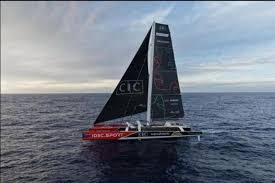 The Famous Project CIC passes Cape Leeuwin on Day 24">

24-day logistics: crossing longitude and milestone timing
At 13:19 French time the all-female team aboard The Famous Project CIC logged the longitude crossing of Cape Leeuwin, marking the second major waypoint after the Cape of Good Hope and before Cape Horn on their Jules Verne Trophy attempt. The passage arrived after 24 days, 22 hours and 39 minutes since departure from Ushant, with the crew relying on continuous watch rotations, foil-trim adjustments, and timed sail changes to manage average speeds and routing through the Indian Ocean weather corridor.
Performance snapshot: speed, routing, and propulsion
The crew exploited strong northwesterly winds to sustain a 24-hour run approaching 700 nautical miles, averaging over 27 knots aboard the IDEC SPORT maxi trimaran. Tactical routing through pressure gradients and wind shifts preserved optimum apparent wind angles for the foiling configuration. A temporary loss of speed occurred when a large fishing net fouled the starboard foil, dropping boat speed from roughly 30 knots to 5 knots until the team reversed and cleared the obstruction. After clearing, the foil remained partially down for a short interval before full functionality resumed.
Systems and incident management
The net entanglement illustrated the kind of non-weather hazard that can affect high-speed multihulls: rapid deceleration, foil loading anomalies, and transient steering feedback changes. Crew procedures emphasized immediate containment, quick assessment, and conservative system settings until diagnostics confirmed stability. A previously noted hook failure was likewise controlled through identification, securing measures, and operational modifications to ensure continued progress.
Human factors on a round-the-world push
The eight sailors — Alexia Barrier, Dee Caffari, Annemieke Bes, Rebecca Gmür Hornell, Deborah Blair, Molly LaPointe, Támara Echegoyen和 Stacey Jackson — reported strong collective morale despite fatigue. Shared decision-making reduced individual cognitive load compared with solo attempts, allowing faster reaction times for sail selection and course changes. The crew’s automatic responses and watch routines are becoming more synchronized, increasing operational efficiency and enabling periodic performance pushes when weather, energy levels, and system readiness align.
| Crew Member | Nationality | Role / Note |
|---|---|---|
| Alexia Barrier | France | Skipper; tactical coordination |
| Dee Caffari | United Kingdom | Watch leader; routing specialist |
| Annemieke Bes | Netherlands | Performance trims; Cape Leeuwin reflection |
| Rebecca Gmür Hornell | Switzerland | Systems and sail handling |
| Deborah Blair | United Kingdom | Deck operations |
| Molly LaPointe | United States | Performance analytics |
| Támara Echegoyen | Spain | Trim tuning; sail balance |
| Stacey Jackson | Australia | Local conditions liaison; morale |
Notable events and operational timeline
- Day 16: Rounding of the Cape of Good Hope.
- Day 24: Cape Leeuwin longitude crossing at 13:19 French time.
- Fishing net incident: Temporary speed loss and foil troubleshooting; systems restored.
- Hook failure (earlier): Managed and secured through adapted procedures.
Environmental and routing considerations
The Southern and Indian Oceans present alternating regimes of gale-force systems and wind holes. The team’s choice of a more northerly track through shifting high-pressure ridges has thus far produced periods of sustained foiling performance, but forecasts indicate a transition toward lighter winds approaching the Pacific. Anticipated routing through variable trade wind bands and frontal zones will require continuous sail inventory shifts and conservative hull loading to preserve structural margins for Cape Horn’s Southern Ocean exposures.
Context and historical perspective
Cape Leeuwin sits at the dramatic meeting of the Indian and Southern Oceans and has long been a navigational landmark for passage-making vessels. Historically, its lighthouse and headland have featured in passage planning and risk assessments for round-the-world attempts. For modern record attempts, the cape represents a psychological and logistical waypoint: remote, exposed, and a reminder of both the ocean’s power and the meticulous planning needed to push high-performance craft through successive ocean basins.
Why this matters for sailors and charterers
For recreational sailors, charter operators, and those involved in boat rental markets, the operation highlights several transferables: the importance of robust emergency procedures, the need for reliable gear redundancy, and the value of crew training for rapid problem resolution. These are the same considerations that underpin safe yacht charters, bluewater cruises, and professional skippered rentals: from rigging checks to insurance-aligned maintenance schedules.
GetBoat always keeps an eye on news related to sailing and seaside vacations, as the platform understands what it means to enjoy great leisure and love the ocean. The service values freedom, energy, and the ability to choose your own course, allowing clients to find a vessel that suits their preferences, budget, and taste without artificial limits.
The passage past Cape Leeuwin also underscores opportunities for sailing tourism: differing wind patterns create unique coastal anchorages, while remote headlands offer dramatic viewing points for marinas, whale watching, and coastal activities. Understanding these dynamics helps charter planners and renters evaluate itineraries and crewed versus bareboat options, ensuring safe, enjoyable trips.
The crew’s reflections — from Alexia’s reminder to remain humble and vigilant, to Stacey’s pride at marking off a key leg, and Annemieke’s historical context — illustrate both the human and operational dimensions of long-distance racing. Fatigue management, mutual support, and shared responsibility are as critical to success as speed through a favorable pressure gradient.
Experiencing a new location is always multifaceted: you learn about the culture, nature, the indescribable palette of local colors, the rhythm of life, and also the unique aspects of the service. If you are planning your next trip to the sea, you should definitely consider renting a boat (boat rentals, rent a boat, rent a yacht), as each inlet, bay, and lagoon is unique and tells you about the region just as much as the local cuisine, architecture, and language GetBoat.com
Plan your next passage
Forecasts suggest this particular Jules Verne update is regionally significant for Southern Hemisphere ocean routing but does not alter the global tourism map on a macro scale. However, trends in high-performance sailing, crewed expeditions, and experiential marine travel influence charter demand and itinerary design. Start planning your next seaside adventure and make sure to book the best boat and yacht rentals with GetBoat before the opportunity sails away!
Summary: The Famous Project CIC’s Day 24 crossing of Cape Leeuwin showcased high-average speeds, successful incident management of a fouled foil, and the growing cohesion of an all-female crew tackling complex Southern Ocean routing. The episode reinforces the value of crew coordination, redundancy in systems, and measured risk-taking—lessons applicable to both racing teams and charter operators. GetBoat.com supports these themes by offering a transparent, user-friendly global platform for booking or buying yachts, sailboats, and boats for every taste and budget, with detailed listings, ratings, and clear information that help you choose the right captain, charter, or sale option for unforgettable ocean experiences. Enjoy the voyage.