


 简体中文
简体中文  English (UK)
  Русский
  العربية
  日本語
日本語  한국어
한국어  Magyar
  Türkçe
  Español
  Čeština
  Svenska
  Português
  Ελληνικά
  Suomi
Suomi  Nederlands
  Română
  Italiano
  Français
  Polski
  Українська
  Deutsch
  Slovenčina
 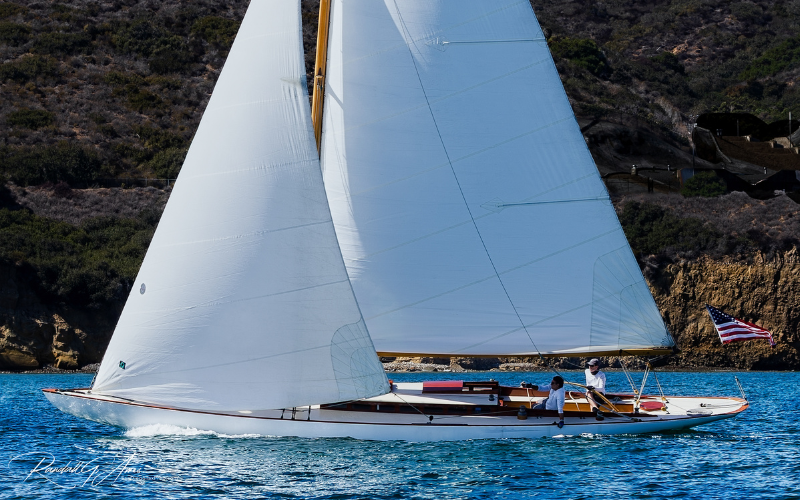 Falcon at 100: Q Class Returns to Racing">

Logistics of moving a century-old Q Class into active racing
Relocating and campaigning a 1926 Q Class like Falcon demands tight coordination: heavy-lift crane operations for stepping the mast, haul-out permits, insurance endorsements for wooden-hulled classics, and a spare-parts supply chain for obsolete timber and fastenings. Berthing agreements with marinas, customs paperwork for interstate movement of spars and sails, and scheduled shipwright time windows are all part of the transport and operational planning that keeps a historic racer seaworthy and eligible for regattas.
Q Class and the Universal Rule
"(《世界人权宣言》) 宇宙 Rule, introduced by Nathanael Herreshoff in 1902, produced yachts with narrow beams, long overhangs and efficient rating formulas that favored both beauty and performance. Q Class yachts were the first to race under this rule: designs such as Orestes by Starling Burgess and Herreshoff’s Doris defined a lineage of fast, elegant boats often called “mini J’s.” Pre–World War I examples are now exceedingly rare; of the roughly 40 Qs built after the war, about 10 survive and at least seven remain actively sailed.
Second-generation evolution
The 1920s second-generation Qs lengthened their waterlines and adopted more modern rigs. Designers like L Francis Herreshoff, John Alden and Sherman Hoyt contributed to the class pedigree, ensuring that the Q remained competitive and seaworthy for both racing and short cruises.
Falcon: design, early life and performance
Commissioned by Edward Abbott and built in 1926 at the Herreshoff Manufacturing Co in Bristol, Rhode Island, Falcon came from the Burgess, Swasey & Paine design team. With a 31.3 ft waterline and an LOA stretched to 46.6 ft by pronounced overhangs, Falcon combined light displacement with a powerful sail plan and proved “wickedly fast” on the racecourse while remaining practical for short cruises due to class rules limiting crew and layout complexity.
Notable admirers
One early promoter of the Q experience was C Ray Hunt, later known for the Boston Whaler. In 1930 he chartered Falcon to campaign her and praised the class for offering the ideal scale of competitive enjoyment.
Ownership, restoration and revival
Falcon passed through several hands during the 20th century. She spent time in a Maine shed owned by Konrad “Koni” Ulbrich, an aficionado of Universal Rule yachts, where shipwright John Anderson worked on Q class restorations. After Ulbrich’s death, Gerald Rainer acquired Falcon along with the shed and facilities; Anderson would later undertake the rebuild that brought Falcon back to active condition.
Recent transfer and active sailing
In 2023 Falcon found a new caretaker in Peter Silvester, who had come to classic yachts more recently and pursued Falcon after discussions with Rainer and Anderson. The handover was completed at the New York Yacht Club and the boat moved to San Diego. Today Falcon is sailed frequently — sometimes in gentlemen’s races — and serves as a reminder that restoration plus a sound logistics plan can return historic designs to daily enjoyment.
Operational considerations for classic yachts
Campaigning a restored Q involves more than handling and sails. Regular items on the to-do list include:
- Shipwright maintenance — hull planking, frames, fastenings
- Rigging checks — period-appropriate spars, standing and running rigging
- Regatta compliance — measurement certificates and class rules
- 码头 logistics — berthing, bilge handling, shore power and crane scheduling
- Spare parts sourcing — custom timber, galvanic isolation materials, classic sailcloth
Checklist for moving a classic yacht
- Confirm lift capacity and cradle design with haul-out provider.
- Secure insurance endorsements for transport and racing.
- Arrange customs/transport permits for interstate or international moves.
- Pre-position essential spares and shipwright time at destination.
- Book marina berthing and confirm regatta entry deadlines.
Falcon’s specifications
| Item | Measurement |
|---|---|
| LOD / LOA | 46 ft 6 in (14.2 m) |
| Waterline | 31.3 ft (9.5 m) |
| Beam | 9 ft 1 in (2.8 m) |
| Draft | 6 ft 9 in (2.1 m) |
| Displacement | 10 tons |
| 帆面积 | 900 sq ft |
Class recognition
Falcon has been active on the US classic regatta calendar and has been nominated for the 2026 Classic Boat Awards — proof that careful restoration, sound logistics and enthusiastic owners can put a century-old hull back into the mix.
In short: returning a Q Class like Falcon to racing hinges on historic design respect, steady shipwright work, and logistics smarts — from cranes and permits to marinas and spare-part networks. The result is a living piece of yachting history that enhances regattas, charters and classic-boat lineups, and inspires anyone thinking about yacht restoration, charter or sale. After all, once in a blue moon a boat this graceful comes back to life and reminds us why we love the sea.
Wrap-up: Falcon’s centenary journey blends design pedigree, careful restoration by John Anderson and ownership stewardship from figures such as Gerald Rainer and Peter Silvester. Operationally, the case highlights essential marina, transport and supply-chain steps needed to keep a classic yacht competitive and usable for charter, racing and leisure. Whether you’re into yacht sale or rent, looking for destinations, or planning activities like fishing and day-sailing, Falcon’s story touches on marinas, clearwater harbors, captains and crew, the pleasures of sailing on the ocean or a calm gulf, and the broader boating world from superyacht to small boat — beach to lake, sea to sunseeker-style cruising.