


 简体中文
简体中文  English (UK)
  Русский
  العربية
  日本語
日本語  한국어
한국어  Magyar
  Türkçe
  Español
  Čeština
  Svenska
  Português
  Ελληνικά
  Suomi
Suomi  Nederlands
  Română
  Italiano
  Français
  Polski
  Українська
  Deutsch
  Slovenčina
 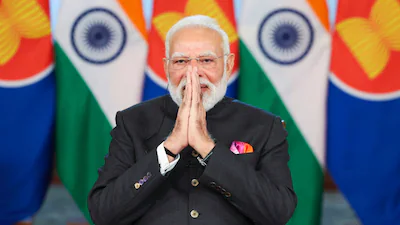 How Modi’s ASEAN Initiatives Strengthen Security, Knowledge, and Travel Connections">

Enhanced ASEAN Relations through Multifaceted Diplomacy
The diplomatic engagement between India and the Association of Southeast Asian Nations (ASEAN) has evolved significantly, extending beyond traditional security concerns to foster deeper connections among people, students, and tourists. With Prime Minister Narendra Modi’s leadership, India’s diplomacy in Southeast Asia emphasizes a broadened strategy that integrates regional security, educational exchange, and tourism growth.
Strengthening Security and Regional Cooperation
India’s commitment to regional security under Modi’s administration is evident through its active participation in initiatives like the ASEAN Outlook on the Indo-Pacific (AOIP) and the Indo-Pacific Oceans Initiative (IPOI). These frameworks promote collaborative naval exercises, coordinated patrols, and information sharing with ASEAN countries, enhancing maritime security.
Cybersecurity and counter-terrorism efforts have also been intensified, positioning India as a key regional player. Beyond traditional military cooperation, India has supported ASEAN defense capabilities through technology exchanges and defense exports. The introduction of a Defence Line of Credit to ASEAN nations highlights India’s role as a facilitator of regional self-reliance in security.
Moreover, India extends its security paradigm to include human security, demonstrated by disaster management collaborations. The Indian National Disaster Response Force (NDRF) works closely with the ASEAN Humanitarian Assistance Centre (AHA Centre) to address natural calamities such as floods and typhoons. Initiatives like the Coalition for Disaster Resilient Infrastructure (CDRI), involving ASEAN partners like Indonesia, the Philippines, and Singapore, promote resilient infrastructure to withstand environmental challenges.
Building a Knowledge Bridge through Education
India’s diplomatic outlook also embraces knowledge exchange, cultivating a long-term bond with ASEAN through education. This includes facilitating the mobility of students both to and from India, fostering a reciprocal relationship that transcends simple academic exchanges.
Efforts to gain mutual recognition of academic qualifications have paved the way for Indian graduates to explore professional and educational opportunities across ASEAN countries more freely. This removes previous barriers and significantly enhances the credibility and mobility of Indian degrees.
Scholarships and fellowships play a central role in this educational synergy. Notably, India offers 1,000 PhD fellowships at premier institutions such as the Indian Institutes of Technology (IITs) for ASEAN nationals, investing in top-tier STEM talent. At the same time, Indian students gain access to scholarships for study at leading universities in Singapore and Malaysia, promoting a two-way flow of knowledge.
Efficient visa processes, such as e-visa facilities for students, streamline international academic exchanges. Programs sponsored by bodies like the Indian Council for Cultural Relations (ICCR) further enhance accessibility and reinforce India’s reputation as a hub for international education.
Tourism as a Soft Power Instrument
Tourism between India and ASEAN nations has transformed into a vital conduit for enhancing people-to-people ties. Policy measures including the introduction of e-visas have simplified travel, enabling ASEAN tourists to visit India with greater ease and spontaneity. Similarly, new flight connections from Indian tier-2 cities to major ASEAN hubs have made travel more accessible, decentralizing tourism and opening it up to broader demographics.
The Indian tourism sector has also responded by offering affordable package tours tailored for middle-class Indian travelers. This surge has economic significance, as millions of Indian tourists visit ASEAN countries each year, contributing billions of dollars to local economies in Thailand, Singapore, Malaysia, and beyond.
Both sides have embraced sustainable tourism in line with their Joint Leaders’ Statement on Sustainable Tourism endorsed in 2024. Commitment to ecologically friendly travel, promotion of inclusive tourism, and initiatives such as reducing single-use plastics underscore a shared vision for responsible tourism that preserves cultural and natural heritage.
ASEAN and Regional Integration: A Historical Overview
ASEAN was founded in 1967 by five Southeast Asian nations, including Malaysia, Indonesia, the Philippines, Thailand, and Singapore, with Brunei joining in 1985. Initially focused on security and political stability, ASEAN gradually expanded its scope to economic collaboration and cultural exchange.
Southeast Asia’s journey towards deeper integration reflects a pragmatic approach, with member countries pursuing regional economic cooperation and development. Despite some challenges, ASEAN has maintained a relatively stable political environment, attracting foreign investment and fostering economic growth.
The economic community aims at free flow of goods, services, investment capital, and skilled labor within its member states, stimulating intra-regional tourism and trade. This has significant implications for sectors such as hospitality and travel, requiring improvements in communication, languages, cultural understanding, and infrastructure.
In recent decades, the rise of ASEAN countries as global and regional players has been propelled by improving connectivity, education, and tourism, laying the groundwork for extensive people-to-people engagement and economic interdependence.
Significance for International Tourism and Boating
The India’s expanded diplomatic engagement with ASEAN is reshaping tourism dynamics in the Indo-Pacific region. Enhanced connectivity, simplified travel formalities, and cultural exchanges are encouraging greater movement of people for leisure, education, and business.
This growth in regional tourism is complemented by the natural allure of ASEAN destinations—rich in beaches, marinas, and unique cultural experiences—that attract an increasing number of visitors. Sailing and yacht chartering in ASEAN waters stand to benefit from these developments, as accessibility and security issues improve, opening up these maritime corridors for recreation and tourism.
As both regions value sustainable tourism and environmental protection, these efforts contribute favorably to maintaining pristine water bodies and beach environments that are vital for boating activities, fishing, and luxury yacht experiences.
Summary Table: Modi’s Multifaceted Approach to ASEAN
| Focus Area | Key Initiatives | Impact on ASEAN Relations |
|---|---|---|
| Security | Maritime patrols, cybersecurity, defense cooperation, disaster management | Enhances regional stability and builds trust through shared security efforts |
| Education | Mutual recognition of degrees, scholarships, academic exchanges, streamlined visas | Builds long-term people-to-people links cultivating future leaders and professionals |
| Tourism | E-visa, flight connectivity, sustainable tourism initiatives, package tours | Boosts economic ties and cultural exchange, promoting inclusive and eco-friendly travel |
结论
India’s comprehensive diplomatic engagement with ASEAN under Prime Minister Modi intertwines security, education, and tourism to foster a robust and sustainable partnership in the Asian Century. The emphasis on people-to-people connectivity through knowledge sharing and travel complements traditional state-to-state relations, offering new avenues for cooperation and mutual growth.
For enthusiasts of sailing and boating, these developments translate into safer, more accessible, and attractive waters across the region. Enhanced connectivity and tourist influx encourage growth in yachting and charter activities, while the focus on sustainable tourism secures pristine environments essential for boating and marine leisure.
To explore yacht and sailing boat rentals that perfectly suit your travel desires in vibrant ASEAN destinations and beyond, consider GetBoat.com, an international platform offering a wide variety of charter options tailored to every taste and budget.