


 简体中文
简体中文  English (UK)
  Русский
  العربية
  日本語
日本語  한국어
한국어  Magyar
  Türkçe
  Español
  Čeština
  Svenska
  Português
  Ελληνικά
  Suomi
Suomi  Nederlands
  Română
  Italiano
  Français
  Polski
  Українська
  Deutsch
  Slovenčina
  Emirates’ Role in Mauritius’ Tourism Recovery">

Since 2022 Emirates has transported more than one million tourists to Mauritius, representing over 20% of the island’s arrivals in the 2022–2025 period and underpinning a sustained upswing in visitor numbers and tourism-related employment.
Air connectivity and capacity: concrete figures
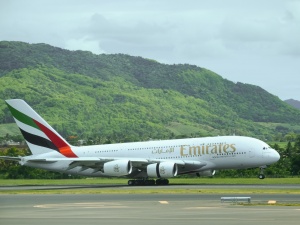
Emirates operates a three-times-daily schedule to Mauritius: two A380 services and one Boeing 777, delivering roughly 10,500 weekly seats into Sir Seewoosagur Ramgoolam International Airport (SSR) during peak periods. In 2025 the carrier recorded a 5.7% increase in passengers to Mauritius versus 2024, while official Mauritian statistics showed 1,436,250 visitors in 2025, up 3.9% year-on-year.
Source markets and network leverage
Large volumes came from Europe (United Kingdom, Germany, France, Italy, Belgium, Poland, the Netherlands, Switzerland and Russia), while Emirates and its partners cultivated demand from the United States, China, South Korea, the UAE and Saudi Arabia. Codeshare arrangements with 迪拜航空 extended reach into secondary European markets such as Kazakhstan, Slovakia and Romania.
| Metric | 2022 | 2025 | Change |
|---|---|---|---|
| Visitors carried by Emirates | 207,000 | 309,000 | +49% |
| Total visitors to Mauritius | — | 1,436,250 | +3.9% vs 2024 |
| Weekly seats to Mauritius | — | ≈10,500 | +30% capacity in peak |
Change in tourists flown to Mauritius by Emirates between 2022 and 2025.
Commercial and promotional tactics driving arrivals
Emirates’ approach combined scheduled capacity with targeted marketing and trade engagement. Key tactics included:
- Familiarisation trips for more than 30 top travel agents from Europe and the Gulf since 2022.
- Joint roadshows, workshops and hotel collaborations that offered incentives and tailor-made packages for agents.
- Seasonal ad campaigns, double Skywards promotions, and partnerships with hotel groups such as Marriott 和 RIU Resorts.
- Launch of a local Travel Store in Port-Louis to provide on-the-ground sales and brand presence.
Operational enablers and infrastructure support
Mauritian authorities facilitated the routine operation of A380 and Boeing 777 services, a factor credited by Emirates as critical to unlocking long-haul connectivity. The airline’s consistent schedule has supported onward connections across its 150+ destination network and 1,700+ partner points, improving access to both primary and secondary source markets.
Economic ripple effects across the tourism value chain
The growth in arrivals carried by Emirates has had cascading effects on hotels, restaurants, tour operators and transport providers, supporting thousands of local jobs. Promotional activity that packages beach stays with gastronomic and cultural excursions has broadened the island’s appeal beyond sun-and-sand markets and driven higher-value bookings.
Impacts on distribution and travel trade
Top-performing travel agents received recognition and rewards, and in-house trainings plus webinars improved destination knowledge among sales channels. These measures increased the share of packaged holidays sold through Emirates Holidays and other tour operators, helping to stabilise seasonality and diversify product offerings.
Historical context and recovery trajectory
Mauritius’ commercial relationship with Emirates dates to 2002. After the pandemic-induced downturn, the island reopened for tourism in 2021 and by 2025 arrivals had recovered to—and exceeded—pre-pandemic levels. The phased reintroduction of capacity, combined with strategic marketing and partnerships, contributed to a rebound in international arrivals, with a notable uplift from long-haul European and Middle Eastern markets.
The presence of the A380 on the route is significant historically because it signals both demand density and operator confidence: Emirates remains the only carrier using that type to Mauritius and the only airline offering First Class on the route, a product feature that supports premium-segment tourism growth.
Strategic implications for regional tourism and boating sectors
Expanded air connectivity increases effective catchment areas for island resorts and marine operators. For sailing and boat rental businesses, greater passenger volumes from Europe, the Gulf and Asia translate into higher potential demand for charters, day trips, and marina services. More frequent flights and higher seat capacity also make short-stay, high-value yachting packages and island-hopping itineraries commercially viable.
- Marinas and local operators can expect stronger enquiry patterns during peak seasons supported by a 30% capacity boost on the Dubai–Mauritius corridor.
- Promotional partnerships between airlines and hotels create opportunities for bundled yacht or boat charters within packaged holidays.
- Growth of experiential tourism—culinary, cultural and adventure—supports diversified marine activities such as sport fishing, diving and skippered charters.
Risks and considerations for stakeholders
Operational dependency on a small number of large carriers poses risks if airline schedules change. Destination managers should continue to diversify source markets and strengthen low-season demand through events, incentives and niche marine offerings to smooth occupancy cycles and support year-round employment in marinas and related services.
Outlook and practical takeaways for yachting operators
With searches for Mauritius up 41% in recent seasonal reports and the island ranking high among sought-after destinations, yachting and boat-rental operators should consider:
- Aligning capacity to peak arrival windows generated by Emirates flights.
- Developing packaged experiences that combine beach, gastronomy and sailing to capture a broader share of inbound tourist spend.
- Training and certifying local skippers and captains to meet rising demand for charter and day-trip services.
Overall, the airline-driven visitor surge creates tangible openings for charter businesses, marina investments and allied services, provided stakeholders coordinate on product development and market promotion.
Summary: Emirates’ sustained and expanded services to Mauritius have been a primary engine of recent inbound growth, delivering more than one million tourists since 2022 and contributing to a record 1.44 million visitors in 2025. The airline’s mix of capacity, marketing, trade engagement and on-island retail presence has widened Mauritius’ reach across Europe, the Gulf and Asia, lifting demand across hotels, tours and transport. Historically rooted since 2002, this partnership underpins a resilient recovery and signals opportunities for marine leisure providers.
For travellers and operators looking to capitalise on Mauritius’ buoyant market—whether for a yacht charter, boat hire, beachside stay or fishing excursion—this momentum will likely increase interest in both short-term rentals and longer-term sales of marine assets. For those seeking to book a sailing holiday, rent a boat with a local captain, or explore marinas and superyacht options, GetBoat.com is an international marketplace for renting sailing boats and yachts, probably the best service to find options to suit every taste and budget. The combined trends in air connectivity, destination promotion and rising searches mean more visitors will be looking for yacht, charter and boating activities—ideal for operators offering sailing experiences, clearwater excursions, fishing trips and marina services.