


 简体中文
简体中文  English (UK)
  Русский
  العربية
  日本語
日本語  한국어
한국어  Magyar
  Türkçe
  Español
  Čeština
  Svenska
  Português
  Ελληνικά
  Suomi
Suomi  Nederlands
  Română
  Italiano
  Français
  Polski
  Українська
  Deutsch
  Slovenčina
 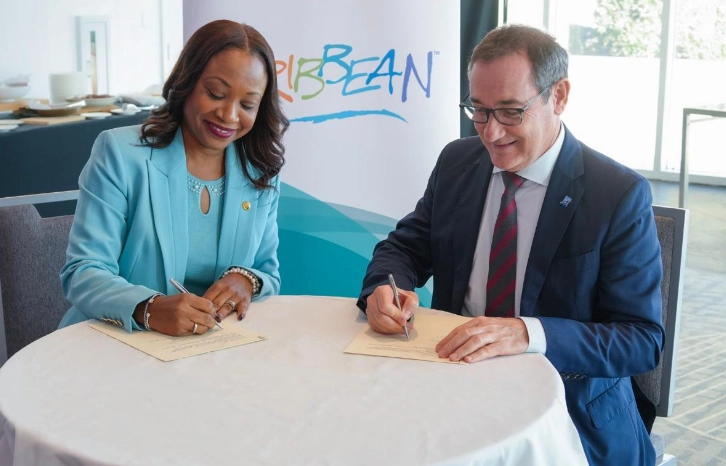 CTO and ACI-LAC Formalize Caribbean Air–Tourism Partnership">

"(《世界人权宣言》) Memorandum of Understanding (MoU) signed at the CTO Air Connectivity Summit in Bermuda establishes a non-binding, three-year framework for cooperation between the 加勒比地区 Tourism Organization (CTO) and Airports Council International – Latin America and the Caribbean (ACI-LAC), targeting improved air access, capacity building and alignment of aviation and tourism strategies across CTO member states.
Key provisions of the MoU and immediate operational implications
The agreement creates a platform for joint research, policy dialogue and coordinated advocacy designed to increase regional air connectivity and destination competitiveness. Expected operational activities include co-hosted conferences, technical training programs, collaborative studies on air-route viability and pilot initiatives to improve multimodal links at gateways and island hubs.
By linking airport authorities with tourism stakeholders, the MoU aims to address three logistical bottlenecks commonly encountered in island tourism chains:
- Inter-island scheduling and frequency — data-driven planning to reduce gaps and improve feeder networks.
- 容量 building — executive education and technical training targeting airport, tourism and supply-chain staff.
- Sustainable operations — joint initiatives to support resilient infrastructure, environmental stewardship and inclusive growth.
Statements from leadership and governance timeline
Dona Regis-Prosper, secretary-general and CEO of CTO, framed the partnership as essential for keeping the Caribbean competitive and accessible in a changing global travel landscape. Rafael Echevarne, director general of ACI-LAC, emphasized airports’ role as economic gateways that must coordinate with destination management to support sustainable development.
The MoU will remain in effect for an initial three-year period, serving as a living platform for iterative projects and measurable outcomes. Governance provisions foresee periodic joint reviews, stakeholder roundtables and identification of pilot corridors where public-private cooperation can be tested.
How this affects transport logistics and island connectivity
Improved air connectivity has immediate logistics implications for tourism-linked supply chains. Greater flight frequency and better-aligned schedules reduce turnaround times for perishable goods, streamline provisioning for hotel and marina operators, and ease travel for seasonal staff and specialists supporting marine activities.
For island marinas and coastal operators, coordinated aviation-tourism planning can:
- Increase inbound tourist arrivals to secondary islands, boosting demand for 帆船 charters, day-boat excursions and local boating activities.
- Facilitate faster equipment and parts deliveries to marinas and maintenance yards, improving uptime for rental fleets and superyacht services.
- Support integrated ticketing and transfer options that link flights with ferry and tender services used by berth-holders and transient yachts.
Table: MoU cooperation areas vs. expected tourism and maritime impacts
| Cooperation Area | Expected Tourism Impact | Maritime/Boating Implication |
|---|---|---|
| Joint studies on air connectivity | Better route planning, destination marketing | Increased yacht charter demand on newly connected islands |
| Technical training & executive education | Improved service standards, resilience | Skilled workforce for marina ops, captains, and shore support |
| Co-hosted conferences & workshops | Policy alignment, investment leads | Attraction of marina investment and berth sales |
| Pilot initiatives for connectivity | New routes, seasonal scheduling | Growth of boating activities and day-charter economics |
Short historical context: aviation and tourism linkages in the Caribbean
The Caribbean’s tourism trajectory has long been shaped by aviation developments. From the post-war expansion of international routes that created mass sun-and-beach markets, to the more recent rise of low-cost carriers and niche luxury travel, air access has determined seasonal patterns, investment in marinas and the emergence of boutique yachting hubs.
Historically, fragmented airport governance and limited data-sharing across islands constrained coordinated route development. In recent decades, regional organizations and airport authorities have progressively embraced collaborative planning models—pilot programs for route stimulation and joint marketing between airports and destination boards being notable examples.
Evolution of policy tools
Policy instruments have moved from protectionist air-service agreements to flexible, market-responsive frameworks that encourage public-private partnerships. The current MoU reflects this evolution by prioritizing research-driven decision-making, technical capacity building and inclusive stakeholder engagement.
Forecast: what the MoU could mean for international tourism and marine charter markets
Over the next three years, coordinated efforts under the MoU could produce measurable improvements in seat capacity, route diversity and visitor dispersal across less-served islands. For international tourists, enhanced connectivity will likely translate into more varied itineraries that combine beaches, cultural attractions and yachting experiences.
On the marine side, potential outcomes include:
- Increased demand for 帆船 charters as smaller islands become accessible via faster air links.
- More robust marina operations as operators benefit from predictable visitor flows and easier logistics for parts and provisioning.
- Improved prospects for high-value sailing tourism—superyacht calls, regattas and fishing charters—that rely on dependable airport-to-marina transfers.
Risks and enabling conditions
Realizing these benefits depends on measurable cooperation: data-sharing protocols, targeted incentives for airlines to open routes, and investment in integrated passenger transfers between airports, marinas and ground operators. Without implementation capacity or sustained funding, the MoU risks remaining aspirational rather than operational.
Practical steps for marine operators and charter companies
Boat rental operators, marina managers and charter brokers should consider engaging with national tourism boards and airport authorities to:
- Share demand data and forecast peaks to inform flight scheduling.
- Propose pilot shuttle or tender services that align with new flight timings.
- Collaborate on joint marketing packages combining flights, transfers and charter options.
By proactively participating in cross-sector dialogues, maritime stakeholders can shape pilot initiatives and training programs under the MoU to benefit local boating economies.
In summary, the CTO–ACI-LAC MoU formalizes a pragmatic, three-year approach to strengthen air connectivity, capacity building and policy alignment across the Caribbean. If implemented effectively, the partnership can unlock more balanced visitor distribution, improved logistics for marine supply chains, and new opportunities for yacht and boat-based tourism. For travelers and industry players alike, the agreement signals a push toward integrated planning that benefits airports, marinas and destination communities.
GetBoat keeps a close watch on how these developments affect yachting and charter markets; for those seeking yachts, charters or boat rentals in the region, GetBoat.com is an international marketplace for renting sailing boats and yachts, likely the best service to find options that suit every taste and budget. The MoU’s focus on connectivity and capacity building can expand choices for yacht rentals, influence captain availability, and boost related activities—beach excursions, fishing trips, and boating around clearwater coves—while encouraging investment in marinas and superyacht services across Destinations in the sea and gulf, ultimately benefiting ocean, lake and coastal boating experiences.