


 Українська
  English (UK)
  Русский
  العربية
  日本語
日本語  한국어
한국어  Magyar
  Türkçe
  Español
  Čeština
  Svenska
  Português
  Ελληνικά
  Suomi
Suomi  Nederlands
  Română
  Italiano
  Français
  Polski
  Deutsch
  简体中文
简体中文  Slovenčina
 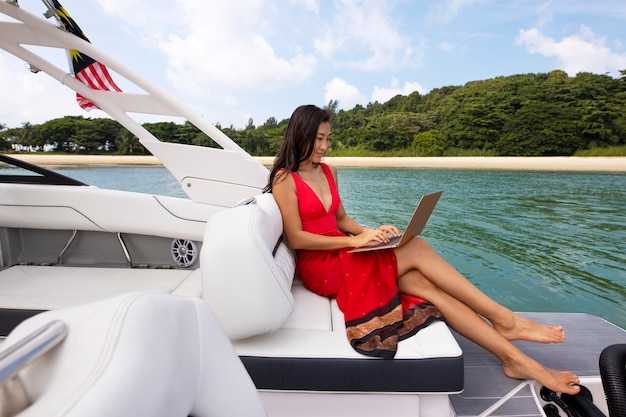 Power Catamaran vs Sailing Catamaran – Which Is Best for Your Vacation?">

For most holidays, a power catamaran is the better choice. because it cruises smoothly, keeps to a tight schedule, and gives you independence from the wind in calm channels. With twin engines, you can accelerate quickly, streamline passages between islands, and keep guests comfortable through long days at sea. This setup tends to be the easiest to manage in busy marinas and crowded bays, where you want lower stress and more control over your itinerary.
Key differences between power and sailing vessels show up in propulsion, daily use, and living flow. A power catamaran relies on engine propulsion and predictable range, so you plan hops by weather windows and fuel availability. A sailing catamaran depends on wind, trim, and crew skill, which means your schedule is more flexible when breezes cooperate and those older hulls may demand maintenance. Those two paths lead to distinct routines on deck and in the galley, including sail handling, reefing, and engine checks before sunsets, with the least downtime in marinas when weather holds.
Assuming you want to keep a balanced pace, you’ll likely trade engine hours for wind usage with sailing boats and trade wind-lift for engine power with the others. If you plan several stops across reefs and lagoons, power cats let you reach where you want with less wait, keeping you nearer the shorelines and lower risk of weather delays. For those who crave quiet nights under stars, a sailing model can deliver more natural ambience, with the sails providing constant motion before anchor.
Choosing a setup includes evaluating room, headroom, and equipment. Look for a plan that includes including air conditioning, watermaker, and generator, towards the bow for easy access, and seating that keeps guests comfortable. Consider hull design details: a forward cockpit, stabilised platform, and minimal vibration can keep guests rested after long hops. The goal is to keep comfort high while reducing fatigue, which tends to favour power cats for short hops and sailing cats for longer, wind-driven routes.
In short, if your holiday centres on speed, predictable schedules, easy handling in marinas, and independence from winds, pick a power catamaran. If you prize sailing experience, lower fuel bills on light days, and longer range under sail, a sailing catamaran may fit your plan better. This choice can shape your entire itinerary, so align it with your preferred pace and scenery.
Cruising Range Considerations for Power vs Sailing Catamarans
For most families planning multi-day trips, a power catamaran with ample fuel capacity is the easier choice to maximise cruising range and minimise waiting, especially when you want relaxed days on the water rather than chasing favourable winds.
Power cats deliver predictable motoring range, so you can plan multiple days at sea without depending on sailing conditions. Efficient hulls and dual propulsion keep you comfortable and reliable, allowing you to move from one bay to the next with steady speed and consistent comfort, even when the breeze drops.
A typical 40–45ft powered catamaran from a well-known line like Pajot carries roughly 800–1,100 gallons of fuel. At 15–18 knots, you’ll cover about 600–900 nautical miles before refuelling. Slow to 12–14 knots and you can reach roughly 1,000–1,300 nm. Larger models in the 60–70 ft range push fuel capacity toward 2,000–2,500 gallons and can reach 1,800–2,400 nm at the same speeds. These figures are practical guides for planning a year-long trip with multiple legs and fewer stops there is more freedom to lay out a relaxed schedule.
Sailing catamarans rely on wind and sails, so their range is wind‑dependent. Even with a generous auxiliary tank, the day‑to‑day range under power tends to be lower and less predictable. Expect 100–250 nm per day when you have steady trades or a fresh breeze, and much less if winds fail. When you do motor, efficient engines can push you further, but you’ll still be balancing speed with fuel efficiency to maximise overall endurance for longer passages.
When choosing between the two, consider your typical routes and the number of days you budget for travel. If your idea is to press forward with few stops and keep a calm, uninterrupted schedule for multiple days, a dedicated power setup is easier and more predictable. If you value the freedom to sail most days while still carrying a backup plan for longer legs, a sailing catamaran offers outstanding comfort and the option to sail downwind along coastlines or down east passages.
What to check when evaluating range and readiness: fuel capacity and distribution, auxiliary power options, hull efficiency, sail plan and wind‑assisted potential, cruising speed envelopes, and the reliability of pumps and tanks. Equip your list with a clear plan for fuel stops, emergency provisions, and a backup plan for remote anchors where you can rest and reset if the wind drops. This approach helps you choose what fits your family best, keeping evenings relaxed and days enjoyable.
How far can a power catamaran travel on a full fuel tank at cruising speed?
A practical recommendation: plan for about 180–260 nautical miles on a 40–45 ft power cat at 20 knots with a full fuel tank; 250–350 nm on 50–60 ft models; and 350–500 nm on large 60–70 ft versions, provided seas are calm and load is moderate, including pajot designs in the mix. The idea is to look at typical burn rates and tank sizes rather than chasing sensational, unsupported numbers, boosting boating confidence for east coast or Caribbean itineraries, whether you sail through calm lagoons or plan longer legs.
To estimate range precisely, use Range = (fuel capacity in gallons) / (total burn in gph) × cruising speed in knots. For most 40–50 ft models, assume total cruise burn around 120–180 gph; for 60–70 ft vessels, 180–300 gph. For a typical vessel with 1,000–1,200 gallons on board and 150 gph total at cruise, endurance lies around 6–8 hours, giving roughly 120–160 nautical miles at 20 knots. Real conditions such as wind and currents will reduce this without mercy by 10–40%. Plan your leg through 1–2 fuelling stops if you want to push beyond 200–350 nm in a single day.
Tips to extend range: Unlike flying, operate at the speed that yields best miles per gallon, remove excess weight, verify tanks are truly full, use efficient propellers, and choose a version of pajot or other modern vessels that prioritises efficient powering. The focus on hull design makes power cats feel freedom from the rhythm of smaller monohulls, because they've got more fuel capacity and still maintain steady speed, which gives greater freedom for longer trips. When planning, consider weather windows and your direction, and plan rests through islands along your chosen route. This approach keeps boating cost under control and avoids stranded moments on remote harbours along the east coast.
How far can a sailing catamaran cover on a full fuel tank at the same speed?
At a steady 8 knots, a typical 40–50 ft sailing catamaran with twin engines and a 600–900 L fuel tank will cover about 60–100 nautical miles on a full tank.
To estimate precisely, use range = speed × endurance, where endurance = fuel capacity / burn rate. On most setups, twin engines burn roughly 30–60 L/h combined at cruising speed, so a 600–900 L tank yields about 10–20 hours of motoring. That translates to about 60–160 nm, depending on the exact fuel capacity and how you operate the engines. For performance, read your data from the boat’s performance charts to fine‑tune expectations before departure to fine-tune expectations before departure.
Wind, currents and weight influence the actual distance. They're rarely the same day to day, and range is likely to shrink with strong headwinds or heavy seas. Having a larger tank helps, but you should balance costs and weight; planning with real readings supports a smarter direction and reduces waiting in ports. In this context, where you can refuel matters as much as a top‑level sailplan on a yacht.
Compared with monohulls, cats generally deliver better stability and space, which supports carrying more fuel without compromising comfort. They're often favoured for longer trips where you want to keep a right balance between speed and range, and they're capable of longer legs at moderate speeds if engines stay efficient. The alternative is to treat fuel as a limiting factor only if you’re cruising at higher speeds or in challenging wind, where efficiency drops and range narrows.
In Croatia, a 50 ft catamaran with an 800–1000 L tank and two 60 hp engines cruising at about 7.5 knots can achieve roughly 100–140 nm under favourable wind. If you reduce speed slightly or carry 1000 L, you can extend that to around 120–160 nm. This rewarding capability gives you flexibility to plan day trips between islands, with fewer stops and more time enjoying the scenery, right on track with your travel direction. They've found that having solid fuel planning helps you keep momentum without sacrificing safety or comfort.
How do wind, sea state, and hull design affect motoring range for both boats?
Operate at the hulls’ most efficient cruising speed to stretch range. For Caribbean island hopping, sailing catamarans excel on long, economical legs at 6–8 knots, while power cats cover longer hops at 18–22 knots if you carry enough fuel. Assuming similar fuel tanks, plan the plan to keep the engines loaded in the most efficient band and you’ll enjoy a more predictable holiday with fewer fuel stops.
- Wind and heading
- With steady trade winds of 15–25 knots, windage adds drag on both vessels. Sailing cats with tall rigs and high freeboard experience more crosswind influence on deck, increasing rudder work and fuel burn by roughly 5–15% at the same ground speed. Power cats, especially those with a flying bridge or wide beam, face the same windage effect but can counter with optimised trim and RPM, keeping the impact under 20% during steady legs.
- Crosswinds push you off a straight course, creating minor speed losses and extra yaw drag. In the Caribbean, where moorings and short legs are common, a small heading adjustment often saves fuel over a long afternoon of cruising.
- Sea state and waves
- Waves in the 0.5–1.5 m range raise hull resistance and cause speed fluctuations. Power cats tend to burn 10–25% more fuel maintaining 18–22 knots on chop than on smooth water; sailing cats at 6–8 knots show smaller increases, but chop still adds drag and upright pounding risk on the forward hulls. Over multiple hops, expect average range to shrink by 15–40% in moderate chop and more in heavy sea.
- Two-hull stability helps reduce pitching and slam energy, so sailing cats often feel steadier in waves, while power cats can maintain a higher average speed if you workload the engines efficiently. This combined effect matters when you’re hopping between a string of island moorings or resort docks.
- Hull design and efficiency
- Compared with monohulls of the same length, both catamaran types cut wetted surface dramatically, but their efficiency curves diverge at speed. Sailing catamarans rely on slender, light hulls designed for low drag at 6–8 knots, giving impressive range at economical RPM with fuel tanks typically in the 300–600 L range. Power catamarans use planing or semi-planing hulls that excel at 18–22 knots but burn more fuel; typical tanks run 600–1800 L, yielding 30–70 hours of motoring at cruising pace depending on load and engines.
- In the Caribbean, a dedicated planning-speed strategy matters: if you must cover multiple legs in a day, a power cat’s winning combination is steady mid-range speed with careful trim; for island exploration with many stopovers, a sailing cat’s lighter hull and efficient low-speed run can offer a more predictable, enjoyable day-by-day plan.
- Assuming you choose well-matched engines and maintain prop efficiency, the same approach works across vessels: keep hulls clean, props clear of weed, and avoid heavy trim changes that spike drag. This part's work gives your mind a clearer picture of how wind, waves, and hull geometry couple into fuel use and overall range.
Overall, the wind-waves-hull trio sets a combined efficiency curve that favours sailing cats for leisurely, long legs and power cats for faster hops when fuel capacity and crew work are planned. The comparison helps dedicated sailors plan multiple legs during a holiday, balancing dream, island life and amenities to match the vessel suited to your style. If you're aiming for a winning mix of freedom and practicality, map routes around the efficient mid-range speeds, then adjust for real-time wind and seas – it's a simple way to impressively extend your holiday on vessels built for life at sea.
What role do batteries, generators, and solar options play in extending range?
Start with a 60 kWh lithium battery bank for mid-size catamarans and add a 600–1000 Вт сонячна батарея плюс компактний 3–5 кВт genset. Ця трійка дає much більше безперервного часу на узбережжі або подалі від вітру, зберігаючи cabins comfortable and amenities функціональним протягом тривалих періодів.
У "The battery є основною means щоб збільшити дальність. А високоякісний LiFePO4 комплект зі спеціалізованим BMS зменшує heavy вага порівняно з свинцево-кислотними акумуляторами та забезпечує сотні parts of cycle life. On catamarans going to sea, aim for 40–60 kWh on smaller для середніх човнів і 80–120 кВт на більших моделях, якщо ви використовуєте великі навантаження. Ця ємність дозволяє вам працювати engines або водозбірники протягом декількох днів без використання дизельного палива, в той час як wind‑assisted sailing preserves reserve energy for яхта якість, комфорт і безпека. What you make залежить від where Ви є і як much сонце ви отримуєте– источник змінюється залежно від місцезнаходження та погоди.
Сонячні панелі є практичними доповненнями для всіх на борту cabins і parts від системи. А 600–1000 Вт налаштування дає приблизно 3–5 кВт-год на сонячний день у помірних широтах і 5–8 кВт-год при сильному сонці біля екватора. Гнучкі панелі на узбережжя archs, bimini tops, і трампліни запобігають скупченню heavy deck gear and keep engines вимкнено, поки ви going. Розумний зарядний пристрій MPPT може make більшість кожного променя, і надійний example є 12–24 В система, яка спочатку живить навантаження будинку, а потім заряджає акумуляторну батарею для руху., what ви покладатиметеся, коли погода turns less сприятливий. Це means постійна повільна течія, а не одноразовий сплеск, що допомагає зберегти здоров’я акумулятора та узбережжя integrity.
Генератори забезпечують передбачуване поповнення заряду, коли сонця мало. А 3–5 кВт genset keeps cabins cool, запускає опреснитель, і extra завантажується без примусового циклування акумулятора до heavy levels. Використовуйте його для поповнення банку вдень або після тривалого пробігу, а потім вимкніть для економії палива. Сучасний агрегат у поєднанні з автоматичною системою доводить що вам не потрібно тримати двигуни ввімкненими протягом тривалого часу, щоб підтримувати запас ходу. What те, що ти отримуєш це unique стійкість–це source of power is not tied to one input and you can weather longer stretches without visiting port. Friends on sailboat або catamarans thank цей підхід для підтримки amenities intact in погода зміни та дозволяючи everyone справляйся.
Щоб максимізувати ефективність, поєднайте тріо з розумним управлінням енергією. Обмежте пікові навантаження acloc, використовуйте DC вентилятори та світлодіоди, та попередньо охолоджуйте, коли сонце найсильніше. Добре збалансована система. means you make менше компромісів у морі; ви все ще матимете enegines для руху, коли вітер стихає, узбережжя до наступного якоря, і тримай cabins comfortable during longer sessions. By treating the bank as a source of trust, you avoid heavy двигун працює і extra використання палива, яке доводить ефективність приносить реальну користь для everyone на борту, як на яхта і catamarans.
Приклад сценарію: літак 55–60 футів catamaran with a 60 kWh батарея, 1 кВт сонячний масив, і а 4 кВт генератор може заряджатися до 80% приблизно за 2 години сонячного світла або 1–2 години роботи. Легкі навантаження – охолодження, навігація, освітлення та електроніка – споживають 1–2 кВт, залишаючи простір для руху, коли це необхідно. У дні зі сприятливим вітром, going під вітрилами зменшується використання двигуна, і smaller підключення до живлення розширює дальність. Ця конфігурація means ви можете подорожувати від узбережжя до узбережжя з меншою кількістю зупинок, і example показує як unique баланс може бути. Якщо ви make звик перевіряти SOC, погода прогнози та кут сонця, ви помітите, що theyve ми вас покриваємо навіть у віддалених рейдах.
Як спланувати щоденні ділянки маршруту, забезпечення припасів та зупинки в маринах, щоб максимізувати дальність плавання?
відповідь: краще планувати щоденні етапи, які відповідають тривалості дня та годинам роботи марини, а потім підбирати постачання та зупинки в маринах, щоб максимізувати дальність плавання. Для силового катамарана цільтеся на 120–180 морських миль на день, коли ви можете рухатися зі швидкістю 16–22 вузлів з повним баком; для вітрильного катамарана плануйте 40–70 морських миль за добрий день вітру під пасатними вітрами.
Забезпечення повинно балансувати між різноманітністю та вагою. Підготуйте список страв, які добре переносять перевезення: рис, паста, консервована риба, боби, томатний соус, консервовані супи, горіхи, сухофрукти, тортильї та ваші улюблені спеції. Включіть свіжі овочі, включаючи деякі зелені, які добре зберігаються у холодильнику, але плануйте 3–5 днів їжі на людину з невеликим холодильником. Використовуйте компактні, легкі контейнери, щоб заощадити місце в шафках і підтримувати простору камбуз. Менші порції, які поповнюються в кожному порту, зменшують відходи та підтримують холодильник наповненим. Для більш тривалих перегонів додайте легкі варіанти, такі як сублімовані страви та консерви з тривалим терміном придатності. Цей підхід підтримує комфорт і моральний дух усіх.
Марини повинні бути заплановані відповідно до потреб у паливі або акумуляторі, поповнення води та прання. На силовому катамарані заправляйтеся кожні 1,5–2 дні на популярних маршрутах; на вітрильному катамарані плануйте поповнення води кожні 2–4 дні. Складіть короткий список варіантів марин протягом 32–64 кілометрів від щоденного етапу, віддаючи пріоритет тим, які мають повний спектр послуг: паливо, воду, викачку відходів, прання та забезпечення. Обирайте зупинки насамперед для легкого швартування та хорошого захисту від залишкових хвиль. Якщо марина повна, використовуйте один з менших портів поблизу та підтримуйте швидкість, щоб не витрачати світловий день. Цей підхід зменшує дрейф і допомагає вам працювати у запланованому темпі день за днем.
Працюйте за простим планом швидкості, який відповідає відстані та погоді. Підтримуйте цільову середню швидкість у вузлах, яка дозволить вам досягти часу прибуття вдень: наприклад, 6–8 вузлів під вітрилами або 15–20 вузлів на мотору. Коригуйте щоденні етапи з урахуванням течії та припливів; переоцінюйте дальність, щоб захистити запас. Використовуйте мачту як орієнтир при зміні вітрильного режиму, і регулюйте газ на силовому катамарані, щоб залишатися у тихому, ефективному діапазоні обертів. Справжній вітер і течія можуть додавати або віднімати 2–4 вузли прогресу; враховуйте це у вашій щоденній відстані. Ці невеликі коригування роблять план надійним, легким для дотримання та вірним цілі максимізації крейсерської дальності для всієї команди. Будьте готові до корегувань, якщо зміниться прогноз; дні відпочинку трапляються, і план повинен бути гнучким, а не змушувати вас мчати у поганих умовах.
Переглядайте свій план щовечора та оцінюйте, що спрацювало. Ведіть простий журнал щоденної відстані пройденого шляху, спостережуваних вітрів і входів у марину; ці записи допоможуть вам покращити вибір наступного дня. Включіть швидку перевірку резервів щодо наступного етапу, щоб ви ніколи не перевищували простір або паливо. Використовуйте вражаюче компактні інструменти: одну карту, програму для телефону та білу дошку на палубі. В результаті ви отримаєте режим круїзу, який поважає свободу, виглядає охайно та підтримує просторість човна для всієї команди.