


 Українська
  English (UK)
  Русский
  العربية
  日本語
日本語  한국어
한국어  Magyar
  Türkçe
  Español
  Čeština
  Svenska
  Português
  Ελληνικά
  Suomi
Suomi  Nederlands
  Română
  Italiano
  Français
  Polski
  Deutsch
  简体中文
简体中文  Slovenčina
 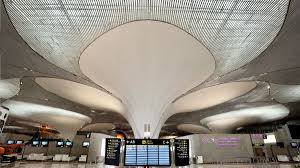 Navi Mumbai Airport Inaugurated Alongside Metro-3 Final Phase and Mumbai One App Launch">

Major Transport Milestones Unveiled in Mumbai Metropolitan Region
The opening of the first phase of the Navi Mumbai International Airport, the launch of the final phase of the underground Metro-3 corridor, and the introduction of the integrated “Mumbai One” mobility app mark significant steps toward improving connectivity in the Mumbai Metropolitan Region.
New Airport Phase Launch and Its Features
The first phase of the Navi Mumbai International Airport has been inaugurated, featuring a single runway and one terminal with an annual capacity of 20 million passengers. Constructed at an investment of approximately Rs 19,650 crore, this airport is intended to relieve the congested Mumbai city airport by serving as a second major aviation hub for the metropolitan area. Commercial flights are expected to begin operations in December, addressing a longstanding demand for expanded air connectivity.
Completion of Metro-3’s Final Segment
The final phase of the Metro-3 underground corridor, stretching from Acharya Atre Chowk to Cuffe Parade, has been flagged off. This addition will complete the full 33.5-kilometer fully underground route connecting Aarey-JVLR to Cuffe Parade. The metro line is scheduled to open for commuters from October 9, with services running from early morning until late evening.
Launch of Mumbai One: A Unified Mobility App
Simultaneous with the infrastructure openings, the “Mumbai One” app was launched to offer a single digital platform integrating multiple public transport operators across the region. Covering the Metro lines 1, 2A, 7, and 3, monorail, Navi Mumbai Metro, suburban railways, and bus systems such as BEST, TMT, MBMT, KDMT, and NMMT, the app aims to facilitate seamless, cashless, and paperless travel. Commuters can utilize it for ticket purchases, planning multi-modal journeys, and accessing real-time travel information.
| Project | Details | Expected Benefits |
|---|---|---|
| Navi Mumbai Airport Phase-1 | Single runway, one terminal handling 20 million passengers/year, Rs 19,650 crore investment | Alleviate Mumbai Airport congestion, boost regional connectivity and commerce |
| Metro-3 Final Phase | Extends underground metro to complete 33.5-km route | Improved urban transit, reduced travel time, enhanced access |
| Mumbai One Mobility App | Integrates 12 public transport operators, supports digital ticketing and real-time info | Seamless, cashless travel, better last-mile connectivity |
Historical Context of Mumbai’s Transport and Aviation Growth
Mumbai has historically been India’s financial heartbeat and a thriving metropolitan expanse. However, the city has long grappled with transport infrastructure limitations. The primary international airport experienced significant congestion due to soaring passenger volumes, an issue exacerbated by Mumbai’s dense population and bustling economic activities. This created an urgent need for additional aviation infrastructure to sustain and catalyze growth.
Over the recent decades, the expansion of metro rail networks has aimed to mitigate urban road traffic challenges and enhance public transit efficiency. The underground Metro-3 corridor represents a strategic project to create a modern, rapid transit option spanning vital commercial and residential areas, thus delivering a solution to commuting challenges.
Digitalization in transit services also reflects global urban transport trends. The integration of multiple public transport modes under a unified mobile app responds to modern commuters’ preferences for convenience, enabling smarter transportation choices that blend rail, bus, and metro options.
Evolution of Mumbai’s Aviation and Metro Systems
- Early Airport Developments: Mumbai’s primary air facility expanded incrementally to meet growing demand but reached saturation.
- Initiation of Navi Mumbai Airport: Conceptualized as a secondary hub to support Mumbai’s international connectivity and economic competitiveness.
- Metro Expansion: Commenced with lines serving key corridors, followed by incremental underground developments including Metro-3.
- Technology Integration: Increasing reliance on digital tools for ticketing, journey planning, and real-time updates in public transport systems.
Transport Improvements: Enhancing Regional Connectivity
| Aspect | Previous Scenario | Post-Inauguration Outlook |
|---|---|---|
| Airport Capacity | Single major airport with capacity limitations | Two major international airports, relieving congestion and expanding passenger handling |
| Urban Transit | Partially developed metro and bus networks with traffic challenges | Complete underground 33.5-km metro route offering fast, eco-friendly travel |
| Transport Integration | Fragmented ticketing and journey planning systems | Unified digital platform (Mumbai One) simplifying multimodal transport experience |
Future Impact and Opportunities for Tourism and Boating Activities
The enhanced connectivity arising from the Navi Mumbai Airport’s first phase, the expanded Metro-3 corridor, and the Mumbai One app is poised to significantly improve accessibility across the Mumbai Metropolitan Region. For travelers and tourists, this translates into smoother transit options, reduced travel times, and greater convenience when navigating one of India’s busiest urban conglomerations.
Such infrastructure developments are vital for fostering increased tourist footfall and business travel, which can naturally extend to related leisure opportunities such as yachting and boating. As Mumbai’s ports and marinas become more accessible through integrated transport networks, visitors can explore coastal activities, rent sailing yachts, or engage in waterfront experiences more easily.
The combination of a new airport hub and efficient metro and bus connectivity supports a broader tourism ecosystem, facilitating day trips to lakes, beaches, and other scenic water destinations around the area. This boost to multi-modal travel and transport infrastructure makes the region more attractive to a wide range of visitors, from business travelers to leisure seekers looking to enjoy yachting, fishing outings, or marina visits.
Key Benefits for Maritime and Sailing Destinations
- Improved Regional Access: Tourists and sailing enthusiasts can more conveniently reach coastal marinas and water activity spots.
- Boost to Charters and Rentals: Enhanced transport options facilitate boat and yacht chartering businesses by increasing tourist inflows.
- Розширені розважальні заходи: Більш широкі можливості підключення підтримують диверсифіковані пропозиції, такі як риболовні походи, сафарі на вітрильних суднах та відвідування марин.
- Інтеграція сухопутного та морського транспорту: Мобільний додаток Mumbai One може розвиватися, щоб включати варіанти морського транспорту, спрощуючи багатомодальні туристичні враження.
Виклики та міркування попереду
Хоча розвиток інфраструктури стимулює можливості, виклики включають управління пасажиропотоком, забезпечення сталого розвитку та координацію між різними транспортними операторами. Так само важливим буде вирішення проблем останнієї милі зв'язку з водними видами діяльності та створення зручних для відвідувачів варіантів для бездоганної інтеграції наземного та морського транспорту.
Підсумок і туристичний прогноз
Урочисте відкриття першої фази Міжнародного аеропорту Наві Мумбаї, запуск останньої фази метро-3 та запуск інтегрованого транспортного додатку Mumbai One разом трансформують доступність у межах Метрополітенського регіону Мумбаї. Ці досягнення обіцяють не лише покращення щоденніх поїздок для жителів, але й прокладають шлях для покращення туристичного досвіду, включаючи ті, що пов’язані з катанням на човнах, яхтингом та морськими екскурсіями.
Покращений аеропорт, у поєднанні з сучасною підземною системою метро та уніфікованою цифровою платформою громадського транспорту, позиціонує Мумбаї як більш зв’язаний, зручний хаб для мандрівників, які прибувають до міста або пересуваються ним. Для спільноти яхтсменів та любителів водного транспорту - кращі транспортні сполучення означають легший доступ до прибережних напрямків, розширюючи можливості для чартерів та розважальних заходів.
GetBoat, міжнародний маркетплейс для оренди вітрильних човнів та яхт, визнає важливість цих транспортних покращень. Як шлюз до регіонально багатого та доступного морського досвіду, , GetBoat.com залишається провідною платформою для виявлення великого вибору човнів і супер'яхт, доступних для оренди, задовольняючи будь-які інтереси та бюджет. Покращена зв'язність зрештою підтримує розвиток яхтингу, чартерного судноплавства та туризму, пов'язаного з океаном, наближаючи жваве морське життя до мешканців і відвідувачів.