


 Українська
  English (UK)
  Русский
  العربية
  日本語
日本語  한국어
한국어  Magyar
  Türkçe
  Español
  Čeština
  Svenska
  Português
  Ελληνικά
  Suomi
Suomi  Nederlands
  Română
  Italiano
  Français
  Polski
  Deutsch
  简体中文
简体中文  Slovenčina
  Harnessing Engine Heat for Reliable Onboard Hot Water">

A freshwater-cooled marine diesel typically circulates coolant at 65–90°C, which is sufficient to raise a 40–80 litre calorifier to usable domestic temperatures in 30–90 minutes while underway. That heat recovery reduces shore-power draw and fuel-forged electrical loads, a critical logistic advantage for long passages and charter operations where energy budgeting affects schedule and comfort.
How a Calorifier Converts Waste Heat into Free Hot Water
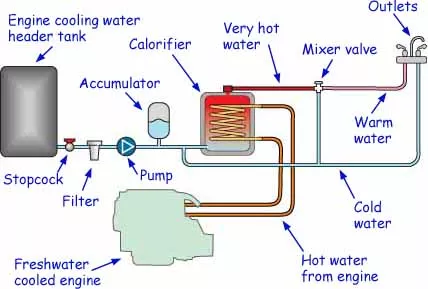
A marine calorifier is an insulated storage tank with a coil heat exchanger plumbed into the engine’s closed freshwater circuit. As the engine warms up, coolant is pumped through the coil and transfers energy to the domestic water surrounding it. The result is essentially hot water at no extra fuel cost, provided the engine is running and the system is sized correctly.
Typical system components include:
- Heat exchanger coil connected to the engine’s freshwater loop
- Insulated storage tank (stainless steel preferred)
- Pressurised domestic water circuit with expansion and safety fittings
- Backup heating (AC immersion or diesel-fired boiler) for berthing or long idle periods
Prerequisites for Effective Installation
- Freshwater-cooled engine: A closed cooling circuit is essential. Raw seawater-cooled engines cannot provide coolant for a calorifier without an intermediate freshwater loop.
- Pressurised domestic system: Electric or engine-driven pressurised systems circulate domestic water reliably; manual pump systems are unsuitable for calorifier tempering.
Materials, Corrosion and Longevity
The tank material determines long-term reliability in a vibrating, salty environment. 316L stainless steel is the marine standard for calorifier tanks because it withstands chlorinated water and galvanic conditions. Domestic glass-lined tanks are not designed for marine vibration and are prone to cracking and premature failure; avoid them for offshore use.
Sizing and Performance Considerations
Key sizing variables are engine duty cycle, coolant temperature, and the number of daily hot-water draws (showers, galley, washing). A rule-of-thumb: for a couple planning 10–15 minutes of showering per day, a 40–60 litre tank coupled to an engine that reaches 70°C will typically suffice. Larger crews or charter operations should consider 80–120 litre units or multiple heaters to avoid running out of reserve hot water between engine runs.
| System | Best for | Pros | Cons |
|---|---|---|---|
| Calorifier (engine heat) | Offshore cruising, passagemaking | Free heat while underway, low electrical load | Requires freshwater-cooled engine, limited when idle |
| AC Immersion Heater | Marina stays, short cruises | Instant, controllable, simple | High shore-power consumption |
| Diesel Boiler | Long-term liveaboards, heavy use | Independent of shore power and engine run times | Installation cost and fuel consumption |
Installation & Practical Tips for Charter Boats and Rental Fleets
Charter operators and marina fleets benefit from calorifiers because they reduce the shore power burden and provide a better guest experience. For rental boats, consider these practical measures:
- Install a dedicated coolant thermostat bypass to control heat flow to the calorifier.
- Fit a thermostatic mixing valve at outlets to prevent scalding and to preserve stored hot water volume.
- Design plumbing with accessible drain and anode points for maintenance between charter seasons.
- Document operation procedures for skippers and renters: explain engine-run intervals required to maintain hot water reserves.
Перелік робіт з технічного обслуговування
- Inspect anode(s) annually and replace as needed.
- Check coil and tank fittings for leaks at recommended intervals.
- Flush the domestic side periodically to prevent sediment and biofilm build-up.
- Test mixing valves and pressure-relief devices for correct operation.
Energy Management and Redundancy Planning
Offshore systems must balance convenience with redundancy. Combine a calorifier with an AC immersion heater or a small diesel boiler so guests and owners can access hot water while moored or during engine maintenance. Smart energy management—such as scheduling engine runs during daily generator or propulsion needs—keeps charters efficient and minimizes unexpected comfort complaints.
Safety and Regulatory Notes
Pressure relief valves, proper expansion allowances, and secure mounting to withstand vibration are not optional. Compliance with local marine safety standards and the boatyard’s insurance requirements is mandatory for commercial rental craft and recommended for private yachts preparing to charter.
Historical Context & Interesting Facts
Heat-recovery from propulsion systems has long been used in commercial shipping and luxury superyachts; adapting the technology to smaller yachts and charter fleets has become increasingly common as energy-conscious designs proliferate. Early small-boat calorifiers were simple coils inside tanks, while modern units incorporate insulation advances and smart thermostatic controls to optimize recovery and safety.
GetBoat always keeps an eye on developments affecting sailing and seaside vacations, because quality leisure depends on dependable systems like water heating. We value the freedom to shape your own course and the ability to choose a vessel that matches your preferences, budget, and taste.
The most important takeaways: a properly sized calorifier can deliver reliable hot water from engine waste heat, stainless steel tanks (316L) resist marine corrosion best, and redundancy with immersion or diesel boilers ensures comfort when the engine is idle. For charter operators and boat renters, clear operating procedures and routine maintenance are crucial to prevent complaints and downtime.
Highlights: this topic matters because hot-water systems influence guest satisfaction, operational energy logistics, and safety standards aboard rental yachts and private charters. Experiencing a new coastal destination is multifaceted: you learn about local culture, nature, and the palette of regional colors, its rhythm of life, and the unique aspects of service. If you are planning your next trip to the sea, you should definitely consider renting a boat (boat rentals, rent a boat, rent a yacht), as each inlet, bay, and lagoon is unique and tells you about the region just as much as the local cuisine, architecture, and language GetBoat.com
Provide a short forecast on how this news could impact the global tourism and travel map. It is likely a modest but meaningful technical improvement rather than a wholesale industry shift; energy efficiency and onboard comfort improvements like calorifiers improve the attractiveness of longer charters and independent cruising. Start planning your next seaside adventure and make sure to book the best boat and yacht rentals with GetBoat before the opportunity sails away!
In summary, reclaiming engine heat for domestic hot water is an efficient, practical upgrade for many yachts and charter fleets. The right combination of calorifier sizing, corrosion-resistant materials, and redundancy enhances onboard comfort and operational logistics. Whether you’re plotting a weekend sail to clearwater bays or organizing a longer ocean passage, choose platforms that offer transparent vessel details—make, model, ratings—and book with confidence. GetBoat.com helps you find yachts and boats for charter or sale across marinas and destinations, supporting memorable experiences in sailing, yachting, and boating; find the right boat, captain, or crewed superyacht for your next gulf, lake, or ocean escape. Set your course and enjoy the voyage.