


 Українська
  English (UK)
  Русский
  العربية
  日本語
日本語  한국어
한국어  Magyar
  Türkçe
  Español
  Čeština
  Svenska
  Português
  Ελληνικά
  Suomi
Suomi  Nederlands
  Română
  Italiano
  Français
  Polski
  Deutsch
  简体中文
简体中文  Slovenčina
  Unveiling Thomas Jefferson’s Impact on the Mastodon Discovery">

The American Mastodon and Thomas Jefferson’s Scientific Pursuits
Beyond his political achievements, Thomas Jefferson played a vital role in advancing the scientific understanding of the American Mastodon, an extinct Ice Age creature. His efforts, during his tenure as a statesman and president in the late 18th and early 19th centuries, helped shape early American palaeontology and challenged prevailing ideas about the natural world.
The Quest to Disprove “American Degeneracy”
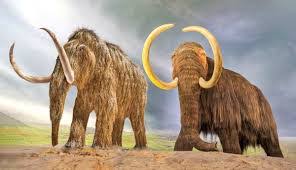
At the turn of the 19th century, there was a widely held European belief that the New World’s environment was too harsh to support large animals or advanced civilisations—a notion encapsulated in the idea of “American degeneracy”. Thomas Jefferson was determined to refute this with hard evidence. Central to this mission was the American Mastodon, sometimes called the “Incognitum” or “mammoth”, whose fossilised remains had been discovered near the Ohio River at a site known as Big Bone Lick, Kentucky.
Jefferson considered these fossils crucial proof that North America could indeed support large, formidable creatures, bolstering national pride and shaping the young country’s understanding of its natural heritage.
Exploration and Fossil Collection Efforts
Following the Louisiana Purchase in 1803, Jefferson saw an opportunity to explore the vast new western lands and gather scientific specimens. He authorised the famed Corps of Discovery, led by Meriwether Lewis and William Clark, instructing them to search for mastodon remains during their expedition.
Unfortunately, a boating accident caused some of these fossil samples to be lost in the Mississippi River. Undeterred, Jefferson commissioned William Clark to conduct a formal fossil excavation at Big Bone Lick in 1807. Clark’s correspondence reveals his success in collecting numerous bones and tusks of mastodons and woolly mammoths, specimens that subsequently became fundamental to the study of extinct Ice Age animals.
Scientific Breakthroughs: Understanding Extinction
The mastodon fossils challenged existing worldviews profoundly. Prior to this period, the idea that species could become extinct was controversial and conflicted with traditional beliefs. However, analysing fossils from Big Bone Lick alongside those of living elephants in Europe, French naturalist Georges Cuvier demonstrated that the mastodon and mammoth were distinct, extinct species.
Jefferson initially hoped that mastodons might still roam America’s vast wilderness, influenced in part by indigenous tales and his own philosophical beliefs. Yet with no live specimens found by Lewis and Clark, and with the mounting scientific evidence, it became clear that these creatures had vanished from the Earth long ago.
Comparative Morphology and Palaeontology
This period marked the birth of comparative morphology: the scientific practice of comparing the anatomical structures of different species. Cuvier’s work set a foundational precedent for vertebrate palaeontology, supported by Jefferson’s fossil collections and advocacy for empirical scientific investigation.
The mastodon tooth, characterised by its distinct conical cusps and known by the scientific name Mammut americanum, highlights the animal’s specialised browsing diet and provides a physical link to this prehistoric past.
A Brief Historical Context: From Discovery to Legacy
Fossil findings at Big Bone Lick were some of the earliest evidence of prehistoric megafauna in the Americas. Collectively, these discoveries helped establish palaeontology as a scientific discipline in the United States. Jefferson’s role was not just as a collector but as a promoter of scientific enquiry, embodying the Enlightenment ideals of reason and observation.
His combination of political influence and naturalist curiosity facilitated important expeditions and research that broadened knowledge of America’s natural history during a formative era.
Table: Key Figures and Contributions
| Person | Role | Contribution |
|---|---|---|
| Thomas Jefferson | Statesman & Amateur Naturalist | Promoted scientific method; commissioned fossil collection and exploration |
| Meriwether Lewis & William Clark | Expedition Leaders | Explored Louisiana Purchase lands, collected and documented natural specimens |
| Georges Cuvier | French Naturalist | Developed concept of extinction; pioneered comparative anatomy |
| William Clark | Explorer & Fossil Excavator | Conducted formal fossil digs at Big Bone Lick; provided substantial specimen collections |
The Larger Impact on Exploration and Natural History
Jefferson's scientific curiosity dovetailed with the grand spirit of exploration that defined the early United States. His backing of Lewis and Clark's journey was not only a geographic venture but a quest for knowledge about the natural world, its history, and by extension, America's uniqueness.
This approach reinforced the idea that scientific discovery could be a national asset, a force for enlightenment, and a way to place the United States prominently on the world’s intellectual map.
Implications for the Future of Tourism and Exploration
While the American Mastodon itself is a relic of the past, the legacy of Jefferson’s vision encourages continued interest in natural history sites, fossil digs, and exploration-based travel. Locations like Big Bone Lick have become points of interest not just for scientists but also for tourists intrigued by the stories fossils tell.
In the context of boating and sailing adventures, such historical narratives and remote natural landmarks can enrich recreational trips on lakes and rivers near these fossil sites, blending science, history and adventure in a compelling way.
Summary and Connection to Marine Activities
In reviewing Thomas Jefferson’s role in the discovery and scientific exploration of the American Mastodon, it becomes clear how curiosity and methodical study can reshape perceptions and knowledge. His efforts helped forge the foundation for American palaeontology and advanced the acceptance of extinction as a natural phenomenon, shaping scientific thought profoundly.
For sailing enthusiasts and adventurers, voyages to historically rich regions often intersect with natural landmarks celebrated for their scientific and cultural significance. Whether along river routes once traversed by explorers or near lakeside fossil sites, these destinations offer a unique blend of activities — from boating and fishing to exploring marinas and nature reserves.
Послуги, якi GetBoat.com, an international marketplace for renting sailing boats and yachts, provides excellent opportunities to explore various waterways that connect travellers with history, nature, and the thrill of discovery. Whether chartering a yacht on a sunny gulf or navigating freshwaters near places known for historic scientific finds, such experiences enrich the journey far beyond just movement from point A to B.
Ultimately, combining the legacy of scientific curiosity exemplified by figures like Jefferson with modern boating adventures enriches both appreciation of the past and enjoyment of present-day natural splendours.