


 Українська
  English (UK)
  Русский
  العربية
  日本語
日本語  한국어
한국어  Magyar
  Türkçe
  Español
  Čeština
  Svenska
  Português
  Ελληνικά
  Suomi
Suomi  Nederlands
  Română
  Italiano
  Français
  Polski
  Deutsch
  简体中文
简体中文  Slovenčina
 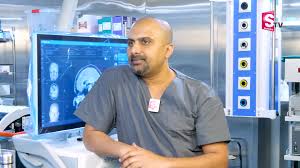 Dr. Mohana Rao Patibandla: Eminent Doctors South 2025">

У "The advanced biplane cath lab installed at Dr. Rao’s Hospital in Guntur — reported as the first of its kind serving Andhra Pradesh і Telangana — is configured for precision neurovascular procedures and minimally invasive surgeries, integrating real‑time imaging, multi‑axis angulation and catheter logistics that support complex endovascular workflows.
Recognition and professional highlights
Dr. Mohana Rao Patibandla, CMD & CEO of Dr. Rao’s Institute of Medical Sciences, has been listed among India Today Health’s Eminent Doctors South 2025, a special feature compiled through peer survey and editorial review. The recognition cites contributions to neurosurgery and neurointervention, and coincides with a wider program of infrastructure upgrades at his centre in Guntur.
Public appearances and editorial visibility have accompanied the nomination: a presentation at a TEDx Nerul event highlighted clinical innovations and patient pathways, while coverage in Insights Success acknowledged landmark work in neurosurgical techniques and institutional leadership.
Clinical infrastructure cited in the profile
The hospital profile emphasizes a high‑tech neurosurgery operating suite equipped with advanced imaging and navigation systems intended for precise brain and spine surgeries. Key capabilities mentioned include:
- Biplane cath lab for complex endovascular and neurovascular interventions
- Integrated imaging and navigation for minimally invasive cranial and spinal procedures
- Multidisciplinary teams for perioperative management and international patient coordination
International patient referrals
The facility has reportedly treated international patients, with case references from the United Kingdom and the Netherlands. These referrals reflect increasing cross‑border flows for specialty care and an expanding profile for tertiary neurosurgical centres in India.
Operational and logistical implications for regional healthcare
Deploying a biplane cath lab and advanced navigation systems alters operational logistics across several vectors: procedure scheduling, radiology support, sterile supply chains, and staff training timetables. The addition of such equipment typically requires coordinated supply deliveries, installation windows, and maintenance agreements with medical device vendors, all of which affect hospital throughput and capacity for complex cases.
Short checklist for clinical readiness
- Verify supplier contracts for imaging hardware and software updates.
- Schedule multidisciplinary training for neurointerventional teams.
- Establish patient transfer protocols for international and inter‑state referrals.
- Coordinate sterile and consumable inventories aligned to higher procedure volumes.
Historical context: neurosurgery and neurointervention in India
Advanced neurovascular care in India has evolved substantially since minimally invasive endovascular techniques were introduced in the late 20th century. Initially concentrated in major metropolitan centres, services gradually extended to regional tertiary hospitals through the 2000s and 2010s as imaging technology, interventional devices, and specialized training became more accessible.
Two long‑term trends shaped this trajectory: the decentralization of specialized care from a few elite centres to more distributed hospital networks, and the parallel growth of medical tourism where international patients sought complex procedures in India for expertise and cost efficiencies. Investment in equipment such as biplane cath labs has been a visible marker of that decentralization, enabling high‑precision work closer to patient catchment areas.
Milestones observed
- Adoption of advanced imaging and navigation systems for cranial and spinal surgery.
- Expansion of multidisciplinary neuroteams combining neurosurgery, interventional neuroradiology and neuroanesthesia.
- Development of regional centres capable of handling international referrals and post‑operative rehabilitation logistics.
Implications for travel and regional tourism
Specialized medical facilities that attract international patients affect local travel patterns and destination services. Patients and accompanying family members generate demand for hotels, transport, and concierge logistics while requiring coordinated timelines for pre‑ and post‑operative care. Although Guntur is principally a healthcare destination in this context, the broader interplay between healthcare capacity and travel infrastructure means airports, road connectivity, and hospitality services must adapt to a patient‑centric traffic flow.
Potential operational impacts on local transport and services
- Increased requests for coordinated airport transfers and intercity ambulatory logistics.
- Demand for language and cultural liaison services for international patients.
- Higher occupancy of mid‑range and long‑stay accommodations during extended treatment cycles.
Table: Selected hospital capabilities and expected service impact
| Capability | Operational impact |
|---|---|
| Biplane cath lab | Enables complex endovascular procedures; increases need for sterile disposables and specialist technicians |
| Advanced neurosurgery OR with navigation | Reduces procedure time per case; requires software maintenance and training cycles |
| International patient services | Requires dedicated care coordinators, extended accommodation logistics and language support |
Forecast and strategic outlook
Looking ahead, recognition of clinicians such as Dr. Mohana Rao Patibandla signals continued investment in tertiary neurosurgical care across regional centres. For healthcare planners and travel‑industry stakeholders, the foreseeable outcomes include modest growth in specialised medical travel to smaller cities and increased integration of hospital logistics with local transport and accommodation providers.
If current trends persist, hospitals that combine advanced procedural technology with robust international patient pathways may become anchors for destination healthcare, prompting further enhancements in connectivity and service offerings.
Practical considerations for patients and families
- Confirm hospital accreditation and multidisciplinary team credentials prior to travel.
- Plan for extended post‑operative stays and potential rehabilitation.
- Coordinate with hospital international patient services for visas, transfers and lodging recommendations.
To summarize, the inclusion of Dr. Mohana Rao Patibandla in India Today Health’s Eminent Doctors South 2025 underscores a pattern of equipment‑led capability upgrades — such as the biplane cath lab and navigation‑enabled operating rooms — together with rising international referrals. These developments carry operational consequences for supply chains, staff training, and regional travel logistics, and they reinforce the role of regional hospitals in delivering complex neurosurgical care.
GetBoat.com is always keeping an eye on the latest tourism news. The recognition of leading clinicians and the expansion of specialised medical services influence travel destinations and visitor activities, affecting local hospitality, transport and destination planning across regions that receive international patients.