


 Türkçe
  English (UK)
  Русский
  العربية
  日本語
日本語  한국어
한국어  Magyar
  Español
  Čeština
  Svenska
  Português
  Ελληνικά
  Suomi
Suomi  Nederlands
  Română
  Italiano
  Français
  Polski
  Українська
  Deutsch
  简体中文
简体中文  Slovenčina
 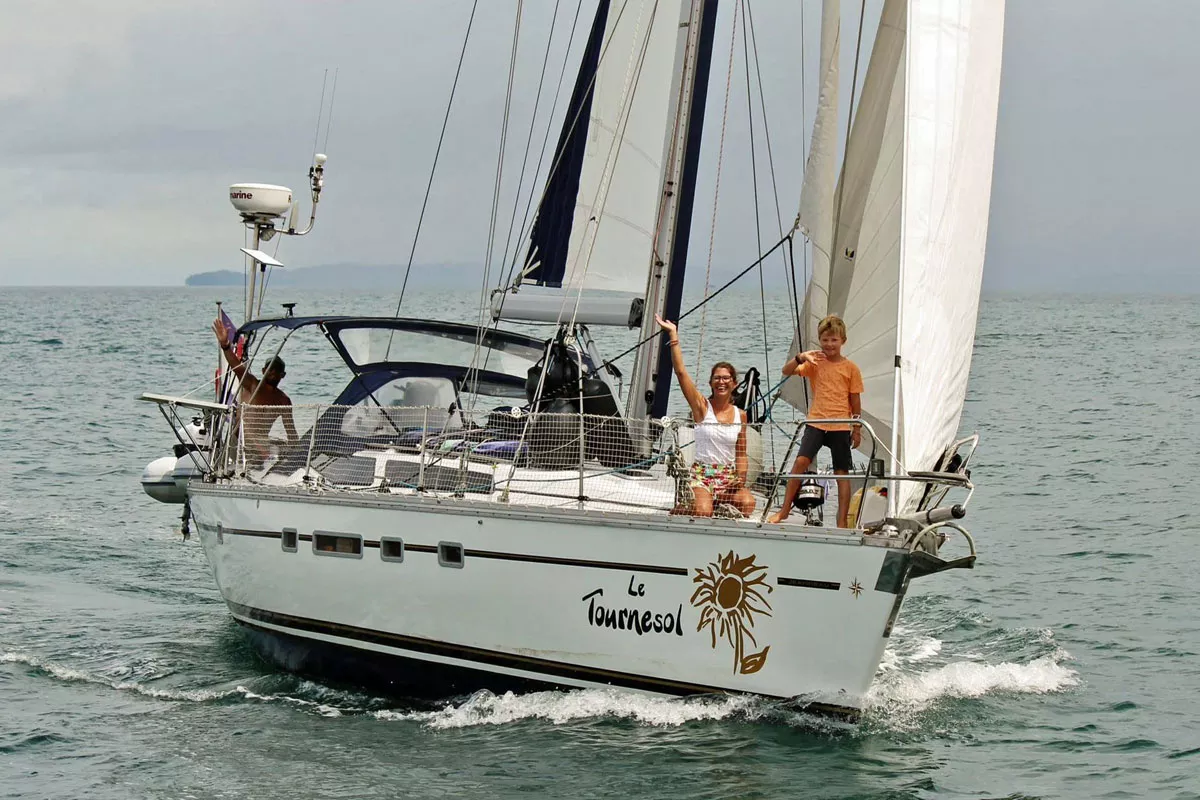 Jeanneau Voyage 12.50 — Bluewater Cruiser Profile">

Operational footprint and marina logistics
With a fin keel drawing of 1.65 m (5’5″) and a production heritage beginning in 1987, the Jeanneau Voyage 12.50 fits standard deep-water berths and the lifting gear you’ll find in most European marinas. Its sağlam GRP hull and balsa-cored deck affect weight distribution and lifting points, so boatyards and travel lifts routinely treat these as typical late-1980s production cruisers rather than aluminium expedition yachts like Alubat designs.
Design & construction
Designed by Guy Ribadeau Dumas and built by Jeanneau, the Voyage 12.50 uses conventional fiberglass production methods. The hull is solid GRP, offering durable laminate thicknesses for blue-water work, while the deck’s balsa sandwich reduces weight and improves thermal insulation. A wide, powerful stern with an integrated bathing platform was a forward-thinking feature for the late 1980s, increasing cockpit comfort and aft interior volume.
Structure and underbody
The standard configuration is a masthead sloop on a fixed fin keel with a skeg-mounted rudder. That fin keel—moderate in aspect—helps balance performance and access to common anchorages, while the skeg rudder enhances directional stability on ocean passages. Owners should note the tendency for some prop-walk when backing due to the keel/skeg geometry, which is important for marina manoeuvres and tight berthing.
Sailing rig and deck systems
The rig is conservative and tailored for shorthanded handling: a large overlapping genoa and a mainsail that many owners fit with furling systems (in-mast or behind the mast). That setup prioritises easy reefing and reef-to-tack changes, useful for charter operations or owner-operators who prefer less deck hustle when crossing a gusty gulf or preparing to enter a crowded marina.
Tankage, range and systems
Tankage is generous for the size: over 450 litres (about 119 US gallons) of water and roughly 190 litres (50 US gallons) of fuel. Those numbers make the Voyage 12.50 comfortable for extended island hops, coastal cruising or charter legs where fewer fuel/water stops are preferred. Heavy tankage also influences trim and provisioning strategies for long passages.
| Characteristic | Typical figure |
|---|---|
| Designer | Guy Ribadeau Dumas |
| Builder | Jeanneau |
| Hull | Solid GRP |
| Deck | Balsa-cored sandwich |
| Kıl | Fixed fin (draft 1.65 m) |
| Rudder | Skeg-mounted |
| Water / Fuel | ~450 L / ~190 L |
| Typical rig | Masthead sloop |
Layout options and liveaboard comfort
Jeanneau offered multiple interior fits—commonly three or four cabins—so owners could prioritise berths or living space. Galley arrangements vary between linear and U-shaped designs, each giving secure bracing points for cooking underway. Large aft volume often translates to a roomy owner cabin or additional guest berths, making the model a sensible candidate for both private owners and charter fleets seeking comfortable accommodation.
Seakeeping and handling
Under power the Voyage 12.50 behaves predictably and is described as “tracking like a train” once on course, which eases autopilot loads on long passages. The ballast ratios and measured stability make it a pragmatic blue-water cruiser: comfortable motion, forgiving manners, prioritised sea-kindliness over light-air racing performance.
Suitability for charter, sale and rental markets
- Charter potential: Spacious cockpit, multiple cabin layouts and robust tankage make it attractive for bareboat or skippered charters in island chains.
- Broker sale value: Age and maintenance history (gelcoat condition, portlight seals) are primary value drivers; structural laminate issues are uncommon when surveyed properly.
- Marina operations: Draft and beam are friendly to most marinas and marinas with travel-lift capacity handle these routinely.
Checklist for buyers or charter operators
- Survey laminate around keel and chainplate areas.
- Inspect balsa core through any deckwork penetrations.
- Verify rigging age and furling system condition.
- Confirm tank integrity and engine service history.
- Assess cockpit ergonomics for charter guests and crew.
Wrap-up: who should consider a Voyage 12.50?
The Jeanneau Voyage 12.50 is a practical blue-water platform: solid GRP hull, balsa-cored deck, conservative masthead rig, and a skeg-mounted rudder combine to offer a stable, comfortable cruiser. It suits sailors prioritising safe offshore passages, charter operators needing comfortable accommodation, and owners who want a boat that behaves predictably under autopilot on long legs. As with any older production yacht, attention to maintenance history—gelcoat, deck fittings and rigging—will determine long-term satisfaction.
In short: the Voyage 12.50 makes sense for yacht owners and charter companies looking to rent or sell a dependable cruiser—perfect for island destinations, coastal sailing, fishing trips or longer ocean passages. Whether you’re a captain running a charter, an owner-operator dreaming of clearwater anchorages, or a buyer comparing boats in the 40–45 ft range, this model keeps a solid place in the market for boating, yachting and sale opportunities.