


 Türkçe
  English (UK)
  Русский
  العربية
  日本語
日本語  한국어
한국어  Magyar
  Español
  Čeština
  Svenska
  Português
  Ελληνικά
  Suomi
Suomi  Nederlands
  Română
  Italiano
  Français
  Polski
  Українська
  Deutsch
  简体中文
简体中文  Slovenčina
 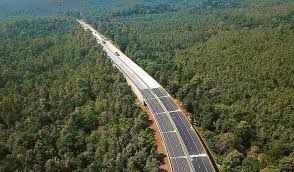 Kaziranga yaban hayatını koruyacak yüksek geçit">

Bu makale, Kaziranga Milli Parkı içinden geçecek olan yeni duyurulan yükseltilmiş koridor projesini, tasarım özelliklerini, zaman çizelgesini ve yaban hayatı ve bölgesel turizm üzerindeki beklenen etkilerini ana hatlarıyla belirtmektedir.
Key facts of the elevated corridor project
The government has approved a major infrastructure initiative to create a safe passage across the Kaziranga landscape and improve transport connectivity between Central and Upper Assam. The project is being presented as a measure to reduce road accidents on the highway running adjacent to the park while supporting the movement of wildlife during the annual flood season.
| Item | Detail |
|---|---|
| Project cost | INR 6,957 crore |
| Highway section | Kaliabor–Numaligarh (part of NH-37 / New NH-715) |
| Four-laning | Approximately 86.675 km widening |
| Elevated corridor | About 34.5 km with underpass area for animal crossings |
| Bypasses | Jakhalabandha and Bokakhat |
| Implementing agency | NHIDCL under the Ministry of Road Transport and Highways |
| Completion timeline | 36 months |
What the plan proposes
The scheme proposes a dual approach: upgrade the existing highway to a four-lane corridor and construct an extensive elevated section across the most sensitive stretches near the park. The area beneath the elevated roadway is explicitly designed to serve as crossing zones for animals, enabling uninterrupted movement from the park into the Karbi Anglong Hills, especially during floods.
Design and legal compliance
Project design follows directions from the Supreme Court and recommendations from the Wildlife Institute of India, prioritizing ecological integrity. The elevated structure and integrated underpasses are intended to reduce direct encounters between vehicles and wildlife, lower the rate of roadkill and improve safety for motorists.
Official endorsements
Prime Minister Narendra Modi has laid the foundation stone and emphasized the project’s role in safeguarding animals during the monsoon. Assam Chief Minister Himanta Biswa Sarma hailed it as a landmark measure to both protect biodiversity and strengthen regional connectivity.
Expected benefits for wildlife and communities
The proposal aims to deliver a range of ecological, safety, and socio-economic gains. Key anticipated benefits include:
- Reduced vehicle-wildlife collisions through grade-separated crossings and bypasses.
- Improved movement corridors for the one-horned rhinoceros, elephants, tigers and other species inhabiting the floodplain grasslands and wetlands.
- Enhanced road safety and reduced travel time between Central and Upper Assam due to four-laning.
- Boost to ecotourism by providing safer and more reliable access to park gateways and adjacent towns.
- Local livelihoods uplift through construction employment and potential tourism-related economic activity in surrounding destinations.
Historical context and conservation challenges
Kaziranga National Park is a UNESCO World Heritage Site renowned for its extensive grasslands, forests, wetlands, and the world’s largest population of the one-horned rhinoceros. The park’s location within the dynamic Brahmaputra floodplain makes it ecologically rich but also sensitive to infrastructure encroachment.
Over decades, escalating traffic on the main highway adjacent to the park led to recurring conflicts between wildlife movement and vehicular traffic. Seasonal floods force animals to move across low-lying areas toward higher ground, historically creating hotspots of danger near road corridors. Previous mitigation efforts have included selective underpasses, embankments and traffic regulation measures, but the scale of seasonal movement demanded a more robust, long-term engineering and planning response.
Why the corridor matters now
This elevated corridor is framed as a scalable solution intended to reconcile two competing priorities: maintaining vital transport routes for people and goods, while ensuring long-distance movement options for large mammals and other fauna in a flood-prone landscape. By elevating a large stretch of the highway and creating dedicated crossing space, planners expect to significantly reduce fragmentation of habitat.
Implementation challenges and environmental considerations
Delivering such a large infrastructure project in a sensitive ecological zone will demand rigorous environmental management. Important considerations include:
- Careful hydrological design to avoid altering natural flood flows.
- Minimizing construction disturbance during sensitive breeding and migration periods.
- Long-term monitoring to ensure animal use of underpasses and the effectiveness of wildlife-friendly design.
- Community consultation to balance local access needs with conservation goals.
Monitoring and adaptive management
To succeed, the corridor will require adaptive management with ongoing monitoring of wildlife movement, traffic patterns and habitat quality. Incorporating wildlife crossings that are visible and accessible to animals, combined with signage, speed controls and enforcement, will be essential. The project’s alignment with judicial and scientific recommendations suggests a commitment to these principles, but execution will determine on-the-ground outcomes.
Tourism implications and future outlook
For tourism, the corridor could make travel to Kaziranga more reliable during the monsoon and shoulder seasons, helping extend visitation windows and diversify the visitor experience. Improved access to park peripheries and nearby towns may encourage development of ecotourism services, guided wildlife trails, and community-based stays that emphasize sustainable nature activities.
Concise forecast
In the short to medium term, the elevated corridor is likely to reduce accidents and improve mobility, setting a precedent for large-scale conservation-aware infrastructure in floodplain reserves. Over time it may catalyze a cautious increase in nature tourism, provided development follows strict environmental safeguards. International travelers seeking authentic wildlife encounters could find Kaziranga a more accessible and safer destination, but the challenge will be to scale visitation without compromising habitat quality.
In summary, the elevated corridor project represents a major investment in reconciling mobility and conservation in one of South Asia’s most important wildlife landscapes. It combines road widening with a long elevated span and underpasses to facilitate animal movement, is backed by judicial and scientific recommendations, and carries both promise and responsibility for sustainable tourism and local development.
GetBoat.com is always keeping an eye on the latest tourism news. The Kaziranga corridor story highlights intersections between infrastructure, biodiversity and travel that affect a wide range of Destinations and activities—from wildlife viewing and riverine landscapes to broader ideas of water, beach and lake conservation; it will be watched by those interested in how protected-area access evolves across regions frequented by visitors, whether they come for fishing, boating, boating adventures, sailing or other outdoor experiences such as sunseeker-style leisure, yachting curiosities, marine and inland marinas, and ocean or gulf-oriented travel planning.