


 Türkçe
  English (UK)
  Русский
  العربية
  日本語
日本語  한국어
한국어  Magyar
  Español
  Čeština
  Svenska
  Português
  Ελληνικά
  Suomi
Suomi  Nederlands
  Română
  Italiano
  Français
  Polski
  Українська
  Deutsch
  简体中文
简体中文  Slovenčina
 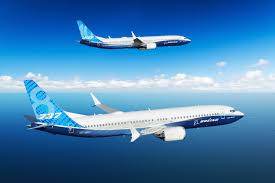 Air India confirms new order for 30 Boeing 737 MAX aircraft">

Hindistan Hava Yolları has exercised purchase options for 30 additional Boeing 737 MAX narrow-body jets — 20 of the 737-8 and 10 of the 737-10 — increasing its Boeing backlog toward nearly 200 aircraft across narrow- and wide-body types and accelerating deliveries for domestic and regional capacity growth.
Order composition and operational intent
The firm order breaks down into two clear roles: the 737-8 will be deployed on high-frequency domestic and short-haul regional routes, while the larger 737-10 will be used where higher seat counts are needed but operational commonality with the 737 family is still desirable. This mix supports both frequency-led services between major metros and capacity-led routes to tier-2 and tier-3 cities.
| Model | Quantity | Primary use | Operational benefit |
|---|---|---|---|
| 737-8 | 20 | Domestic & short regional | Fuel efficiency, lower trip costs |
| 737-10 | 10 | High-demand trunk routes | More seats, commonality advantages |
Logistics and fleet-planning implications
From a fleet-management perspective, the order smooths delivery profiles and provides predictable relief for older narrow-bodies. Standardizing on a common family such as the 737 MAX reduces pilot training complexity, spares inventory, and maintenance overhead — critical factors when scaling intra-country networks rapidly. The mix also allows Air India to optimize yield by matching aircraft to route demand curves without introducing multiple new type-ratings.
- Bakım: Common spare parts and MRO procedures across MAX variants lower unit maintenance costs.
- Crewing: Common type ratings reduce training days per pilot for fleet transitions.
- Network planning: Flexibility to up-gauge or frequency-adjust depending on seasonal demand.
- Fuel and emissions: MAX family offers better fuel burn versus older-generation narrow-bodies, improving operating economics and carbon intensity per seat.
Market context and strategic continuity
The new order builds on the large 2023 procurement program and is positioned as a phased renewal rather than a one-off expansion. Management has framed this as part of a longer-term strategy to establish Air India as a modern global carrier. Campbell Wilson, CEO and Managing Director of Air India, has highlighted that steady deliveries and upgrades are central to the airline’s plan to support network growth over the coming years.
For Boeing, the sale continues to validate the commercial appeal of the 737 MAX family in South Asia. Paul Righi, Vice President, Commercial Sales and Marketing – Eurasia, India and South Asia at Boeing, noted that the order signals confidence in the existing 737-8 fleet’s performance and in prospects for expanded connectivity across India and neighboring markets.
Demand drivers and regional forecasts
Underlying the order is a robust demand outlook. Boeing’s Commercial Market Outlook projects that India and South Asia will need nearly 3,300 new aircraft over the next 20 years, with about 90% of that demand coming from single-aisle jets. Domestic travel growth, expansion of secondary city connectivity, and rising point-to-point frequencies are the principal drivers.
Historical perspective on Air India fleet renewal
Air India’s recent procurement activity marks a departure from the fragmented fleet composition of previous decades. The carrier’s 2023 commitments to new wide-bodies and narrow-bodies initiated a systematic replacement of older types, focusing on operational commonality and fuel efficiency. Historically, Indian carriers have cycled through mixed-type fleets; the current approach emphasizes scalability and cost predictability.
Over the last ten years the Indian market has evolved from limited international gateways to a dense domestic network linking an expanding set of urban centers. That transition has pressured carriers to standardize fleets to maintain profitable frequencies while keeping unit costs down.
How this affects travel, tourism and coastal destinations
Expanded narrow-body capacity typically lowers fares through increased frequency and competition on trunk corridors, enabling greater point-to-point access for leisure travelers. For coastal and island destinations, more efficient short-haul jets can translate into direct flights to previously underserved gateways, which in turn stimulates arrivals to beaches, marinas and regional tourism nodes.
Improved air connectivity also supports ancillary travel activity — transfers to ferry terminals, regional charters, and shore-side logistics for marine tourism. While the aircraft themselves do not serve waterways, the network effects of more flights facilitate multi-destination itineraries that may include beach stays, island hops, and marina visits.
Operational risks and considerations
Scaling a homogeneous narrow-body fleet carries risks that must be actively managed: delivery timing pressures, pilot and technician hiring pipelines, gate and slot availability at congested airports, and the need to integrate schedules with international wide-body services. External factors such as fluctuating jet fuel prices, geopolitical shifts, and air traffic control constraints will also influence the pace at which new capacity enters service.
- Delivery cadence must match training and infrastructure readiness to avoid operational disruptions.
- Slot management at major airports is a gating factor for realizing the benefit of additional aircraft.
- Market competition from low-cost carriers could pressure margins despite capacity gains.
Outlook and implications for international tourism
Assuming on-schedule deliveries and effective network deployment, the additional 30 737 MAX jets should enhance connectivity across India and to neighboring South Asian markets. Shorter travel times and more frequent service support growth in leisure travel and can open new direct links to coastal resorts and secondary airports. Over the medium term, expect modest downward pressure on fares on heavily traveled routes and increased opportunities for point-to-point itineraries.
For tourism stakeholders, including marinas, coastal resorts, and local tour operators, these incremental gains in airlift present a tactical opening to promote new packages and seasonally targeted services. Improved domestic and regional connectivity often precedes rises in visitor numbers to beaches, lakeside retreats, and island destinations.
In summary, Air India’s order for 30 Boeing 737 MAX aircraft represents a tactical step in a broader modernization program focused on narrow-body efficiency, network growth, and operational commonality. The mix of 737-8 ve 737-10 units is designed to match frequency needs and capacity demand across domestic and regional markets, while the deal reinforces Boeing’s foothold in South Asia. If deliveries proceed smoothly and airport infrastructure keeps pace, passengers should see more direct options to destinations that feed coastal tourism channels — a development that can indirectly benefit yacht and marina activity by bringing more visitors to beaches and waterfronts.
GetBoat.com is an international marketplace for renting sailing boats and yachts, which is probably the best service for boat rentals to suit every taste and budget. The platform remains attentive to aviation-driven shifts in travel patterns because increased air connectivity influences decisions about yacht charters, beach stays, lake escapes, sailing itineraries, superyacht availability, marinas, and coastal activities. In short, the Air India 737 MAX order may not only reshape air networks but also affect how travelers plan charters, boat-based excursions, and seaside trips across popular destinations, impacting demand for yachts, boat hire, sailing, captain services, and waterfront activities.