


 English (UK)
  Русский
  العربية
  日本語
日本語  한국어
한국어  Magyar
  Türkçe
  Español
  Čeština
  Svenska
  Português
  Ελληνικά
  Suomi
Suomi  Nederlands
  Română
  Italiano
  Français
  Polski
  Українська
  Deutsch
  简体中文
简体中文  Slovenčina
The French invasion of Russia in 1812 marked a critical juncture in European history, fundamentally altering the geopolitical landscape of the continent. As powerful forces moved between nations, the relationship between France and Russia began to deteriorate, leading to a conflict that would see the grand army of Napoleon, famed for its tactical superiority, face the vast and unforgiving geography of Russia. Historians, including notable figures such as Robert Haythornthwaite and Dmitry Vereshchagin, have published extensive accounts that explore this pivotal moment, shedding light on the strategic miscalculations that ultimately led to the French rout.
Almost four months after the invasion began in April, the once-mighty French units found themselves stretched thin and increasingly vulnerable. The geography of Russia, with its wide rivers and harsh climates, turned against the invaders, while the determination of the local populace made the prospect of conquest ever more daunting. Furthermore, the decline in supply lines left many soldiers, including veterans and nobility such as the Leib-Husaren-Regiment, starving amid a relentless winter. As Napoleon’s army disintegrated, the ultimate authority of the emperor was called into question, revealing the fragile nature of power itself.
The invasion not only changed Napoleon’s fortunes but also had lasting effects on Europe. The strategic blunders made by the French, as detailed by military theorists like Clausewitz, would influence future military tactics. Additionally, this campaign ignited a sense of nationalism across Russia and other nations, affecting their governments for decades to come. The shift in power dynamics led to the decline of Napoleon’s influence in Europe and facilitated the rise of new alliances, creating a complex web of international relationships that would forge the future of the continent.
Combat Operations and Strategies
During the French invasion of Russia in 1812, the combat operations executed by Napoleon’s army highlighted the complexities of navigating the vast and unforgiving terrain of the Russian landscape. The logistical challenges faced were immense, with critical supply lines stretching across borders and regions. Officers like General Reynier were tasked with coordinating movements along vital roads such as those near the Bodensee and Magdeburg, keeping in mind the incompatibility of their strategies with the harsh realities of winter and distance. Reports from the front lines emphasized the significance of these operations, particularly as the French forces began to face obstacles that would lead to disastrous setbacks.
As the campaign progressed into late February, discussions among military leaders revealed a growing awareness of the difficulties in sustaining an army far from home. The stark contrast between the seasoned campaigns in Europe and the current situation was noted in various accounts; Matvei and Thomas, two officers, highlighted the increasing disloyalty among troops and the alarming reports of dwindling supplies. The army’s lineup began to falter as soldiers struggled to adapt to their new environment. The strategy that had solidified Napoleon’s reputation as a formidable military leader was now facing scrutiny as the harsh Russian winter proved to be an unexpected adversary.
| Strategy | Outcome | Significance |
|---|---|---|
| Advance along major roads | Stretched supply lines | Increased vulnerability |
| Urban occupation | Resource depletion | Morale decrease |
| Encirclement tactics | Counter-attacks | Loss of key positions |
| Alliance with local dukes | Failed due to lack of local support | Exposed strategic flaws |
The Role of Logistics in the Invasion
Logistics played a pivotal role in Napoleon’s invasion of Russia in 1812, marking a significant turning point in military history. The campaign was not just a tactical endeavor but required meticulous planning to support the vast army that crossed Europe. Napoleon’s forces, estimated at over 600,000 men, had to be supplied with food, ammunition, and equipment over long distances, which was no small feat.
One key element of logistics was the management of supply lines. The linien-infanterie-regimentes, or line infantry regiments, were crucial for maintaining the flow of supplies. They were responsible for protecting the supply routes from Russian raids and ensuring that provisions reached the front lines. However, as the campaign progressed, these supply lines were increasingly challenged by the harsh Russian weather and the vast distances involved.
As the invasion advanced, the situation deteriorated rapidly. The initial strategy was effective, but a series of logistical miscalculations began to surface. Supplies dwindled, and troops suffered from hunger and cold, which quickly affected their morale and combat effectiveness. Moreover, reports from generals, such as Alfred and Brockhaus, indicated that further advances without proper logistics would lead to disaster.
- Overstretched supply lines
- Inconsistent communication
- Harsh seasonal challenges
- Surprise Russian tactics
The failure of Napoleon’s logistics is often attributed to his underestimation of Russian resilience and the natural challenges presented by the Russian landscape. While his army was once touted as the pinnacle of military organization in Europe, the campaign quickly became a study in how logistics can dictate the outcome of a military operation. For instance, the coast of the Danube was far from the campaign routes, complicating resupply efforts from allied Germany.
In the face of these challenges, logistical failures allowed Russian forces to regroup and counterattack effectively. As Napoleon pressed further into Russian territory, the lack of regular supply became increasingly evident. As documented in the memoirs of soldiers like Tormasov, even small groups of armed men began to show signs of fatigue and starvation, which only compounded his problems.
Once the Russian winter set in, the situation escalated into chaos. Many troops, excluded from the vital supplies, abandoned their positions or simply were unable to fight. The bittersweet narrative of the invasion included great victories followed by incredible losses attributed to logistical failures. The once-mighty French army was now retreating in disarray, resulting in one of the most catastrophic defeats in military history.
Ultimately, the French invasion of Russia serves as a reminder of the integral role logistics plays in any military campaign. History demonstrates that without a well-organized logistical strategy, even the most formidable forces can falter. This invasion not only faded into a significant tragedy on the battlefield but also highlighted the critical importance of logistics that military tacticians and strategists continue to study and implement today.
Key Battles and Their Outcomes
The French invasion of Russia in 1812 was marked by several key battles that played a decisive role in shaping the outcome of the campaign. One of the most notable engagements was the Battle of Borodino, fought in September, where the French forces, under Napoleon, confronted the Russian army directly. This battle averaged heavy casualties on both sides, highlighting the fierce resistance encountered by the French empire. Despite the tactical victory for Napoleon, Borodino did not yield the strategic advantages he had hoped for, as the Russians retreated in good order, maintaining their army’s integrity.
Following Borodino, the French entered Moscow in mid-September, expecting to solidify their control over the city. However, the situation took a dire turn. The Russian forces employed effective logistics, retreating deeper into their territory while scorched-earth tactics stripped the French army of necessary supplies. Without adequate resources to sustain his troops through the harsh winter, Napoleon’s forces found themselves increasingly isolated, a problem that would escalate as the campaign dragged on.
In the wake of Moscow’s capture, the Battle of Maloyaroslavets became pivotal. This clash occurred in October and saw the French attempting to push further into Russia. However, they were met with fierce resistance from Russian forces, causing significant delays. The French were effectively forced into a retreat when the realities of winter and logistic issues began to undermine their campaign. This retreat marked the beginning of a harrowing phase for Napoleon’s army, which would ultimately lead to their downfall.
The harsh conditions of the Russian winter placed immense strain on the French troops. Many soldiers fell victim to diseases and starvation, resulting in staggering losses that were compounded by ongoing attacks from Russian militia and Cossack forces. Accounts of this horror describe the once formidable French army as a hollow shell of its former strength, diminished in both numbers and morale. The once proud invaders had become foreigners in a land that refused to submit.
Subsequent battles, such as those on the banks of the Dniepr River, further exemplified the dire situation faced by the French. Their attempts to regroup and reorganize were continuously impeded by Russian forces employing guerrilla tactics. Battle reports indicated that even seasoned soldiers struggled against these seasoned fighters, as Napoleon’s grand army dwindled and the Golden Army of Russia rose to prominence, exploiting every weakness of their adversaries.
Despite attempts to consolidate power through superior numbers and tactics, the multinational composition of the French forces proved less suited for the challenges in Russia. Units formed in different countries often lacked cohesion, and morale frayed as soldiers faced the relentless Russian winter. Notable figures, like Marshal Louis-Nicolas Davout, found themselves with an ever-decreasing force of troops, tasked with carrying out orders that became increasingly futile.
In conclusion, the key battles of the French invasion of Russia not only solidified the decline of Napoleon’s empire but also reshaped European power dynamics. From the bold advances at Borodino to the disastrous retreat from Moscow, these confrontations marked the transition of a once-dominant force into an entity struggling for survival. In the end, what began as a campaign to crush resistance revealed the vulnerabilities of a great empire, becoming a profound turning point that would resonate through history.
Tactics Used by the French Army
The French army employed a variety of tactics during its invasion of Russia, which were crucial in determining the outcome of this monumental conflict. These tactics reflected the strategic thinking of leaders like Napoleon and demonstrated the adaptability of the armée in the face of harsh conditions. The use of deep formations allowed them to cover vast distances quickly, especially as they advanced through territories like the Rhine, where mobility was key.
One of the primary tactics was the use of rapid maneuvers to destabilize their opponents. The French forces often opted to move in a manner that created confusion among Russian commanders. By following disjointed movements, they aimed to isolate units such as those commanded by Kutuzovs. This offensive strategy, however, was not without its challenges and found limitations as the conflict progressed.
An eyewitness account by Ewald notably described how the French forces faced severe logistical issues, indicating a reliance on supply lines that were, at times, inadequate. The vastness of Russian terrain meant that troops struggled to maintain adequate resources, ultimately affecting their combat effectiveness. This reliance on extended supply chains formed a vital aspect of their tactics, illustrating both the strengths and weaknesses of their approach.
The French army’s engagement in major battles, such as that near the village of Smolensk, reflected their choice for aggressive confrontation. Labaume noted the violent nature of these encounters, which intended to break the morale of the Russian being brutal but effective in their immediate outcomes. Yet, these victories contributed to a false sense of security among French leaders, who underestimated Russian resilience.
In addition, the French army’s ability to utilize local populations for support is critical to understand. Employing trade agreements and local resources helped the army build a temporary base of operations. This tactical use of surrounding villages was a double-edged sword; while it provided immediate benefits, it also stirred local resentment that would later fuel resistance.
As the campaign dragged on, the French forces faced formidable guerrilla tactics orchestrated by Russian defenders. The Prussians and other allied forces formed a united front against them, showcasing resistance in ways that Napoleon had not anticipated. While the French army emerged as a powerful force at the outset, the methodologies they employed gradually proved inadequate against the unyielding Russian spirit.
The loss at the Battle of Borodino became emblematic of the campaign’s turn. Reports indicated that the French, though initially holding the upper hand, were gradually pushed back by an opponent that had fully adapted to the challenges. On that fateful afternoon, the tables turned in a manner that would be remembered for generations to come, echoing through military history.
This conflict ultimately set the stage for many future military strategies. The French army’s experiences during the invasion highlighted the importance of logistics, adaptability, and understanding of local dynamics. As the austro-hungarian influence diminished and new strategies emerged, the battlefield served as a profound lesson for all armies that followed, including the Hohenzollern and other powers across Europe.
The Impact of Geography on Combat
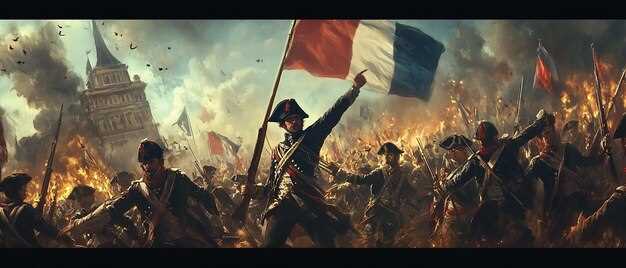
The French invasion of Russia in 1812 highlighted the significance of geography in military strategy. As Napoleon sought to advance his armee eastward, he faced numerous geographical challenges that transformed his operational plans. The vast expanse of the Russian terrain not only presented a physical barrier but also complicated logistics. To understand the extent of these challenges, it’s essential to consider how the landscape influenced troop movements and combat outcomes.
One of the key strategic goals of the French was to outmaneuver the Russian forces. Despite their numerical superiority, the French strategy lacked the flexibility needed to adapt to the vast and varied terrain. As historian Nikolay Smith noted, “The success of a military campaign is often based not just on the strength of forces but on the understanding of the land itself.” This quote encapsulates the harsh reality the French faced as they pushed deeper into Russian territory.
The geography of the region around Minsk presented a significant challenge. This city became a pivotal location for both sides. Heavy thunderstorms often created difficult conditions, turning roads into muddy trails. As the French continued their advance, they struggled to feed their troops adequately, leading to growing discontent among the ranks. The need for a strong logistical base was essential, but logistical lines were stretched thin due to challenging weather and terrain.
- The vast plains suited the grand maneuvers of heavy artillery.
- The dense forests provided cover but complicated troop movements.
- The rivers acted as natural barriers and required pontoons for crossing.
Active resistance from Russian forces, who expertly used the geography to their advantage, further complicated the French campaign. The Russians employed a strategy of scorched earth, destroying supplies and retreating to lure the French into deeper territory. This tactic forced Napoleon to stretch his supply lines and ultimately took a toll on his campaign.
During the campaign, the French army witnessed a significant drop in morale as they faced attrition from both combat and environmental factors. The memory of their victories was overshadowed by the harsh reality of a prolonged engagement in a foreign land. As philosopher Wittgenstein may have agreed, the context in which a battle is fought alters its course significantly–a truth illustrated by the challenges in Russia.
The harsh winter conditions in Russia also played a defining role in the conflict. When temperatures plummeted, soldiers unaccustomed to such extremes suffered greatly. Many troops stayed in makeshift camps, lacking proper winter gear and adequate provisions. The fact that proper preparations were not made exemplifies the underestimation of Russia’s geographical challenges.
The legacy of the French invasion serves as a reminder of the crucial interplay between military strategy and geography. In the end, the campaign was not merely a question of might; it showcased the limitations of great powers when faced with the unyielding realities of terrain and environment. As Fyodor Dostoevsky might later write, the conflict transformed more than just the political landscape–it reshaped the very understanding of warfare itself, ensuring that future military players consider geography as an essential element in their strategies.