


 Svenska
  English (UK)
  Русский
  العربية
  日本語
日本語  한국어
한국어  Magyar
  Türkçe
  Español
  Čeština
  Português
  Ελληνικά
  Suomi
Suomi  Nederlands
  Română
  Italiano
  Français
  Polski
  Українська
  Deutsch
  简体中文
简体中文  Slovenčina
 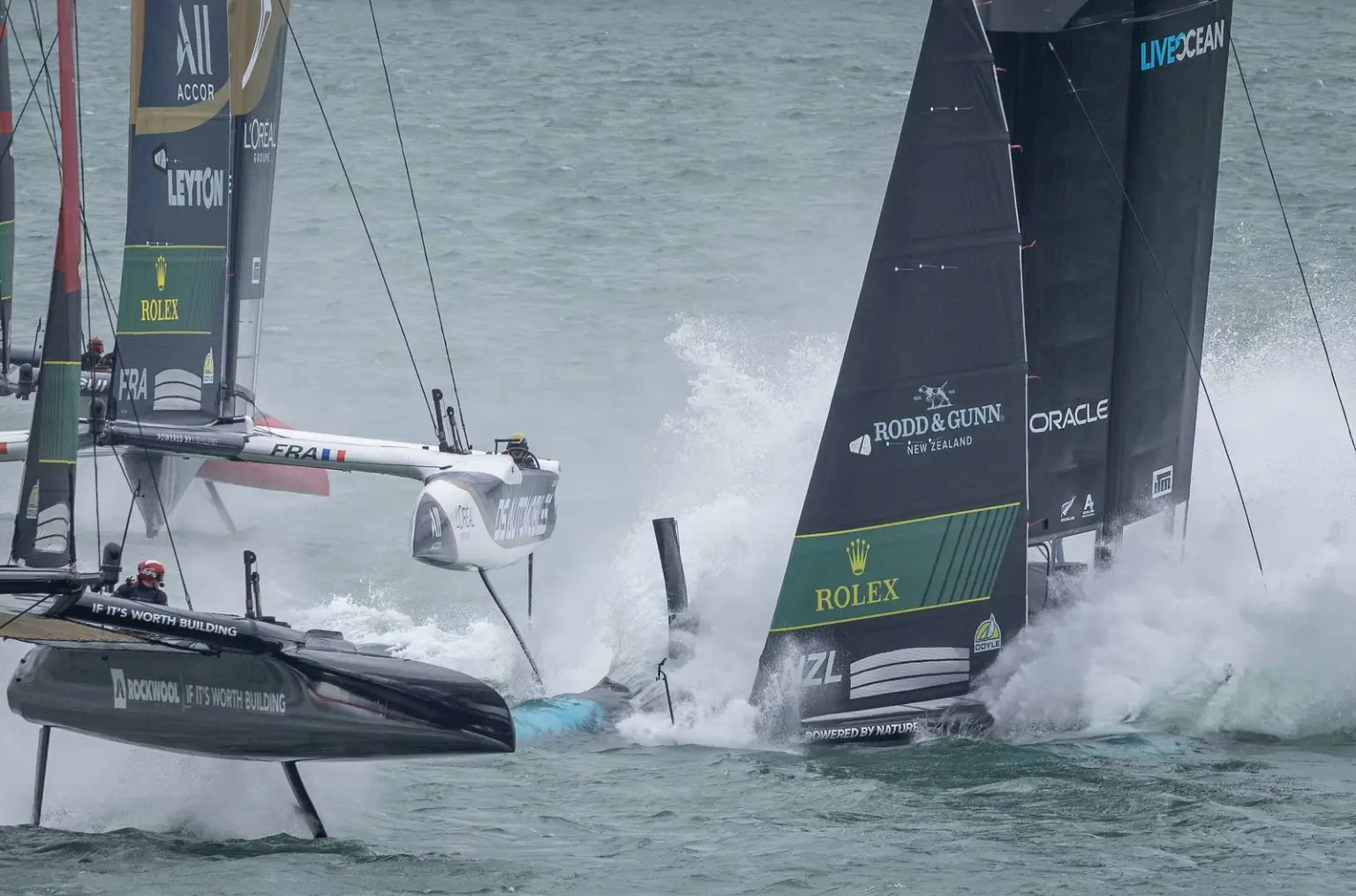 Sail GP Auckland 2026: Speed, Risk, and Spectacle">

Fifty-four knots (about 100 km/h) was recorded as peak foiling speed during the Auckland Sail GP event, where fleets of F50 catamarans operated on compact stadium-style courses with up to 12 boats in close-cohort match racing scenarios.
Race dynamics and course logistics
Running multiple short circuits inside harbors or narrow coastal stretches concentrates overtaking and tactical maneuvers into tight windows. Organizers typically set reaching starts and triangular or windward/leeward legs no longer than a few hundred meters to improve spectator visibility and broadcast framing. Those choices reduce transit times between marks but accelerate collision probability, especially when boats are foiling at speeds exceeding conventional sailing norms.
Operational parameters
- Fleet size: up to 12 F50 catamarans per race heat
- Top speeds: ~54 knots (100 km/h) in strong wind and sea state
- Course type: compact stadium, reaching starts, close-mark laylines
- Broadcast dependence: camera platforms and streaming generate revenue and dictate course visibility choices
Safety challenges unique to foiling multihulls
High-speed foiling introduces kinetic energy and impact signatures comparable to motorsport at smaller craft scales. The primary risk vectors are:
- High-energy collisions between bows or amas at speed
- Capsize with high-energy release when foils stall or ventilation occurs
- Injury from secondary projectiles and equipment failure during violent decelerations
Risk mitigation: engineering and procedural responses
Several measures have been proposed or trialed to reduce on-water trauma without sacrificing spectacle.
| Issue | Mitigation | Trade-off |
|---|---|---|
| High-speed impact | Reinforced cockpit structures (F1-style protective cells) | Added mass reduces acceleration and may lower top speed |
| Frequent close-quarters contact | Modified starting procedures; fewer boats per heat | Less action per broadcast; potential revenue impact |
| Equipment failure at foil interface | Stricter maintenance windows and standardization of critical parts | Increased operational cost; potential supply-chain strain |
Operational controls and crew selection
Crew selection and fitness standards are already high; elite physical conditioning and rapid cognitive decision-making are necessary for safe handling at foiling velocities. Rather than ideological quotas, series rules prioritize demonstrated competency, medical fitness, and repeated training in high-speed emergency procedures. That said, equal-access pathways remain important for broadening the talent pool without compromising on measurable safety thresholds.
Comparisons: Sail GP, AC75, and other high-performance classes
AC75 monohulls (America’s Cup) and F50 foiling cats share the same fundamental challenge of controlling enormous lift-generated loads at speed. AC75 geometries—with broader cross-arms and heavier foils—produce different failure modes, but both classes demand similarly rigorous safety engineering and emergency response planning. Lessons from motorsport (e.g., reinforced cockpits) translate well, though weight penalties alter performance curves in sailing more acutely than in cars.
Historical perspective and safety evolution
Just as open-wheel motorsport improved dramatically after its early, fatal decades, high-performance sailing has iteratively tightened safety systems: survival equipment (helmets, buoyancy suits), cockpit protection, and standardized rescue response. Continuous improvement is feasible; absolute elimination of risk is not.
Implications for coastal tourism and charter markets
Short-term, intense sailing spectacles can draw crowds to marinas, waterfront restaurants, and charter operators—but they change the visitor profile. Spectators seeking close-quarters adrenaline will concentrate near race villages; families and traditional beach-goers may prefer quieter bays. For charter operators and yacht providers, regattas represent both opportunity (increased demand for day charters, spectator cruises, and private hospitality) and constraints (restricted sailing areas, increased marine traffic, and higher insurance premiums during events).
How boat rental and marina services can adapt
- Offer curated spectator charters with experienced captains and safety briefings.
- Create temporary mooring solutions and shuttle services to handle peak demand.
- Adjust insurance and terms for event-period bookings to reflect increased risk exposure.
Practical recommendations for sailors and charter companies
To balance spectacle and safety, organizers and operators should consider:
- Limiting fleet size per heat or increasing separation at starts
- Implementing mandatory reinforced cockpits for foiling classes
- Expanding marshal and rescue assets along race corridors
- Providing transparent pre-event information for local boaters and charter customers
GetBoat always keeps an eye on news related to sailing and seaside vacations; the platform values freedom, energy, and the ability to choose your own course and believes a well-informed community enhances safety and enjoyment on the water — offering clients the chance to find vessels suited to their preferences, budget, and taste. GetBoat.com
Planning note: while this news is unlikely to dramatically reshape the global tourism map on its own, it is relevant for coastal destinations hosting elite foiling events—local marinas, charter fleets, and hospitality sectors should plan for temporary demand spikes and safety-driven operating constraints. Start planning your next seaside adventure and make sure to book the best boat and yacht rentals with GetBoat before the opportunity sails away!
Viktiga slutsatser och slutord
High-performance foiling events like Sail GP in Auckland 2026 showcase the cutting edge of sailing technology and spectator entertainment, but they concentrate kinetic risk in ways that require engineering, procedural, and infrastructural mitigations. Reinforced cockpits, adjusted race formats, and enhanced rescue coverage can materially reduce the likelihood and severity of incidents—yet no combination of measures will completely eliminate risk when craft are foiling at 54 knots.
For sailors, charter operators, and travelers, these events offer a compelling reason to visit marinas and coastal destinations, but they also demand heightened situational awareness and careful planning. Yacht charters, boat rentals, and spectator cruises can provide unique vantage points for experiencing the spectacle while keeping passengers safe. Whether you’re attracted to superyacht hospitality, small-boat spectator trips, or lighthouse-view beaches, the interplay of sport, safety, and local services shapes the visitor experience—each inlet, bay, and lagoon telling the region’s story as vividly as its cuisine and architecture; if you are planning your next trip to the sea, you should definitely consider renting a boat (boat rentals, rent a boat, rent a yacht), as each inlet, bay, and lagoon is unique and tells you about the region just as much as the local cuisine, architecture, and language GetBoat.com
Summary: Sail GP Auckland 2026 underlined a core tension in modern sailing—spectacle versus safety. The series’ stadium-format racing delivers broadcast-friendly action and local economic injections but raises engineering and operational demands. For the boating community and tourism stakeholders, the path forward blends reinforced hardware, revised race logistics, and clear communication with charter guests and marina users. Platforms like GetBoat provide transparent, user-friendly access to yachts, charters, and boats—helping travelers and captains connect with destinations, marinas, and activities across the sea, gulf, and lake frontiers for memorable sailing, fishing, and yachting experiences; enjoy the journey.