


 Svenska
  English (UK)
  Русский
  العربية
  日本語
日本語  한국어
한국어  Magyar
  Türkçe
  Español
  Čeština
  Português
  Ελληνικά
  Suomi
Suomi  Nederlands
  Română
  Italiano
  Français
  Polski
  Українська
  Deutsch
  简体中文
简体中文  Slovenčina
 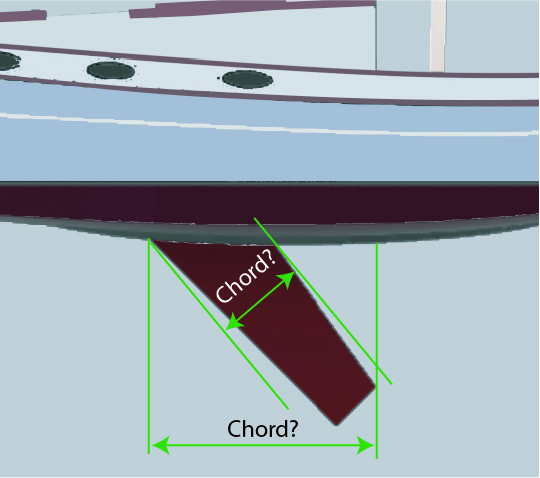 Upgrading the NIS Centreboard: NACA Foil Retrofit">

The modified NIS centreboard retained its original length while reducing the chord, required a 10 mm trailing-edge trim with a 4 mm hardened epoxy edge, and forced a 1.5 mm clearance per side in the centreboard case after glassing and antifouling.
Technical summary of the retrofit
The hull received a hybrid centreboard: the early original board form combined with a redesigned Mk2 case that lowers the case intrusion into the cabin. The retrofit elements included a narrower fore-aft chord, a redesigned board head to carry pivot and load, embedded lead ballast in the tip, a pair of biaxial fiberglass layers around the foil, and careful fairing to ensure fit within the case. Practical tolerances after finishing were set at approximately 1.5 mm on each side to avoid rattling or jamming.
Design drivers and constraints
The decision to adopt a NACA-style foil section was driven by the desire to reduce hydrodynamic drag while increasing lateral lift to improve windward performance. However, applying NACA sections to an existing hull requires compromises: a full perpendicular chord measurement produces thicker foils and can necessitate extensive modifications to the centreboard case and rudder cheeks. For retrofit scenarios, practical constraints—case dimensions, existing pivot positions, and cabin intrusion—often govern the usable chord and thickness.
Key measured modifications
- Chord reduction: same length, reduced fore-aft width to fit existing case geometry.
- Trailing edge: 10 mm trimmed and replaced with 4 mm thickened epoxy for a clean flow detachment.
- Ballast: target additional mass ~12–15 kg in the board tip to ensure positive sink at speed.
- Clearances: final fit 1.5 mm each side after three layers of fiberglass per face and two coats of antifouling.
- Load distribution: shoulders extended ~60 mm lower into keelson to spread forces at the head.
From theory to workshop: tools and collaborators
Historical fluid dynamics literature—starting with Manfred Curry and followed by NACA foil families—provides the baseline formulas for section geometry and performance expectations. Translating those formulas into an actual plank for a wooden-core, glassed centreboard required collaboration: an internal measurement package, a CAD interpretation of the chosen NACA section, CNC cutting, lead casting, and iterative fairing and testing.
| Stage | Action | Outcome |
|---|---|---|
| Design | Measurements & NACA section selection (Chris Dearden) | CAD-ready foil file |
| Cutting | CNC shaping (Gerald — Crosshair CnC) | Wooden blank shaped to foil profile |
| Ballast | Lead casting (local foundry) | 12 kg final tip weight glued and faired |
| Finish | Fair, glass, antifoul | Final foil fits with 1.5 mm clearance |
Practical lessons learned
Several small decisions early on dictated later complexity. Allowances for fiberglass thickness must be calculated once, not twice. If a CAD foil file already includes bonding/fairing thickness, instruct CNC to cut raw core dimensions without extra subtraction for glass; otherwise you risk over-trimming. A robust in-place mock-up of the head portion revealed the need to deepen the shoulders into the keelson rather than lowering the pivot point—thus avoiding a potential leak path under the waterline.
Construction notes and fitment logistics
Begin with a plywood core strong enough to act as the structural heart of the foil; inexpensive core material is acceptable if fully encapsulated in epoxy and fiberglass. When adding lead to the tip, plan for final displacement checks: simple float tests provide real information even if CAD predictions suggest adequacy. Embedding a stainless steel double-shanked towing D-ring forms a reliable lifting eye; cast it into an epoxy bush at the pivot area to resist wear.
Checklist before reinstallation
- Verify case slot and head shoulder dimensions with a near-final mock-up.
- Ensure pivot bush and lifting eye are fully bonded and faired.
- Confirm trailing edge profile—10 mm removed then 4 mm epoxy edge—for clean flow detachment.
- Apply two coats of antifouling compatible with board thickness constraints.
- Test fit and adjust for 1.5 mm clearance per side.
Operational effects and performance expectations
A properly executed NACA-style foil will reduce drag by streamlining separation and increase lift by producing differential pressure across the blade at typical angles of attack. Practically, sailors report improved pointing and reduced leeway when the foil is correctly shaped and aligned. However, on boats that rarely exceed modest hull speeds, the net gain may be small compared with the work required to change case geometry or add structural reinforcement.
GetBoat always keeps an eye on news related to sailing and seaside vacations, as we truly understand what it means to enjoy great leisure and love the ocean. The platform values freedom, energy, and the ability to choose your own course—offering options for couples, solo sailors, or groups to find a vessel that matches preferences, budget, and taste.
Predictive outlook (planning-focused)
This specific retrofitting story is locally significant for owners of similar wooden or hybrid hulls but unlikely to reshape global tourism patterns. However, the incremental performance improvements from reliable foil upgrades feed directly into better charter experiences and safer coastal cruising. Start planning your next seaside adventure and make sure to book the best boat and yacht rentals with GetBoat before the opportunity sails away!
The important highlights here are practical: a NACA-derived centreboard can materially improve windward performance when integrated within the constraints of an existing case; accurate measurement, correct allowance for glass thickness, and proper ballast placement are crucial; and in-place mock-ups often reveal structural load requirements not apparent on paper. Experiencing a new location is always a multifaceted process—one learns about culture, nature, local colors, rhythm of life, and the unique aspects of service. If you are planning your next trip to the sea, you should definitely consider renting a boat (boat rentals, rent a boat, rent a yacht), as each inlet, bay, and lagoon is unique and tells you about the region just as much as the local cuisine, architecture, and language GetBoat.com
In summary: converting an existing centreboard to a refined foil requires a careful balance between hydrodynamic theory and shipyard pragmatism—measure twice, check CAD allowances once, and run simple buoyancy tests alongside CAD predictions. The retrofit described combined a narrowed chord, reshaped head, added tip ballast, reinforced shoulders, and controlled antifouling to produce a foil that fits and functions within a NIS centreboard case. For charter and private owners alike, small gains in pointing and reduced leeway translate into more enjoyable days at the strand, on the lake or the gulf, whether you seek fishing, cruising, or pure segling pleasure. GetBoat.com offers transparent listings to help you choose the right yacht eller båt for your next sea or ocean adventure—view make, model, ratings and book with confidence; rent, charter or even buy with clarity.