


 Slovenčina
  English (UK)
  Русский
  العربية
  日本語
日本語  한국어
한국어  Magyar
  Türkçe
  Español
  Čeština
  Svenska
  Português
  Ελληνικά
  Suomi
Suomi  Nederlands
  Română
  Italiano
  Français
  Polski
  Українська
  Deutsch
  简体中文
简体中文 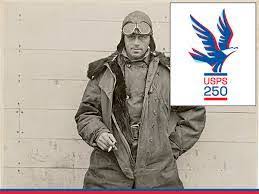 William C. Hopson — Priekopník leteckej pošty a novátor">

This article reveals the life and career of William C. Hopson, an early U.S. airmail pilot, his experiences flying primitive mail planes, and the broader impact of airmail on global transport and tourism.
From Hempstead Training to Transcontinental Routes
William C. Hopson entered the U.S. Airmail Service on April 14, 1920, with 741 hours of flight time. Trained at Hempstead, Long Island, he earned recognition by winning a pilot incentive contest sponsored by Otto Praeger, the second assistant postmaster general. Over his airmail career Hopson logged an impressive 4,043 flight hours and flew 413,034 miles, totals surpassed by only two other pilots in the service’s early cadre.
Hopson primarily flew the Omaha–Chicago leg of the transcontinental airmail route, a demanding segment that required resolving frequent weather, navigation, and landing challenges. His chosen aircraft for much of this service was the British-designed De Havilland DH-4B, a biplane with a front cockpit converted into a cargo hold capable of carrying roughly 500 pounds of mail and cruising at about 95–100 mph. Though reliable, the DH-4B had known handling quirks—tendency to stall and high landing speeds—yet Hopson regarded it as “the only suitable ship for mountains in all weather.”
Close Calls, Cornfields, and Courage
Hopson’s career featured daring recoveries from severe weather. In 1925, during a storm near Anita, Iowa, an air pocket dropped his DH-4B nearly into the ground; the aircraft harvested about 75 bushels of corn before overturning and pinning him beneath the wreck. Despite being drenched and pinned among cornstalks, he fired his revolver to attract help. Official reports noted he was only slightly injured and the mail was wet in spots; the plane was largely ruined.
His practical approach to flying in adverse conditions is captured by one of his aphorisms: “The best system of flying bad weather is not so much to go rip roaring through nasty weather, but to use your head for something else besides a hatrack, and fly where bad weather ain’t.”
Life as an Early Airmail Pilot: Pay, Duty, and Transition
Beginning airmail pilots in 1925 received base pay between $2,000 and $2,800, varying with night flying responsibilities. In addition to salary, pilots earned five to seven cents per mile flown, with nighttime mileage paid at double rates. Importantly, pilots signed agreements to fly in all types of weather, making the profession perilous but central to the expanding postal network.
Hopson’s official service ended on August 27, 1927. When contract carriers took over domestic airmail routes on September 1, 1927, Hopson transitioned to the private sector, joining National Air Transport to fly Contract Air Mail Route 17 between New York and Chicago—an Allegheny route noted for its difficulty and limited emergency landing options. On October 18, 1928, Hopson was killed when his plane struck treetops during a severe storm near Polk, Pennsylvania, a tragic end that underscored the hazards faced by early aviators.
A Passenger’s Tribute
A passenger whose life Hopson had helped save published a tribute in The St. Louis Times following Hopson’s death. Will Rogers’ note recalled Hopson’s commitment to completing a flight in poor conditions and expressed gratitude for the pilot’s skill: “I kinder feel like his skill saved my life. So ‘Hoppie,’ Old Boy, here’s hoping you are piloting the best cloud the Boss has got in his hangar up there….”
Technological and Geographic Expansion of Airmail
The airmail service, evolving from modest domestic routes into a global network, drove key advancements in aviation. By the end of 1930, much of the Western Hemisphere had established air links with the United States. Major milestones followed:
- Transpacific routes: Began November 22, 1935 (FAM Route 14 from San Francisco to the Philippines via Pacific islands).
- Asia–Oceania expansions: Extensions reached Hong Kong (1937), New Zealand (1940), Singapore (1941), Australia (1947), and China (1947).
- Transatlantic routes: Initiated May 20, 1939, with Pan American’s Yankee Clipper connecting New York to Marseilles in roughly 29 hours, and later establishing a New York–Great Britain connection via North Atlantic waypoints.
- Jet era: On October 4, 1958, the first jet airliner carried mail between London and New York, shrinking the transatlantic trip from 14 hours to 8.
Table: Hopson’s Key Career Figures
| Category | Figure |
|---|---|
| Flight hours at hiring | 741 hours |
| Total miles flown | 413,034 miles |
| Total hours logged | 4,043 hours |
| Typical DH-4B cruise speed | 95–100 mph |
Historical Context and Long-Term Significance
Early airmail pilots like Hopson served as pioneers who tested aircraft, navigation, and operational procedures under routine pressure. Their daily flights contributed to the development of airways, communications, navigation aids, and operational standards that later supported regular passenger and cargo aviation. Charles I. Stanton, an early airmail leader, described these elements as the seeds planted by airmail service that became cornerstones of the global transport structure.
The transition from government-run airmail to contract carriers in 1927 and later technological leaps—such as transoceanic routes and jet transports—moved mail and passengers alike toward faster, more reliable services. By the mid-20th century, the line between airmail and first-class postal transport blurred as commercial aviation increasingly carried correspondence alongside people and freight.
Forecast: What Hopson’s Story Means for Travel and Tourism
Hopson’s era illustrates how investment in reliable air transport unlocks broader mobility. Continued advances in aviation infrastructure historically widened tourism opportunities, accelerating connections between distant destinations and fostering growth in international travel. While Hopson’s story is anchored in mail delivery, the same operational improvements—navigation aids, dependable aircraft, and established routes—directly enabled the expansion of passenger aviation and international tourism.
Key Takeaways
- William C. Hopson exemplified the courage and skill of early airmail pilots who operated with limited instruments and high personal risk.
- Stránka DH-4B played a central role in early airmail operations despite its handling challenges.
- Technological and organizational developments from airmail operations laid foundations for modern global air transport and long-haul tourism.
GetBoat is always keeping an eye on the latest tourism news and developments; readers can follow updates at GetBoat.com. The saga of Hopson and his peers highlights how early aviation shaped transportation and opening of new destinations, influencing travel, boating and yachting activities, marinas, beach access, and broader tourism patterns across sea and land—reminding modern travelers and captains alike that advances in one transport sphere often ripple into others such as yacht and boat chartering, sailing, and waterfront recreation.