


 Slovenčina
  English (UK)
  Русский
  العربية
  日本語
日本語  한국어
한국어  Magyar
  Türkçe
  Español
  Čeština
  Svenska
  Português
  Ελληνικά
  Suomi
Suomi  Nederlands
  Română
  Italiano
  Français
  Polski
  Українська
  Deutsch
  简体中文
简体中文 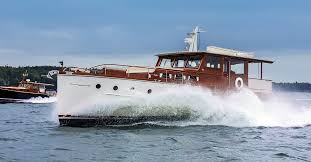 Modern Cold-Molded Wood Motoryachts">

Transporting a 55-foot, 60,000-pound cold-molded motoryacht such as the Wheeler Syntax requires coordinated logistics: oversized permits for road moves, a crane with a 70,000-pound rating for lifts, and careful berth planning at marinas with adequate draft and fingerspace. Launch windows, haul-out capacity, and local harbor regulations all shape the schedule before the boat ever tastes salt water.
What cold-molding actually is
Cold-molding replaces the old plank-on-frame tradition with a laminated plywood and epoxy system that behaves more like a composite hull. Sheets of marine plywood are laid over bulkheads and frames, usually in diagonal orientations, and bonded with high-strength epoxy. Layers are applied at alternating angles—commonly 45 and 90 degrees—to create a unified, anisotropic panel that distributes loads like a fiberglass laminate.
For high-load applications the layup increases: smaller runabouts might use two plies, coastal cruisers three to four plies, while performance motoryachts can go up to six or more. In the Wheeler 55 case, six quarter-inch plies formed a hull bottom about 1.5 inches thick to resist bottom loads and pressures at 30+ knots; topsides were engineered with four layers for roughly 1 inch of panel thickness.
Why modern wooden hulls behave differently
The key differences from vintage wooden construction are seam reduction and the epoxy-to-wood bond. With cold-molding there are far fewer seasonal seams, so the old ritual of swelling planks each spring is largely obsolete. After the cured laminate is finished, the exterior is typically sheathed with a layer of fiberglass cloth set in epoxy for abrasion resistance and total moisture sealing—think of it as a wooden hull with an FRP skin.
| Boat Type | Typical Ply Count | Total Thickness | Use Case |
|---|---|---|---|
| Dayboat / Tender | 2–3 | 0.5″–0.75″ | Nearshore cruising, low-speed |
| Coastal Cruiser | 3–4 | 0.75″–1″ | Extended cruising, charter |
| Large Motoryacht (50–60ft) | 4–6+ | 1″–1.5″+ | High-speed, ocean-capable |
Maintenance, durability, and insurance
Modern wood yachts are not the high-drama, high-maintenance creatures many imagine. The combination of marine plywood, epoxy bonding, and an outer FRP layer makes them resilient and relatively low-maintenance—still more tactile than fiberglass, but far removed from a rotting 1930s cruiser. Routine upkeep focuses on topside finishes, checking coatings, and the usual engine and systems maintenance. For charter operators and owners, predictable maintenance cycles reduce downtime and improve insurance underwriting.
- Dokončiť care: Varnish and paint inspections annually; spot repair of chips.
- Structural checks: Fastener and bonding inspections during haul-outs.
- Systems: Engine, electrical, and steering maintenance follow standard marine schedules.
Design examples and modern commissions
Contemporary yards and designers have translated classic lines into modern, cold-molded builds. Notable examples include a modern Wheeler replica of Ernest Hemingway’s 38-foot Wheeler Pilar, a rebuilt Huckins Avocette styled and reconstructed by Yachting Solutions in Rockport, Maine, the 24-foot Van Dam gentleman’s racer capable of 50 knots, and the large Wheeler 55 motoryacht, Syntax. Owners often quip—when asked about price—the joking reply: “United States currency.”
These projects show that cold-molding scales from nimble dayboats to heavy, 2,000-horsepower motoryachts without reverting to old methods. The resulting boats are lighter than comparable plywood plank vessels, stiff enough for high speed, and attractive to clients who want classic wood aesthetics with modern reliability.
Operational impact for charter fleets and marinas
For the charter market, cold-molded wood offers a middle ground between pure fiberglass production yachts and the craft of old. The finish and appeal of wood attract higher-end charters and captains looking for a standout yacht in a crowded marina row. From a logistics point of view, operators should account for:
- Berthing and launch: ensure marina fingers and travel lifts can handle gross weight and beam.
- Turnaround time: lower seasonal seam issues mean quicker prep between charters.
- Insurance and sale: documented cold-mold construction often improves resale value and simplifies coverage.
When listing on platforms like GetBoat.com, noting a cold-molded hull, experienced captain availability, and nearby prístavy alebo destinations can make a craft more attractive for charter a rent searches. Owners should highlight activities (fishing, coastal cruising, water sports) and nearby attractions—beach days, clearwater bays, or gulf anchorages—because buyers and renters love specifics.
In short, cold-molded wooden yachts blend classic aesthetics with modern engineering and logistics. They demand sensible planning for transport, lifts, and berthing but reward owners and charter operators with stunning vessels that hold up in charter service. Whether you’re listing a yacht for charter, planning a sale, or preparing a boat for summer rent, the cold-molded approach gives you a resilient, beautiful platform for plachtenie, motoring, and yachting adventures across marinas, lakes, and the open ocean.