


 Slovenčina
  English (UK)
  Русский
  العربية
  日本語
日本語  한국어
한국어  Magyar
  Türkçe
  Español
  Čeština
  Svenska
  Português
  Ελληνικά
  Suomi
Suomi  Nederlands
  Română
  Italiano
  Français
  Polski
  Українська
  Deutsch
  简体中文
简体中文 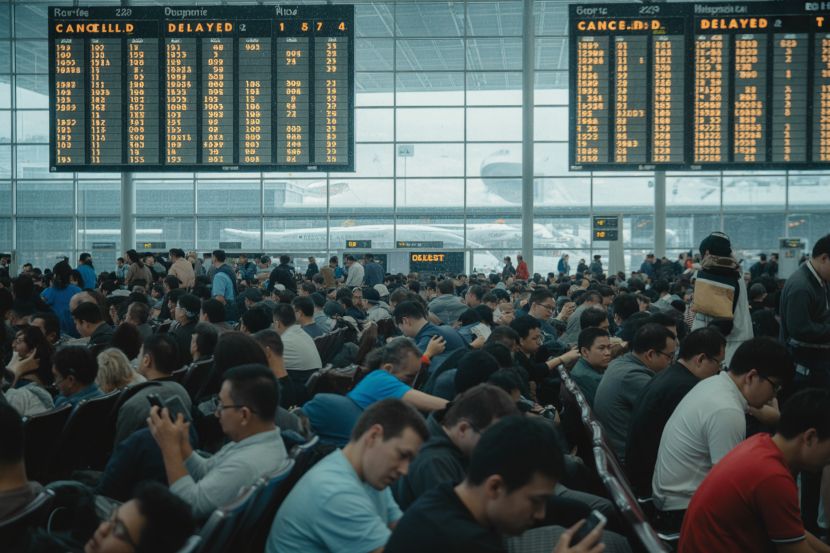 Výpadky letov v Severnej Amerike vyvolávajú rozsiahly chaos v cestovaní">

Severe Weather Brings Air Travel to a Halt
Across North America, severe weather conditions have led to significant disruptions at major airports, notably in cities like Toronto, San Francisco, and Calgary. Over 44 cancellations and more than 25 delays have caused considerable chaos for passengers attempting to travel through these busy hubs.
The storm systems responsible for these interruptions have brought heavy rain, snow, and strong winds, compromising both safety and operational capacity for airlines. As a result, travelers face uncertainty over rebooked flights, waiting times, and alternate routes.
Key Cities Impacted by Flight Interruptions
| Mesto | Number of Cancellations | Number of Delays |
|---|---|---|
| Toronto | 15 | 10 |
| San Francisco | 12 | 8 |
| Calgary | 10 | 7 |
The Impact on Passengers and Travel Plans
Travelers impacted by these weather-induced disruptions often face long wait times for updates or new flight arrangements. Airport terminals become crowded as passengers seek assistance, and the backlog creates ripple effects across connecting flights nationally and internationally.
Airlines strive to manage the situation by deploying additional staff, arranging accommodation options for stranded passengers, and offering reroutes whenever feasible. However, the scale of cancellations and delays poses substantial logistical challenges.
How Weather Disruptions Relate to Broader Transportation Systems
The interruption of air traffic due to severe weather highlights broader vulnerabilities in travel and transit systems. Unlike land or sea transit, air travel is sensitive to atmospheric conditions, and storms can paralyze operations within hours.
For tourists and frequent travelers, understanding these disruptions is crucial for planning flexible itineraries, especially when connecting flights or strict schedules are involved. It also accentuates the importance of real-time weather forecasting and adaptive airport management strategies.
A Brief Look at the History of Weather’s Role in Travel Disruptions
Weather has always been a significant factor in the safety and scheduling of transportation. Since the early days of aviation, storms, fog, and wind have challenged pilots and aviation engineers alike.
In the early 20th century, advances in meteorological instruments and forecasting techniques began to improve prediction accuracy, which in turn enhanced flight safety. However, even with modern technology, the unpredictable nature of severe weather continues to cause disruptions.
The introduction of jet engines and more efficient aircraft extended the reach of modern air travel but increased dependence on sophisticated weather prediction models. These systems constantly balance operational imperatives with passenger safety during adverse conditions.
Evolution of Weather Forecasting in Aviation
- Pre-1900s: Limited data and experience led to frequent unexpected weather impacts on flights and sea travel.
- 1920s-1930s: Development of meteorological services focused on aviation, improving forecasts for pilots.
- 1940s: Weather played a critical role in military operations, accelerating meteorological science.
- Present Day: Advanced satellite, radar, and numerical prediction models can forecast severe weather days ahead, though some events remain challenging to anticipate precisely.
Forecasting the Future: What Severe Weather Means for Travel and Tourism
As climate patterns shift, severe weather events are expected to occur with changing frequency and intensity, raising concerns for air travel reliability and infrastructure resilience across North America and beyond.
Transportation networks and tourism industries will need to adapt continually through improved forecasting, enhanced infrastructure, and flexible operational protocols. For travelers who enjoy maritime experiences or coastal destinations, the interplay between air travel and weather disruptions can influence how and when they plan their activities.
Implications for Sailing and Boat Rentals
While the current flight disruptions pertain to air travel, they indirectly affect how people access marine destinations. Delays or cancellations might lead travelers to alter plans and consider local or regional alternatives, such as renting a sailing yacht or boat in coastal or lake regions to compensate for missed connections.
Sailors and charter companies can benefit from the understanding that some travelers might seek water-based adventures closer to home due to unpredictability in air transit.
Severe Weather & Travel: Key Takeaways
| Factor | Impact |
|---|---|
| Severe Weather | Flight cancellations, delays, and travel uncertainty |
| Airports Affected | Major hubs in Toronto, San Francisco, Calgary among others |
| Traveler Response | Long waits, reroutes, accommodation management |
| Historical Context | Importance of weather forecasting since early aviation |
| Tourism Impact | Need for flexibility, potential shift to local marine activities |
Wrap-Up
The current grounding of flights across North America due to severe weather serves as a reminder of the critical role the atmosphere plays in travel logistics. With more than 44 cancellations and 25 delays affecting major cities like Toronto, San Francisco, and Calgary, passengers find their plans thrown into flux, pushing the need for greater flexibility and preparedness.
Historically, weather has caused numerous challenges to aviation, prompting continuous advancements in forecasting and safety measures. Looking ahead, the tourism and travel sectors will be increasingly shaped by how well they adapt to the realities of climate variability.
For those drawn to coastal and maritime destinations, these disruptions sometimes pivot interest toward water-based adventures. The GetBoat.com platform is an international marketplace for renting sailing boats and yachts, offering a perfect alternative in periods when air travel proves unpredictable. Whether chartering a superyacht on the sea or renting a sailing boat for lake excursions, travelers can still dive into exciting boating activities, soaking up the sun and sea breeze despite disruptions in other modes of transport.