


 Slovenčina
  English (UK)
  Русский
  العربية
  日本語
日本語  한국어
한국어  Magyar
  Türkçe
  Español
  Čeština
  Svenska
  Português
  Ελληνικά
  Suomi
Suomi  Nederlands
  Română
  Italiano
  Français
  Polski
  Українська
  Deutsch
  简体中文
简体中文 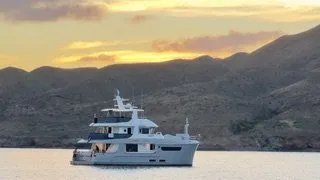 Relocating Arkana: A Nordhavn Passage South">

Fuel planning, hours and timing for a safe southbound move
The relocation of Arkana began with a deliberate fuel plan: tanks topped off in San Diego, departure timed to maintain a 48-hour buffer ahead of a forecast northwest system, and an acceptance threshold based on fewer than 500 hours on the main engines. That kind of logistical foresight kept the passage within conservative range margins and minimized offshore risk during the initial Baja leg.
Vessel profile and critical systems
Delivered in 2024 as Nordhavn hull 7102, Arkana demonstrated why the Nordhavn 71 is considered a true passagemaker. The boat paired a large lithium battery bank with a full Victron system and zero-speed stabilizers, enabling extended energy autonomy at anchor and during slow transits—features that matter to both private owners and charter operators.
| Spec / System | Details |
|---|---|
| Hull | Nordhavn 71 (hull 7102) |
| Engine Hours | < 500 hours at transfer |
| Electrical | Large lithium bank + Victron management |
| Comfort & Systems | Zero-speed stabilization, steam shower, heated floors |
| Auxiliary | Dual watermakers with Spot Zero, sewage treatment |
Crew, orientation, and hands-on handover
The sale closed late in 2025 and included a hands-on handover: a survey and sea trial followed by onboard orientation from Eric Leishman of Nordhavn Yachts. Such operational training—systems walkthroughs, passage planning, and crew procedures—reduces buyer learning curves and feeds practical feedback into future builds. On the southbound leg the complement included the owner, a returning friend, John Ellis from Dragon, and Leishman; Karsten served as crew and Peter the boat dog kept morale high.
Route highlights and local logistics
Arkana eased out of San Diego Bay, passed the Coronado Islands, and worked south with weather windows that favored coastal routing. Fishing lines north of Cedros produced yellowtail and dorado—simple provisioning that extended fresh meals during the crossing. Strategic stops and local services played a key role in the itinerary:
- Santa Maria (near Magdalena Bay) — greeted by Nordhavn 47.5 Dulcezza and replenished with local lobster via panga crew.
- Cabo San Lucas — Mexican clearance and crew exchange; replenishment of fresh provisions.
- Cabo San José & Los Muertos — sheltered anchorages for rest, Lift board sessions, and shore time.
- San José Island — mangrove exploration and staging before the final run.
- Puerto Escondido, Loreto — arrival at a new dock with marina hospitality and a grand opening celebration.
Voyage log (condensed)
| Day | Leg | Activity |
|---|---|---|
| 1 | San Diego → past Coronado Islands | Fueling, depart, initial transit |
| 3 | Near Cedros Island | Fishing—yellowtail & dorado |
| 4 | Santa Maria | Anchored, lobster delivered by panga |
| 5 | To Cabo San Lucas / San José | Clearance, crew swap, whale escorts |
| 6–8 | Sea of Cortez northbound | Stops at Los Muertos, San José Is., final push to Loreto |
Onboard comforts that matter to charter and rental markets
Arkana’s configuration reads like a checklist for premium charters and high-end rentals: a tasteful interior, extensive navigation electronics, top-tier audiovisual gear, and conveniences such as ice makers and deep freezers. For operators in the charter and boat-rent sectors, these systems translate into higher guest satisfaction, lower downtime, and competitive differentiation—especially on long-range itineraries through the Sea of Cortez or Pacific coasts.
- Guest comfort: heated floors, steam shower, roomy salon
- Operational resilience: dual watermakers, sewage treatment
- Energy independence: lithium bank + Victron for anchorage amenities
Community, marinas, and destination value
The arrival at Puerto Escondido coincided with the grand opening of a new marina beach club—an example of how infrastructure investments raise destination appeal for both private owners and charter fleets. Seeing larger vessels like the 387-foot Feadship Launchpad alongside local Nordhavns underscores how marinas can attract a mix of superyacht and expedition traffic, improving services for all.
All hands aboard enjoyed communal moments—Lift electric hydrofoil fun, whale escorts, and dockside hospitality. Little things like a warm marina welcome, fresh seafood caught and delivered by locals, and a well-timed weather window make the difference between a stressful delivery and one that’s, well, smooth sailing.
In summary, Arkana’s San Diego to Loreto relocation balanced careful logistics, proven systems, and practical crew training to produce a low-risk, high-comfort delivery. The passage showcased the Nordhavn 71’s passagemaking ability, the value of thorough handover training, and the importance of marina infrastructure and local services for successful yacht relocations. For anyone involved in yacht sale, charter, or boat rent operations, lessons here touch on fuel and provisioning planning, electrical autonomy, and destination readiness—key factors whether you’re captain, owner, or charter operator looking to schedule the next sea-bound adventure to beaches, clearwater anchorages, fishing grounds, or marinas in the gulf and beyond.