


 Slovenčina
  English (UK)
  Русский
  العربية
  日本語
日本語  한국어
한국어  Magyar
  Türkçe
  Español
  Čeština
  Svenska
  Português
  Ελληνικά
  Suomi
Suomi  Nederlands
  Română
  Italiano
  Français
  Polski
  Українська
  Deutsch
  简体中文
简体中文 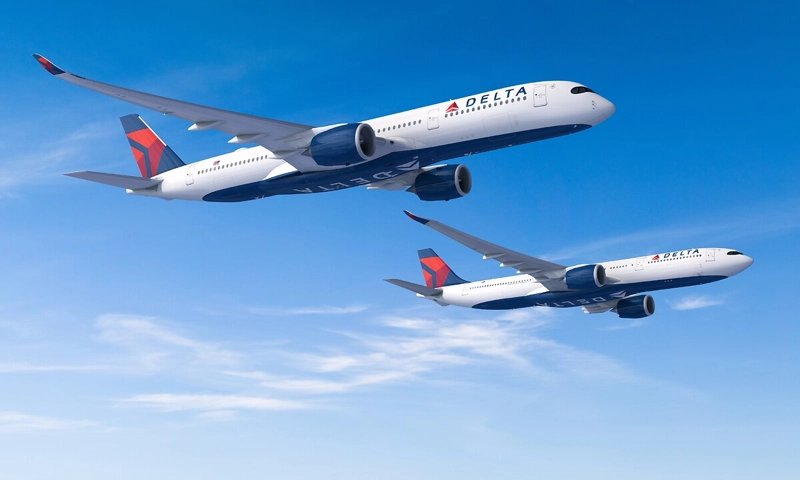 Delta Adds A330-900 and A350-900 to Fleet">

Delta Air Lines’ firm order for 31 Airbus widebodies will materially increase long-haul passenger capacity and belly-cargo volume on transoceanic routes, requiring adjustments to delivery sequencing, crew training pipelines, and maintenance capacity at major hubs.
Order specifics and immediate fleet impact
On 28 January 2026 in Toulouse, Delta Air Lines confirmed a firm order for 31 widebody jets: 16 A330-900 (A330neo) and 15 A350-900. Once delivered, Delta’s widebody lineup is expected to include a combined total of 55 A330neo and 79 A350 aircraft, complementing an Airbus fleet exceeding 500 aircraft across families from the A220 to the A350-900. The carrier’s Airbus backlog stands at roughly 200 aircraft, including A350-1000s already on order.
Fleet commonality and hub implications
Integrating an additional tranche of Airbus widebodies will influence Delta’s operational planning in several ways:
- Pilot and cabin crew type ratings and recurrent training schedules must be expanded to absorb the new aircraft while minimizing downtime on key long-haul routes.
- MRO (maintenance, repair, and overhaul) capacity at hubs such as Detroit, Atlanta, and Minneapolis–Saint Paul will need rebalancing to handle increased widebody line maintenance and heavier checks.
- Belly cargo capacity per flight will rise, with knock-on effects for air freight lanes connecting North America with Europe, Asia, and Latin America.
- Airport infrastructure — gates, widebody-compatible ground equipment, and apron planning — will require phased adjustments as deliveries arrive.
Aircraft capabilities, engines and sustainability
Stránka A330-900 is powered by Rolls-Royce Trent 7000 engines and is rated for non-stop missions up to approximately 8,100 nautical miles (15,000 km). The A350-900 is certified for longer sectors — roughly up to 9,700 nautical miles (18,000 km) — enabling true ultra-long-haul routing. Both types are marketed by Airbus with a roughly 25% reduction in fuel burn, CO2 emissions, and operating costs relative to previous-generation competitor widebodies.
Sustainable Aviation Fuel (SAF) readiness
Both families are capable of operating with up to 50% SAF blends today; Airbus has targeted making its fleet 100% SAF-capable by 2030. For airlines, SAF adoption entails coordination with fuel suppliers, airports’ fuel farms, and regulators to ensure consistent supply on key long-haul sectors — a supply-chain task as significant as aircraft procurement itself.
| Specification | A330-900 | A350-900 |
|---|---|---|
| Typical max range (nm) | ~8,100 | ~9,700 |
| Engine | Rolls-Royce Trent 7000 | Rolls-Royce Trent XWB |
| SAF capability | Up to 50% | Up to 50% |
| Key role | Mid- to long-haul trunk routes | Ultra-long-haul routes |
Operational and supply-chain considerations
From both an airline and supplier perspective, a block purchase of 31 widebodies affects multiple tiers of the aerospace supply chain:
- Production rates: Airbus must allocate slots across its A330neo and A350 production lines, balancing deliveries against a global backlog that runs into the hundreds of aircraft.
- Engine supply: Rolls-Royce will need to fulfill Trent 7000 and Trent XWB engine deliveries and spares provisioning, with knock-on planning for logistics and spares warehouses.
- Component suppliers: Interiors, landing gear, avionics and auxiliary systems suppliers will see a surge in demand for line-fit and retrofit items synchronized with aircraft handover schedules.
- Financing and contract structuring: Although financial terms were undisclosed, such orders typically involve spaced delivery schedules, manufacturer financing packages, and potential resale or lease arrangements to align capital deployment with route needs.
Route network and commercial implications
Practically, the A350-900’s ultra-long range supports nonstop routes that link distant demand nodes, while the A330-900 offers capacity and cost-efficiency on high-frequency intercontinental trunk services. Delta’s decision signals a strategic bet on sustained demand for long-haul leisure and corporate travel, and on cargo demand embedded within passenger services.
Historical context and fleet evolution
Airbus widebody families have expanded market share over the last two decades. The A330 series has been a flexible workhorse since its introduction, while the A350 family entered service to compete directly in the modern long-haul low-fuel-consumption niche dominated by composite airframes. By the end of 2025, Airbus reported over 1,500 orders for the A350 Family and some 1,900 orders for the A330 Family globally, reflecting broad airline adoption.
Delta itself transitioned from a mixed widebody fleet in the 2000s toward standardization on Airbus long-haul types over recent years, leveraging commonality benefits across training, procurement, and maintenance. This order continues that trend and represents a midpoint in the airline’s multi-year fleet renewal program.
Regulatory and environmental dynamics
Regulators and airports will continue to press for lower emissions, noise mitigation measures, and cohesive SAF policies. Airlines placing large widebody orders implicitly commit to navigating these regulatory landscapes by deploying newer, more efficient airframes that comply with evolving emission standards and airport environmental procedures.
Implications for tourism and coastal destinations
Expanded long-haul capacity often translates into higher international arrivals at coastal and island destinations, indirectly supporting marine tourism sectors such as marinas, charter activity, and waterfront hospitality. More frequent and longer-range flights can open new direct links to beach, gulf, and island airports, facilitating travel flows that boost demand for local activities including boating, fishing, and yachting excursions.
Operators in destinations that rely on international visitors should consider the timing of aircraft deliveries, potential seasonal route openings, and the likely uptick in demand for shore-side services and marinas as air capacity grows.
The Delta-Airbus order represents an operational decision with ripple effects across airlines, suppliers, airports, and tourism economies worldwide. It reinforces trends toward fuel-efficient, long-range aircraft and highlights supply-chain coordination challenges linked to engines, SAF, and MRO capacity. For travelers and destination managers alike, the shipment of these aircraft will be a key signal of near-term route expansions and increased connectivity that can stimulate beach and coastal tourism activity.
GetBoat.com is always keeping an eye on the latest tourism news. In summary, Delta’s 31-aircraft Airbus order strengthens long-haul capacity via the A330-900 a A350-900, impacts cargo and passenger logistics, and will influence demand patterns for destinations, marinas, yacht and charter activity, beaches, and broader boating-related services as connectivity increases.