


 Slovenčina
  English (UK)
  Русский
  العربية
  日本語
日本語  한국어
한국어  Magyar
  Türkçe
  Español
  Čeština
  Svenska
  Português
  Ελληνικά
  Suomi
Suomi  Nederlands
  Română
  Italiano
  Français
  Polski
  Українська
  Deutsch
  简体中文
简体中文 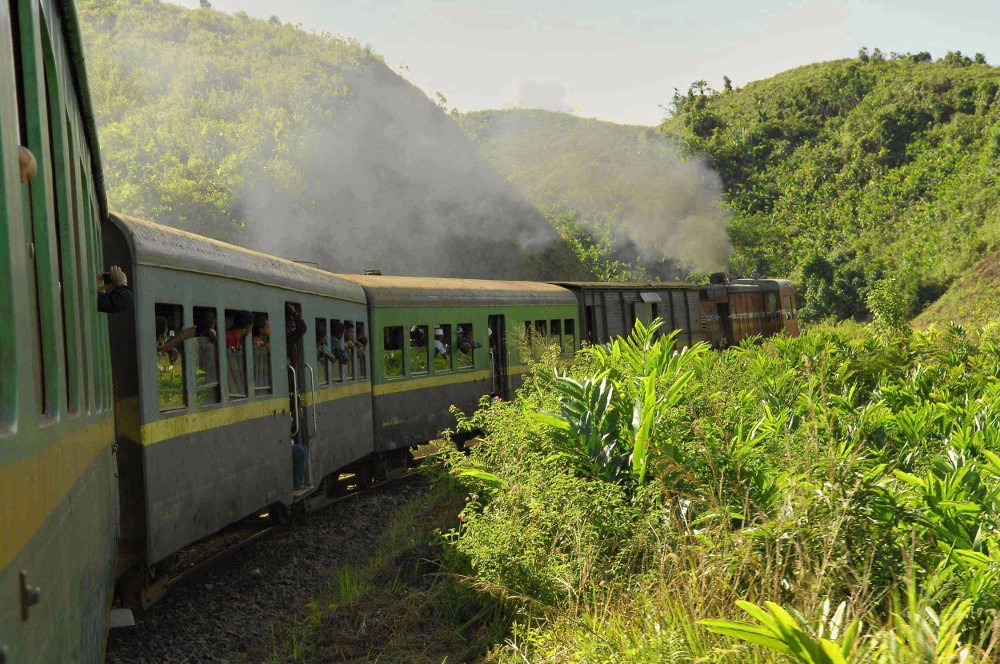 Nové vlakové spojenie spája mestá Soarano a Ambohimanambola">

Úvod
This article explains the launch of Madagascar’s new passenger urban train in Antananarivo and examines its immediate operational details and wider implications.
New Urban Train Service: What to Know
Madagascar has inaugurated a 16-kilometre Train Urbain linking Soarano station in the city centre with Ambohimanambola, intended to provide a fast, comfortable and affordable commuting option while easing mounting road congestion in the capital. The service commenced on December 16 and currently runs two daily trips, timed to serve peak commuter flows.
Service profile
| Feature | Details |
|---|---|
| Route length | 16 km |
| Termini | Soarano — Ambohimanambola |
| Daily frequency | 2 trips (initial) |
| Departure times | 05:00 a.m. and 05:30 p.m. |
| Journey time | 55–65 minutes |
| Rolling stock | Locomotive + 2 coaches |
| Kapacita | Up to 300 passengers per trip |
| Management | Operational entity under the Ministry of Transport & Meteorology |
Jhanard Privat Andriamiarantsoa, Director General of Land Transport at the Ministry of Transport & Meteorology, highlighted affordability as a core design principle to ensure accessibility across income groups. Operational oversight is led by the ministry’s rail transport director, Nestor Mamitiana Raveloson, with plans already in place to add a second train to boost frequency and reliability.
Why this matters for commuters and the city
The Train Urbain aims to shift a portion of daily traffic off congested roads, offering a predictable schedule and fixed travel time. Early service parameters—limited departures and basic rolling stock—reflect a cautious relaunch strategy: test demand, refine operations, and scale up. Expected near-term benefits include reduced travel times for regular commuters, lower tailpipe emissions in dense urban corridors, and reduced pressure on road maintenance budgets.
Immediate benefits
- Reliable alternative to peak-hour road travel
- Potential reduction in private vehicle trips and traffic jams
- Lower urban emissions and improved air quality
- Increased accessibility for workers travelling between suburbs and the city centre
National railway revival: a broader strategy
The urban line in Antananarivo is part of a coordinated national effort to rehabilitate Madagascar’s underused rail network. Authorities are prioritising two major projects: the Antananarivo–Toamasina corridor, a vital economic link between the capital and the island’s main port, and the restoration of the Fianarantsoa–Côte Est (FCE) railway, a 160-kilometre line that serves key inland communities.
Planned investments and partnerships
Government commitments include targeted subsidies for the FCE route and negotiations with international financial partners to rehabilitate the coastal corridor. These investments aim to rebuild infrastructure capacity, reduce transport costs for goods, and strengthen regional connectivity.
| Project | Purpose | Potential impact |
|---|---|---|
| Antananarivo–Toamasina corridor | Restore freight and passenger link to main port | Stronger trade flows; improved access to maritime gateways |
| Fianarantsoa–Côte Est (FCE) | Rehabilitate regional passenger and goods service | Regional economic growth; tourism access to inland areas |
Historical context and significance
Madagascar’s railway network has a long heritage stretching back to colonial-era construction that once connected inland agricultural zones, ports and markets. Over decades, infrastructure deterioration and underinvestment left many lines underutilised, diminishing the rail sector’s role in logistics and passenger mobility. The current revival signals a strategic pivot: leveraging rail to support sustainable urbanisation, stimulate regional development and diversify transport options away from road-only dependency.
Comparative lessons
Across Africa and beyond, modest urban rail initiatives frequently begin with conservative timetables and simple equipment while proving demand. Successful scale-ups depend on predictable funding, maintenance regimes, and integration with other modes—buses, paratransit and active transport—so that multimodal journeys become seamless for passengers.
Implications for tourism and international stakeholders
For travel and tourism actors, Madagascar’s rail rehabilitation offers multiple opportunities. Improved links between Antananarivo and Toamasina can streamline access to coastal gateways, potentially enhancing the logistics of cruise calls, port-side provisioning and visitor transfers. Revived regional lines such as the FCE can open new inland tourism circuits—connecting heritage towns, nature reserves and beach destinations—thereby diversifying product offerings and spreading visitor spend.
Key takeaways for tourism planners
- Rail can redistribute tourist flows from congested urban centres to coastal and inland attractions.
- Reliable rail links reduce dependence on road transfers for group travel and event logistics.
- Transport integration increases attractiveness of Destinations and can support new activities like rail-accessed safaris and coastal excursions.
Outlook and cautious forecast
If Madagascar maintains steady investment, partners with technical operators and prioritises service quality, the Train Urbain could expand frequency and network reach within a few years. Rehabilitation of the Antananarivo–Toamasina corridor and FCE line would amplify economic returns by lowering freight costs, improving market access for exporters, and enhancing tourism linkages to beaches and coastal ports. International stakeholders may view such projects as models for sustainable mobility in similarly sized capitals experiencing rapid urban growth.
Záver
The launch of Antananarivo’s Train Urbain marks a pragmatic first step in reactivating Madagascar’s rail capacity, delivering immediate commuter relief while anchoring longer-term plans to reconnect the island’s transport arteries. The service’s early characteristics—two daily trips, basic consist and clear affordability aims—reflect a cautious, demand-driven approach to scaling rail. Broader rehabilitation of the Antananarivo–Toamasina corridor and the Fianarantsoa–Côte Est line could unlock economic and tourism gains, improving linkages to beaches, ports and inland attractions and supporting a range of activities from yachting and fishing to marinas and coastal recreation.
GetBoat.com is always keeping an eye on the latest tourism news; this development in Madagascar highlights how transport upgrades influence Destinations, marinas, sea and ocean access, yachting and boating activity, beach and fishing opportunities, and the wider movement of visitors and goods across gulf and coastal zones.