


 Slovenčina
  English (UK)
  Русский
  العربية
  日本語
日本語  한국어
한국어  Magyar
  Türkçe
  Español
  Čeština
  Svenska
  Português
  Ελληνικά
  Suomi
Suomi  Nederlands
  Română
  Italiano
  Français
  Polski
  Українська
  Deutsch
  简体中文
简体中文 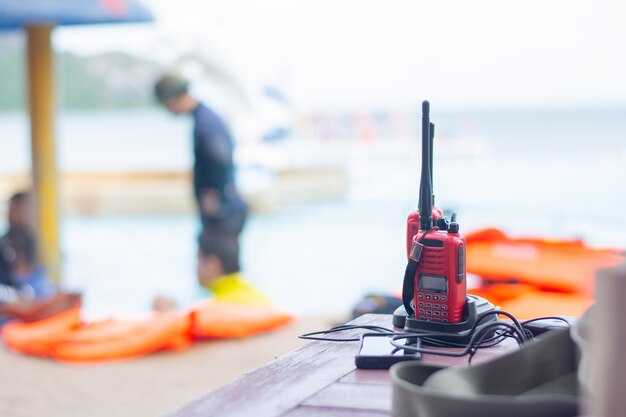 How to Use a VHF Marine Radio – A Practical Guide for Safe Maritime Communications">

Power up and tune to Channel 16 for hailing as your first step. A quick pre-operation check at the dock saves confusion at sea and keeps everyone calm. Verify you can receive and transmit clearly, ensure any transmissions are being transmitted properly, and run a brief loopback demonstration if your radio supports it. This sets a reliable baseline before you head offshore.
When you call, say your vessel name, position, and purpose in a single, calm sentence. A well-known practice is to say, “This is United Star, at 37.40 N, 122.08 W, requesting a working channel for safety and navigation.” Saying these details helps anyone listening respond quickly. At this time, switch to the agreed channel to continue the conversation, keeping messages concise so the radio work remains smooth.
Respect channel etiquette to avoid congestion on busy routes. Listen before speaking; acknowledge receiving and the transmissions you hear, and respond promptly. Use plain language and spell out critical information if needed. Avoid nonessential chatter to keep the channel clear for everyone in your area. Remember that marine VHF is independent of internet connectivity, so these transmissions can support safety even if data links are down. If you hear a transmission, time your reply and keep your message short.
Practice with a demonstration on the dock or in a calm harbor. Involve anyone on board and run a timed drill to simulate calling and responding. For submerged conditions, such as spray or rain, position the microphone at mouth level and use the speaker to improve receiving. This hands-on exercise helps boating teams build confidence and keeps the world of maritime communications united and safe, reminding us that civilization relies on clear, cooperative information sharing that benefits being on the water.
Remember that these practices apply to anyone who operates a radio while boating. For a quick check during time on the water, perform a short dry run with a helper on another vessel to confirm your transmissions are clean and that your signals are being received. Regular training builds confidence, makes work on the radio easier, and strengthens safety in a connected world.
VHF Marine Radio: Practical Guide to Safe Maritime Communications
Turn on your VHF radio, set channel 16 for initial calls, and answer with your vessel name, call sign, and position. Use the same format on all vessels to keep communications clear and efficient.
Know the rules: channel 16 is designated for calling and distress notification; channel 13 is used for inter-ship safety; use these channels in routine traffic and weather updates for motor vessels and other vessels with radios onboard.
Operators should speak calmly, clearly, and concisely. Have both handheld and fixed radios ready, and train crew members to use them so others can hear and respond quickly.
Check batteries and power sources daily; ensure charged batteries and an alternative supply. If your gear is submerged or exposed to spray, keep the battery compartment sealed and dry to prevent corrosion, and note any performance changes.
Choose a model with robust characteristics for marine use, and verify ratings for IP protection, waterproofing, and audio loudness. When using these features, review the uses, settings, and emergency capabilities, and keep the manual handy for quick answer guidance.
canada waters follow well-known channels and local procedures. Maintain a clear identity, including vessel name and call sign, so designated authorities can locate you quickly.
Use radios for weather updates, navigational safety, and medical or crew emergencies. If a medical situation arises, communicate clearly about the nature of the issue, your position, and the required assistance so responders can provide fast support. Keep your voice measured and do not shout; this reduces interference and ensures messages don’t carry down the channel.
Keep notes on who you contacted, what channel was used, and the direction of the vessel’s movement. This helps when you review logs and train new operators, and it supports accountability for the same incident across shifts.
Practice drills until the crew is comfortable with the flow: calling, responding, acknowledging, and closing each transmission. nice routines and discipline save time and reduce risk at sea.
Channel Selection and Transmit Power for Your Vessel
Always start on Channel 16 to establish contact with coast stations or nearby vessels. Identify your vessel name, call sign, and position (latitude) and request to switch to a working channel for the conversation as soon as possible. If available, display your position on a chartplotter to aid responders, and be ready for responding. Keep the first transmission concise and well-structured.
- Channel selection: Start on Channel 16 for distress, safety, and hailing. Once contact is established, move to a working channel as directed by the other party or by your chartplotter. Provide basic details in the first transmission; then switch to the channel intended for ongoing conversation. Without monopolizing the line, ensure everyone listening can track who is speaking and the intent of the message. If the contact is with a vessel you know well, keep the exchange short and move to data sharing quickly.
- Working channels and etiquette: Use channels designated for vessel-to-vessel or coast-to-vessel traffic; listen before transmitting; identify your vessel on each call; if you hear your call sign, respond promptly; if not, repeat your call after a brief pause. On each transmission, speak clearly, use standard phrases, and avoid long monologues that block others; each transmission should be purposeful.
- Transmit power and audio: Hand-held radios typically transmit at 5W. For close-range conversation (roughly 1-3 miles), drop to 1-2W to minimize noise for others. Fixed-mount radios usually offer up to 25W; use 25W for open-water or distant contacts, then lower to 6-10W as you close in. Tune the microphone and adjust the volume so your voice is well heard by the listener; verify the other side can hear you clearly on the speaker. If your model supports auto-tune, enable it for consistent audio quality.
- Range considerations: Open coast contacts benefit from higher power, but avoid staying at full power inside crowded harbors. If you’re under a bridge or deck, reposition to improve line-of-sight to the target station. A chartplotter can show your approximate distance and hazards, helping you tune the channel for reliable reception. Tune for readability rather than raw power, and keep transmissions concise.
- Power management and testing: Regularly test power levels and the antenna; keep the hand-held units charged; ensure you can switch channels quickly. For a chartplotter, confirm the display shows your latitude and current course so responders know where you are; test the link between your radio and chartplotter if available. You want to keep operations ready for every call.
- Emergency and resilience: In distress or urgent situations, transmit Mayday or Pan-Pan on Channel 16 and provide your vessel name, position, and the nature of the emergency. If DSC is available, initiate a priority alert and follow the coast station’s guidance to a working channel for coordination. If there’s no response, try again after a minute; you want to reach everyone listening who can help. If a message was transmitted but not heard, retry promptly on the same or alternate channel.
- Backups and Morse: If voice is compromised, you can send a morse SOS on the appropriate emergency channel if your model supports it; otherwise rely on DSC and repeated voice calls. Some older model radios expose a pahn setting; check the manual to understand its effect on transmit power or alert tones. You may attempt Morse signaling if circumstances require, but keep it brief and correct when possible.
- Connectivity and unity: Stay united with united coast stations and nearby vessels; maintain a simple log of transmissions with time and channel. Share your latitude and any position changes; a well-documented exchange improves the chances of a quick response across civilization.
Making a Distress or Routine Call on Channel 16: Step-by-Step
Step 1: Switch your fixed-mount VHF to Channel 16, verify power, test the microphone, and press the PTT button to confirm clear audio before transmission. Make sure you are within range of nearby stations and can reach responders quickly.
Step 2: Determine purpose. For distress, begin with Mayday, Mayday, Mayday, then give your call sign and position. For routine traffic, state your call sign, vessel type, and position, then request to move to a working channel. The same format applies in every scenario.
Step 3: Distress example: “Mayday, Mayday, Mayday. Delta Bravo One, near an island, position 36.3N 122.2W, 5 people aboard, medical emergency on board.” Maintain calm pace and speak clearly.
Step 4: Routine example: “Delta Bravo One, Channel 16, requesting to switch to a working channel for safety coordination. Position 36.3N 122.2W.”
Step 5: The message includes your call sign, vessel type, number of people aboard, position or nearest reference, and the request. If uncertain, provide best available estimates. Speak slowly and clearly; use plain language; avoid jargon.
Step 6: Wait and respond. Listen for a reply on Channel 16; if no answer within a few tens of seconds, repeat once or twice at 30-second intervals until a response arrives. If you cant reach the intended station, getting a response may require trying another channel or escalating to a relay station.
Step 7: Transition to working channel. Once addressed, switch to the assigned working channel and continue the exchange. The process applies anywhere on the water, from a small island to a busy harbor, and even on a fixed-mount installation on a vessel used for a restaurant deck. During increased traffic, stay concise and skip nonessential details; maintain your call sign and critical data. Use the same format across operations and keep the scale of the information appropriate to the situation.
Key VHF Procedure Words and Phrases: Phonetic Alphabet and Readback Rules
Use the NATO phonetic alphabet for all letters and digits in VHF transmissions, and require a readback of commands that affect speed, course, position, or safety status.
Phonetic Alphabet: Use the standard set to ensure clarity. Alpha, Bravo, Charlie, Delta, Echo, Foxtrot, Golf, Hotel, India, Juliett, Kilo, Lima, Mike, November, Oscar, Papa, Quebec, Romeo, Sierra, Tango, Uniform, Victor, Whiskey, X-ray, Yankee, Zulu.
Readback Rules: When you receive an instruction, repeat back the exact elements: call sign, channel or frequency, course, speed, and action. If any item is uncertain, request ‘Say again’ and confirm with a precise readback. Use digits and letters in NATO form, and end with over if more statements follow, or out to finish the exchange.
Key Procedure Words include: Over, Out, Roger, Copy, Wilco, Say again, Stand by, Break, Mayday, Pan-Pan, Securitea All stations. Use This is to announce your vessel, Go ahead to invite a response, and Affirmative/Negative as quick yes or no. Short, direct phrases perform best on VHF.
Practical tips to improve reliability: press the button firmly and hold it while you speak, keep statements short, use local channels for routine safety, check quality a sets of your equipment, and maintain a calm situation with vessels nearby. Confirm critical requests with a readback of numbers, positions, and tonnage if relevant. In mixed conversations, reference the bridge and the units on board, such as the crew, passengers, and medical people needing assistance. If you are the white vessel, apply the same readback discipline on every transmission. Keep logs for flags and important points so you can report them later to responders. If you hear a request that seems likely or involves a submerged hazard, repeat back and ask for clarification. Then, confirm the course of action with a clear, concise reply that the other party can act on immediately.
Responding to Calls: Acknowledge, Verify, and Log Contacts

Always acknowledge within 5 seconds: “This is [your callsign], go ahead.” This keeps both vessels connected and sets a clear link on onboard operations. Onboard, switch from the hail channel (often channel 16) to the designated working channel after confirmation.
Verify readability and intent: If the caller comes through clearly, repeat the key details to confirm what’s requested–channel, time, action, and any bearing or location information. If clarity is poor, ask for repeats, request a channel change if needed, and keep listening for follow-up signals. A kind, concise reply reduces confusion and speeds follow‑ups, since you can’t assume intent from partial words.
Log contacts promptly: record the time (times) in UTC or local, the other station’s callsign and vessel name, the channel used, and the nature of the message. Note if the caller used a phone bridge or a data link, and log your response. Note the action you took and any bearing or position you obtained with your chartplotter. Include a brief comment for context and save the entry for offline and online backups when possible. Since you answered, keep the log current through the entire contact.
Operate with attention to power, channel, and procedure: adjust watts to the minimum level that ensures readability; higher watts extend range but drain batteries and affect ratings. When needed, switch between channels smoothly–switching from 16 to the working channel, then back as required–without breaking the listening watch. Maintain control of your phrases and keep the log updated during the entire contact. If you hear a distant boater whose signal fluctuates or disappears, verify orientation, retry on a clearer bearing, and consider a channel switch to preserve the connection. Be mindful of variable conditions, and adapt your approach as the situation evolves.
Tips for reliability and drill readiness: keep a calm, concise tone; use morse or other modes only if your equipment supports them on a safe, legal basis; note times, responses, and outcomes for debriefs. If the contact becomes prolonged, record the cadence and the response time, which helps you judge how well your rig handles signals. A nice habit: use a short note after each contact to capture the gist of the exchange so your crew can review and improve, whether you’re at sea or in port, on a chartplotter display or a traditional logbook. Rain or spray can cause a drip on the mic–keep the mic dry and use a foam cover if needed.
Emergency Protocols and Distress Signals: Mayday, Pan-Pan, and Security
Begin with Mayday if life is at risk; Pan-Pan for urgent situations that aren’t immediately life-threatening; Security for safety messages. Speak slowly and clearly, repeat the chosen call three times on Channel 16, and then switch to a working channel for details. Keep the exchange brief, precise, and on the station and bridge sides of the radio to avoid confusion.
The five essential elements of any distress call are: vessel identity, position, nature of distress, actions taken, and the assistance requested. Include latitude and longitude, course and speed, number of people on board, and the closest point of land or navigational reference. Use the correct terminology, then provide contact information for follow-up answers on a separate channel if required. Those steps help responders assess danger quickly and allocate resources accurately.
Mayday example: “Mayday, Mayday, Mayday. This is united Voyager, call sign UVR, MMSI 123456789. Position: latitude 37.7749 N, longitude 122.4194 W. Course 5 knots, speed 2 knots. Nature of distress: engine room fire. Persons on board: four. Requesting immediate assistance to Port of San Francisco; medical support if needed. Over.” Use the same structure for the response, and keep the enclosure of the microphone secure to protect your message quality on vhfs. Youve got to remain under control and provide clear answers as the coast station requests.”
Pan-Pan example: “Pan-Pan, Pan-Pan, Pan-Pan. This is united Voyager, call sign UVR, MMSI 123456789. Position: latitude 36.0000 N, longitude -120.0000 W. Engine trouble, steering failure. Persons on board: three. Requesting assistance to ensure safe navigation in this area; report to nearest coast station on Channel 16 and then move to a working channel. Over.”
Security example: “Security, Security, Security. All stations, all ships. Hazard reported at latitude 35.5000 N, longitude -119.5000 W. Drifting container in the main lane; exercise caution, reduce speed, and report any sightings. Maintain radio watch and advise when conditions change. Over.”
Practical checks: maintain a continuous watch on Channel 16 and at least one alternative channel; log every transmission with time, call signs, and positions; ensure the station and those on the bridge understand the protocol; verify that the unit’s ratings support a clear, intelligible transmission even during noise. Using a reliable enclosure for your mic and keeping the vhfs gear within easy reach reduces response time. In all calls, be ready to answer follow-up questions from the coast station and other vessels; the price of delay is high in dangerous situations, so speed and accuracy matter. Five minutes of calm preparation before a drift or maneuver can prevent a critical failure when you need to communicate the necessary message to responders.