


 Русский
  English (UK)
  العربية
  日本語
日本語  한국어
한국어  Magyar
  Türkçe
  Español
  Čeština
  Svenska
  Português
  Ελληνικά
  Suomi
Suomi  Nederlands
  Română
  Italiano
  Français
  Polski
  Українська
  Deutsch
  简体中文
简体中文  Slovenčina
  How to Build a Reliable Offshore Passage Plan">

On offshore routes, maintaining an updated waypoint log and a redundant communications plan reduces grounding and collision exposure by allowing for timely course changes when freight traffic lanes or weather fronts shift unexpectedly.
The operational case for a formal Passage Plan
A robust offshore passage plan is not paperwork; it is the operational backbone of any ocean voyage. It integrates weather routing, fuel and provisioning logistics, watch schedules, and contingency courses so that the crew can manage hazards—such as an advancing low-pressure system or heavy ship traffic—without improvising under stress. For charter skippers, yacht owners, and captains on private charters, the plan governs safety and guest comfort, and for boat rental operators it protects assets and reputation.
Four pillars of effective planning
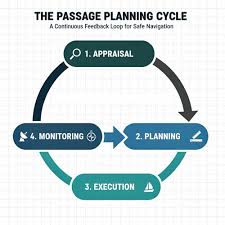
The passage planning process can be broken down into four interdependent stages: Appraisal, Planning, Execution, и Мониторинг. Each step feeds the next in a continuous feedback loop so decisions remain aligned with changing conditions.
1. Appraisal — collect your maritime intelligence
Before committing to a route, gather:
- Метеорологический forecasts: synoptic charts, GRIB files, and local buoy reports.
- Oceanographic data: currents, tidal streams, and sea-state predictions.
- Traffic analysis: AIS density, separation zones, and commercial shipping lanes.
- Regulatory constraints: traffic separation schemes, marine protected areas, and local pilotage rules.
- Port & berth information: availability, pilotage windows, and customs/immigration requirements.
2. Planning — the route and resource matrix
Translate intelligence into a detailed plan: waypoints, estimated times of arrival (ETA), fuel margins, provisioning stops, and alternates. Define safe speed profiles and identify narrow passages or shoals where margin for error is small. For charter and rental operations, include guest comfort considerations such as daylight arrivals and sheltered anchorages.
| Item | Minimum Standard | Why it matters |
|---|---|---|
| Fuel margin | 20% above planned consumption | Allows for detours, adverse weather, and generator use |
| Watch rota | 2–3 person overlap on critical legs | Maintains vigilance in heavy traffic or bad weather |
| Comms | VHF, AIS, SSB/EPIRB, satellite backup | Ensures distress alerting and receipt of updated forecasts |
3. Execution — checklists and briefings
Turn the plan into action with pre-departure checklists and a formal briefing. Make sure the crew understands the plan, the delegation of tasks, and the triggers for invoking alternates such as ports of refuge. Ensure all safety equipment—lifejackets, liferaft, flares, and fire suppression systems—are inspected and that the EPIRB registration matches the vessel and voyage details.
4. Monitoring — adapt and record
Implement continuous monitoring: weather updates, fuel consumption, position fixing, and watch handover logs. Use AIS and radar to track contacts and log any deviations from plan with timestamps. Monitoring completes the feedback loop: post-voyage debriefs convert observations into improvements for the next passage.
Detailed checklists and decision points
Below is a compact checklist useful for skippers, charter captains, and rental operators preparing for offshore legs.
- Weather windows: Confirm a safe multi-day window for offshore legs; identify deterioration thresholds.
- Alternate ports: Nominate at least two safe havens within range for diversion.
- Medical preparedness: First aid kit, maritime medical guide, and telemedicine contacts.
- Documentation: Passage plan copy aboard, shore copy with a responsible person, and customs paperwork where relevant.
- Vessel readiness: Engine, bilge pumps, sails (if applicable), spare parts, and battery state-of-charge.
How passage planning affects rentals and charters
For the marina manager, charter company, or peer-to-peer boat rental platform, strong passage planning reduces insurance exposure and improves guest experience. Guests who rent a boat or book a charter expect transparent information: route options, expected conditions, and crew competence. Clear plans also help owners protect assets like engines and electronics and minimize expensive emergency responses.
GetBoat always keeps an eye on news related to sailing and seaside vacations, as we truly understand what it means to enjoy great leisure and love the ocean. The GetBoat service values freedom, energy, and the ability to choose your own course. It places no limits on a good life, allowing clients to find a vessel that suits their preferences, budget, and taste.
Key tools and technology to include
Modern passage planning benefits from the integration of digital tools with traditional navigation practices. Recommended items:
- Electronic charting with route export and backup paper charts.
- GRIB and routing viewers for swell and wind optimization.
- AIS transponder for situational awareness in busy approaches.
- Satellite comms for weather and emergency messaging beyond VHF range.
Risk matrix for common offshore contingencies
| Contingency | Mitigation | Trigger to divert |
|---|---|---|
| Severe weather | Alter course, reduce sail, increase fuel reserve | Forecasted gusts > 35 kt or wave height > 4 m |
| Mechanical failure | Deploy tow plan, use engine spares, call for assistance | Loss of propulsion or progressive flooding |
| Medical emergency | Stabilize, commence diversion to nearest suitable port | Unstable vitals or inability to manage onboard |
Planning outlook and call to action
In terms of global tourism, improved emphasis on structured passage planning is likely to have a modest but positive effect: safer crossings and clearer expectations can increase confidence in charter travel and facilitate longer blue-water itineraries. Although this development is not a seismic global change, it is meaningful to operators and travellers who value safety and reliability. Start planning your next seaside adventure and make sure to book the best boat and yacht rentals with GetBoat before the opportunity sails away!
The topic highlighted here shows that experiencing a new location is always multifaceted: you learn about culture, nature, the indescribable palette of local colors, the rhythm of life, and also the unique aspects of the service. If you are planning your next trip to the sea, you should definitely consider renting a boat (boat rentals, rent a boat, rent a yacht), as each inlet, bay, and lagoon is unique and tells you about the region just as much as the local cuisine, architecture, and language GetBoat.com
Summary: A disciplined offshore passage plan—built on appraisal, detailed planning, rigorous execution, and continuous monitoring—makes voyages safer and more enjoyable. Whether you’re a private owner, charter captain, or planning to rent a boat for a beach or island hop, attention to fuel margins, weather windows, comms redundancy, and alternate ports is essential. Platforms like GetBoat.com support this process by offering transparent listings—make, model, ratings, and detailed descriptions—helping you pick the right yacht or boat for your itinerary. From yacht charters and fishing trips to superyacht experiences and lake or gulf cruising, the right preparation unlocks more boating activities and better memories. Plan ahead, choose wisely, and sail safely.