


 Русский
  English (UK)
  العربية
  日本語
日本語  한국어
한국어  Magyar
  Türkçe
  Español
  Čeština
  Svenska
  Português
  Ελληνικά
  Suomi
Suomi  Nederlands
  Română
  Italiano
  Français
  Polski
  Українська
  Deutsch
  简体中文
简体中文  Slovenčina
  Navigator’s Guide to Weather Models">

Seven days out from an offshore event such as the Rolex Fastnet Race, navigation teams switch into a rhythm of daily model runs, cross-checking the jet stream, synoptic fronts and the timing of pressure changes to set routing, provisioning and crew watches.
1. Get the big picture with synoptic analysis
Start by mapping the synoptic-scale features: where is the high pressure relative to the race area, where are lows tracking, and how will those systems modulate local winds? That macro view determines whether the fleet will see steady gradient breeze or localized thermal/night breezes driven by land–sea contrasts.
Understanding the wider atmospheric drivers prevents wasted effort chasing small-scale model noise. For instance, a persistent high pressure over a continent increases the chance of evening thermal breezes; a deepening low favors stronger, more consistent gradient winds. Teams plan sail inventories and watch rotations around that context.
2. Analyse multiple weather models — don’t put all your eggs in one basket
Good navigators compare several operational and ensemble outputs rather than trusting a single routing run. The core operational models to consult are the UK Met Office charts, NOAA (GFS), DWD (ICON) and Meteo France. Each model has different resolution and physics; disagreement between them is a signal to plan contingencies.
How to read model agreement
Track model convergence over successive runs. If models align through day three but diverge after day five, treat forecasts beyond day three as lower confidence and design flexible strategies for the later legs. Ensemble spreads give a quantitative feel for uncertainty.
Quick comparison table
| Model | Typical strength | Practical note |
|---|---|---|
| GFS (NOAA) | Global coverage, frequent runs | Good for synoptic trends; coarser over small seas |
| ICON (DWD) | High resolution in mid-latitudes | Better mesoscale detail for European waters |
| UK Met Office | Strong synoptic diagnostics | Excellent charts for the North Atlantic and Channel |
| Meteo France | High/low resolution options | Valuable for western European coastal forecasts |
3. Use ensembles and look for consistent signals
Ensemble forecasts show the distribution of plausible outcomes. A narrow spread increases confidence in timing and intensity; a wide spread means the fleet must prepare for multiple scenarios. Examine when the ensemble members start to diverge — that often pinpoints the decision window for strategy changes.
- Check at least four to five models or ensemble families.
- Note the divergence day; that sets the re-evaluation cadence.
- Prioritize consistency over a single precise forecast.
4. Practical workflow and tools
A pragmatic workflow moves from the big picture to local detail:
- Day 7–5: synoptic charts and jet stream trends.
- Day 4–2: model ensembles and higher-resolution local runs.
- Day 1–0: live updates, satellite imagery and on-board observations.
Useful web tools for quick comparisons include wetterzentrale.de to flick between model outputs. Onboard, combine model guidance with visual checks and barometer trends — sometimes the sea tells you something the model misses.
Crew communication and timing
Keep the crew out of the weeds early on. Final briefings are most productive when model agreement improves a day or two before the start. That avoids confusing the team with provisional strategies and keeps morale intact — because nobody likes to be told to change plans every other hour!
5. Local effects, observations and verification
Local geography creates quirks: coastal funnels, diurnal sea breezes, tide-driven flows and thermal gradients near shore. Combine model output with pilot charts, tide tables, and firsthand observations. When possible, use AIS, satellite imagery and short-range radar to verify model predictions.
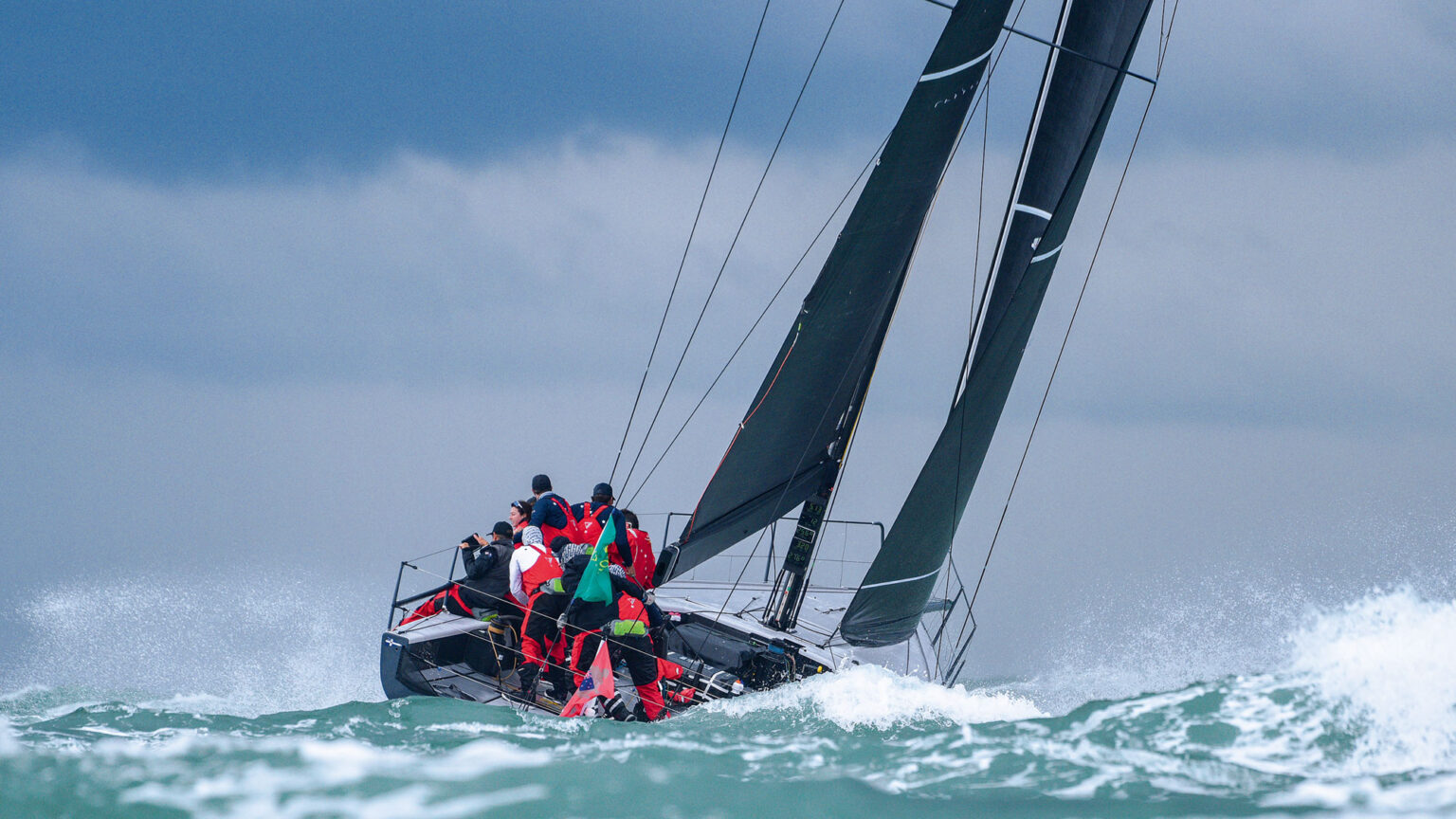
Anecdote: during offshore racing, a yacht named Callisto was routed offshore in the 2025 RORC Admiral’s Cup based on blended model analysis and local knowledge; the combined approach paid off. Race photographers like Rick Tomlinson/RORC often capture the moment when a routing call swings the fleet — that split-second decision can win or lose you positions.
Tools checklist for navigators
- Synoptic charts and jet stream maps
- Operational models: GFS, ICON, UK Met Office, Meteo France
- Ensemble outputs and spread diagnostics
- Local tide and current data
- Onboard instruments and satellite imagery
Weather models aren’t magic — they’re probability engines. Use them to shape decisions, not to dictate them. As the saying goes, “plans are useless, but planning is priceless.”
In summary, build the plan from synoptic to local, consult multiple models and ensembles, watch where they diverge, and verify with on-the-water observations. Whether racing a yacht or running a charter operation, these practices improve routing, safety and outcomes. Key takeaways: prioritize the big picture, check GFS, ICON and local models, use ensembles to gauge uncertainty, and keep crews informed at the right time. This approach benefits yacht and boat operators across marinas, gulf or ocean destinations — from superyacht captains to small charter skippers — and it helps when managing sail plans, provisioning for fishing or recreational activities, and advising clients who want to rent a boat for sea, lake or beach excursions.