


 Русский
  English (UK)
  العربية
  日本語
日本語  한국어
한국어  Magyar
  Türkçe
  Español
  Čeština
  Svenska
  Português
  Ελληνικά
  Suomi
Suomi  Nederlands
  Română
  Italiano
  Français
  Polski
  Українська
  Deutsch
  简体中文
简体中文  Slovenčina
 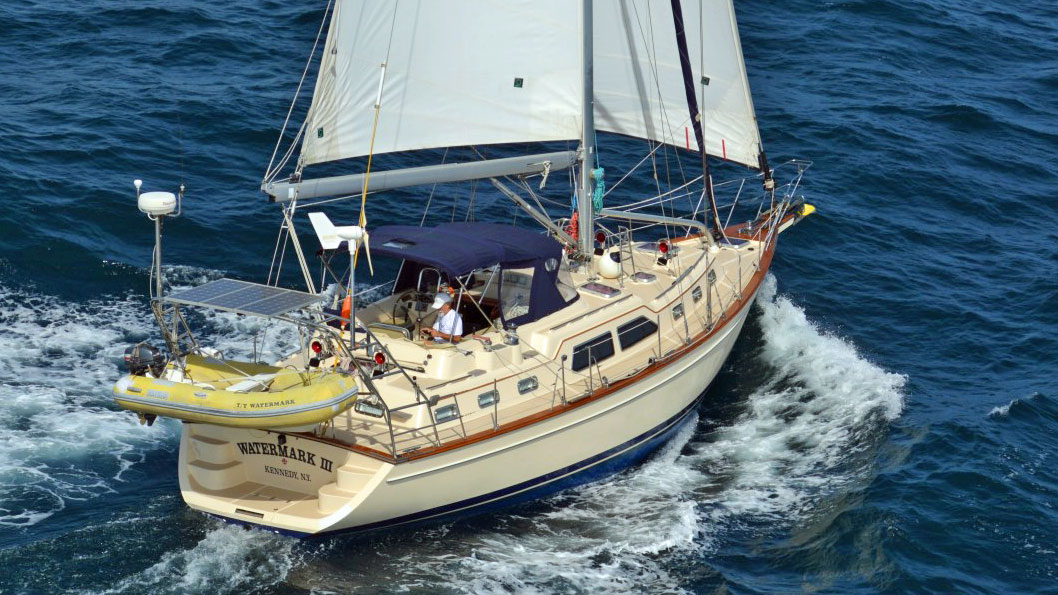 Свободно скроенные гроты: Преимущества для круизов и чартеров">

In marina and charter logistics, sail-handling time directly affects vessel turnaround, crew workload, and passenger satisfaction; switching to a loose-footed mainsail can simplify reefing operations and reduce time alongside the dock by removing the bolt-rope constraint that complicates reef set and stow procedures.
Aerodynamics and Shape Control: Lower-Sail Dynamics
Freeing the foot of the mainsail from the boom restores independent curvature to the sail’s lower third. When the foot is fixed in a bolt rope or slotted track, the fabric is forced into a straight spar geometry that resists becoming a true aerofoil at the base. The result is often a flattened or creased lower section that underperforms in light air.
С loose-footed configuration, the оттяжка гика becomes the principal control for the sail’s lower camber. Easing the outhaul allows the lower panel to develop a fuller, more powerful shape that increases lift in light conditions. Conversely, tensioning the outhaul flattens the profile and reduces drag and heeling in stronger winds, without the foot being constrained by a boom groove.
Why Light-Air Performance Improves
Because the lower sail can adopt a fuller section, the center of effort moves slightly and the sail generates more drive at lower wind speeds. This advantage is especially noticeable on coastal passages, in sheltered bays, and during daycharter operations where motoring is minimized and every knot of sail power matters.
The Structural Reality of Modern Booms and Rigging
Traditional assumptions hold that the boom must carry horizontal loads from tack to clew, but modern sailcloth—high-modulus dacrons and laminated fabrics—transmit and resist these loads effectively across the sail body. Contemporary booms are engineered primarily as compression members, and the primary load path runs via the outhaul car and gooseneck fittings.
For most production yachts and charter fleet boats, converting to a loose-footed setup does not mandate a boom replacement, provided the gooseneck and outhaul hardware are serviceable and rated for the loads common to the vessel.
Practical Advantages for Short-Handed and Charter Crews
Operational gains are where loose-footed mainsails often prove decisive for marinas, charter operators, and yacht management companies:
- Faster reefing: Reef tack and clew move freely; the sail flaks and ties more neatly.
- Neater stowage: Redundant cloth doesn’t fight a bolt rope and can be flaked or bagged more efficiently.
- Lower maintenance complexity: No in-boom slugs to bind, jam, or require replacement inside a boom track.
- Improved customer experience: Shorter docking times and smoother sail handling translate to higher guest satisfaction on charters.
Table: Loose-footed vs. Bolt-rope Attached Mainsails
| Characteristic | Loose-footed | Bolt-rope / Slug |
|---|---|---|
| Lower sail shape control | Direct via outhaul; fuller in light air | Restricted by boom; prone to creasing |
| Reefing ease | Quicker, cleaner flaking | Can jam in track, harder to stow |
| Техническое обслуживание | Fewer in-boom parts to service | Requires slug/track upkeep |
| Suitability for charter fleets | High — time and handling benefits | Moderate — traditional appearance |
Reefing Procedures and Best Practices
For crews and charter operators considering conversion, a few practical rules help maximize benefits and safety:
- Inspect and reinforce the оттяжка гика system and clevis pins; these become primary load paths.
- Confirm the gooseneck and compression fittings are in excellent condition.
- Train short-handed crews to control foot tension as part of routine sail trim; the outhaul is now integral to sail shape adjustments.
- When reefing, snug the tack and clew with reef ties while easing the outhaul slightly to allow clean folds.
- Keep a spare set of shackles and a small sail repair kit aboard for charter operations where quick fixes matter.
Checklist for Charter Managers and Owners
- Audit boom hardware and outhaul blocks before the season.
- Update crew SOPs to include outhaul-based trim adjustments.
- Communicate handling differences to guests during safety briefings.
- Consider retrofitting older mainsails to add reefing patches and reinforced reef points if needed.
GetBoat always keeps an eye on news related to sailing and seaside vacations, since we truly understand what it means to enjoy great leisure and love the ocean. Our service values freedom, energy, and the ability to choose your own course, placing no limits on a good life and enabling clients to find a vessel that suits their preferences, budget, and taste.
Highlights: the shift to loose-footed mainsails is important for performance, safety, and operational efficiency—especially in charter and rental contexts. It reduces reefing friction, improves light-air propulsion, simplifies maintenance, and shortens dockside turnaround. Experiencing a new location is always a multifaceted process, where one learns about the culture, nature, the indescribable palette of local colors its rhythm of life and also the unique aspects of the service. If you are planning your next trip to the sea, you should definitely consider renting a boat (boat rentals, rent a boat, rent a yacht), as each inlet, bay, and lagoon is unique and tells you about the region just as much as the local cuisine, architecture, and language GetBoat.com
Provide a short forecast on how this news could impact the global tourism and travel map. While the technical choice between loose-footed and boltrope mains is unlikely to reshape global tourism on its own, it remains significant for charter operators and coastal destinations where efficient turnarounds, guest comfort, and safety matter. Start planning your next seaside adventure and make sure to book the best boat and yacht rentals with GetBoat before the opportunity sails away!
In summary, adopting a loose-footed mainsail offers measurable operational and sailing benefits: enhanced lower-sail aerodynamics for improved light-air drive, simplified reefing and stowage for short-handed crews, and lower in-boom maintenance demands that benefit charter fleets and private owners alike. Whether you manage a fleet, captain a charter, or plan a family cruise, these adjustments can affect performance, safety, and guest satisfaction. For those seeking yachts, charters, or boat rentals across marinas, beaches, gulfs, lakes or clearwater coves, platforms that prioritize transparency and choice make it easier to match make, model, and ratings to your plans — from a day sail with a captain to a superyacht charter or a local fishing trip. Enjoy the ride.