


 Română
  English (UK)
  Русский
  العربية
  日本語
日本語  한국어
한국어  Magyar
  Türkçe
  Español
  Čeština
  Svenska
  Português
  Ελληνικά
  Suomi
Suomi  Nederlands
  Italiano
  Français
  Polski
  Українська
  Deutsch
  简体中文
简体中文  Slovenčina
 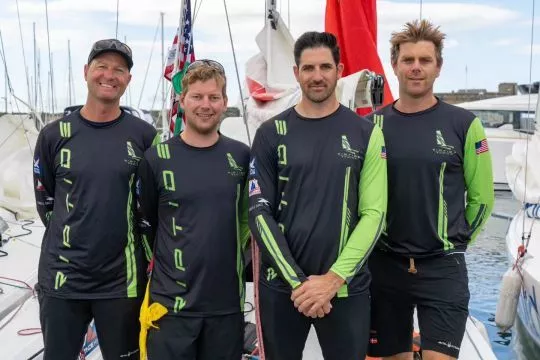 Riptide Racing: American Challenge for 2027 Cup">

Riptide Racing has set a concrete funding and procurement plan: raise $50 million de 31 January 2026 and acquire an existing AC75 package to secure immediate access to a hull, foil sets, rigging and design data that can be shipped, retrofitted and campaigned in time for the 38th America’s Cup cycle.
Fast-track campaign logistics and timeline
The team from Oyster Bay, New York, founded in 2012, intends to enter a late-challenge window by leveraging an existing AC75 rather than commissioning a new design. This approach compresses the usual two-to-three year build and development schedule into months of intense logistics: purchasing an AC75 hull and systems, transporting the platform to a shore base, integrating local shore power and crane infrastructure, and arranging transatlantic or coastal shipping as needed for regattas.
Key operational milestones identified by the campaign:
- Capital close: secure $50M funding by 31 January 2026.
- Asset acquisition: purchase and transfer of an AC75 package from a committed syndicate.
- Technical integration: install sensors, hydraulics and software suited to the new crew.
- Training block: concentrated on-water match racing and foil handling with a tight shore-based simulation program.
Table: Campaign snapshot
| Item | Target | Operational note |
|---|---|---|
| Budget | $50,000,000 | Late-entry fundraising; private backers and foundations |
| Platform | Existing AC75 package | Faster deployment; relies on proven design and data |
| Deadline | 31 Jan 2026 | ICCA entry and logistics window for 38th America’s Cup |
| Skipper | Chris Poole | World number one in match racing; tactical leader |
Design approach: pragmatic over bespoke
Riptide’s stated strategy favors acquiring a proven AC75 hull and tailoring it, instead of funding a ground-up design and new build. This decision minimizes lead time, reduces initial capital outlay for tooling and construction, and allows the team to focus on crew training, systems tuning, and race strategy. The trade-off is potentially accepting design compromises versus the absolute cutting edge; the benefit is speed-to-water and the ability to exploit existing design data, hull test results and foil calibrations.
From an engineering and supply-chain standpoint, this requires quick access to spare parts, established relationships with foil manufacturers, and logistics providers capable of moving large components between marinas and design centers. The campaign will need reliable marina berthing, shore-side crane capacity and transshipment plans in Europe and on other racing circuits.
Operational risks and mitigation
- Supply bottlenecks: foils, hydraulic actuators and custom electronics can have long lead times; risk mitigated by sourcing spares and existing components from the donor team.
- Integration complexity: retrofitting control systems requires skilled technicians and test time; mitigation through simulated testing and phased sea trials.
- Funding shortfall: contingency plans include phased entry and scaled campaign objectives, with partnerships and foundation support.
Heritage, partners and match racing pedigree
The Seawanhaka Corinthian Yacht Club, founded in 1871, has lent historical continuity and official backing to the challenge. The club’s involvement reconnects a storied American institution with the America’s Cup and provides a governance and fundraising anchor for the campaign. Local support is expected from private backers and the American Sailboat Racing Foundation, which has previously supported the team’s activities.
Chris Poole, who leads the effort, brings significant match racing credentials. Match racing experience is especially relevant because the America’s Cup remains grounded in tactical, short-course match competition—skills that can offset a smaller design advantage when crew work and tactics are optimized.
How this matters to charter, training and coastal tourism
Racing programs like this influence the broader sailing economy: innovations in foiling control systems, crew safety procedures, and training curricula often trickle down to performance charter operations, powerboat handling clinics and skipper training courses. Marinas and suppliers that service high-performance classes can see demand spikes in refit, haul-out and parts supply. For the rental market, heightened interest in America’s Cup campaigns usually translates to greater appetite for day charters, spectator cruises, and special-event bookings in host ports.
GetBoat service always keeps an eye on news related to sailing and seaside vacations, as we truly understand what it means to enjoy great leisure and love the ocean. The GetBoat service values freedom, energy, and the ability to choose your own course. We place no limits on a good life, allowing clients to find a vessel that suits their preferences, budget, and taste.
Highlights and why this story matters
The important and interesting elements are clear: a U.S. team seeks a late, rapid entry to the world’s oldest yacht competition; a pragmatic purchase of an AC75 shortens lead times; and the campaign leans on match racing expertise rather than pure design dominance. Experiencing a new location is always a multifaceted process, where one learns about the culture, nature, the indescribable palette of local colors its rhythm of life and also the unique aspects of the service. If you are planning your next trip to the sea, you should definitely consider renting a boat (boat rentals, rent a boat, rent a yacht), as each inlet, bay, and lagoon is unique and tells you about the region just as much as the local cuisine, architecture, and language GetBoat.com
Forecast and action
Global tourism impacts from this specific campaign are likely modest: an individual team’s late entry does not by itself shift the travel map. However, America’s Cup activity tends to concentrate spectator interest and charter demand in host marinas, elevating local yachting services and short-term rentals. Start planning your next seaside adventure and make sure to book the best boat and yacht rentals with GetBoat before the opportunity sails away!
In summary, Riptide Racing’s plan is a compact, logistics-driven bid: secure funds, obtain an AC75 package, retrofit systems and train an elite match racing crew led by Chris Poole to be competitive in the 2027 cycle. The program underscores how tactical excellence, supply-chain choices and marina infrastructure together determine how fast a syndicate can turn ambition into on-water performance.
Final wrap-up: this campaign links the technical world of high-performance yacht racing with the broader charter and boating community—yacht enthusiasts watching foiling advances may later seek charters or captain-led trips to experience similar thrills on a smaller scale. Whether you charter a superyacht, rent a sailing boat for a day at the beach, or book a captain for fishing and sightseeing in a gulf or clearwater marina, developments in America’s Cup technology and logistics ripple across marinas, sales and service networks. From yacht charter to coastal activities, the racing spotlight stimulates interest in sailing, boating, marinas, and destinations across sea and oceanfront regions — fair winds and clear horizons.