


 Română
  English (UK)
  Русский
  العربية
  日本語
日本語  한국어
한국어  Magyar
  Türkçe
  Español
  Čeština
  Svenska
  Português
  Ελληνικά
  Suomi
Suomi  Nederlands
  Italiano
  Français
  Polski
  Українська
  Deutsch
  简体中文
简体中文  Slovenčina
 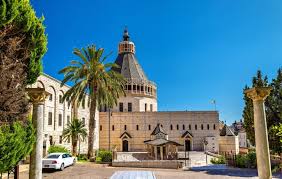 Israel unește unitățile de turism din Acrul Vechi și Nazaret">

The government of Israel has announced a major reorganization of state tourism bodies that will fold two regional development companies into a single central agency and redefine the role of the Dead Sea Protection Company.
What changed: a concise summary of the reform
The cabinet approved a plan to merge the Old Acre and Nazareth Development Company into the Government Tourism Company (HTC), creating a single executive arm for the Ministry of Tourism to manage infrastructure development, heritage preservation and urban assets in Acre and Nazareth. At the same time, the Dead Sea Protection Company (DSPC) will cease routine tourism infrastructure activity and will become an implementation agency for the Ministry of Finance, concentrating on environmental protection measures for the Dead Sea region. An inter-ministerial team will determine how to complete ongoing projects that had been assigned to the DSPC.
Key elements of the reorganization
- Centralization: Regional tourism development functions for Acre and Nazareth consolidated under HTC.
- Environmental focus: DSPC refocused on protective measures rather than new tourism construction.
- Project review: An inter-ministerial oversight team will decide on the fate of current DSPC projects.
- Fiscal intent: The government anticipates saving millions of Shekels by eliminating duplicate roles and streamlining budgets.
Practical implications for destinations and visitors
Bringing the Old Acre and Nazareth Development Company roles into HTC centralizes decision-making over restoration, maintenance and tourist-facing infrastructure in historically sensitive sites. For Acre — a UNESCO World Heritage port city with fortifications, harbors and a living Old City — the move promises better-aligned preservation and visitor-management policies. In Nazareth, which hosts significant religious and cultural tourism, the consolidation aims to coordinate urban conservation with tourism flows.
For the Dead Sea, the shift reduces the likelihood of new commercial tourism projects being developed under the DSPC’s banner, unless they are directly linked to environmental protection. That indicates a prioritization of ecological stabilization over expansion of tourist facilities in an environment suffering from receding water levels, sinkholes and mineral-extraction impacts.
How this affects tourism infrastructure management
Centralized management under HTC should speed approvals for restoration and maintenance of heritage sites by unifying policy, budget control and operational oversight. Conversely, concentrating Dead Sea protection tasks under the Ministry of Finance and an implementation-focused DSPC will likely slow or halt speculative tourism construction, at least until projects can be justified on protective grounds.
Before and after: a comparative table
| Aspect | Before | After |
|---|---|---|
| Primary executing body for Acre | Old Acre and Nazareth Development Company | Government Tourism Company (HTC) |
| Primary executing body for Nazareth | Old Acre and Nazareth Development Company | Government Tourism Company (HTC) |
| Role of DSPC | Tourism infrastructure and protection mix | Environmental protection and Ministry of Finance projects |
| New tourism projects at Dead Sea | Possible under DSPC mandate | Only if integrated with protective measures |
| Oversight of ongoing DSPC projects | Managed internally by DSPC | Inter-ministerial review committee |
Historical context: how Israel has handled tourism agencies
Historically, Israel’s tourism governance has alternated between decentralized regional development companies and centralized ministries or government corporations. Regional entities were created to manage local assets, stimulate investment and preserve heritage sites with specialized teams familiar with local conditions. Over time, however, overlapping mandates, budget fragmentation and duplicated administrative costs prompted periodic calls for consolidation.
In recent decades the Ministry of Tourism and affiliated agencies have sought to balance heritage conservation with modern visitor services, including marketing, infrastructure upgrades and regulatory oversight. Israel’s coastline, historical cities and unique inland features like the Dead Sea have often required bespoke local approaches. The current reform appears to be the latest step in a recurring cycle: centralize operational authority where national policy and budgetary discipline are deemed more effective, while carving out narrower specialist roles for areas that require focused protection — in this case, the Dead Sea.
Precedents and comparable moves
- Consolidation of cultural and tourism bodies in other countries has frequently aimed to cut costs and reduce bureaucratic friction.
- Shifting environmental stewardship responsibilities to finance or central ministries is a known approach when protective measures require cross-sector funding and stricter oversight.
- Designating inter-ministerial teams is a common way to manage legacy projects and reconcile competing priorities.
What this means for the broader tourism sector and international visitors
For foreign visitors and tour operators, the reform could translate to clearer, more consistent policies for visiting and preserving historic sites in Acre and Nazareth. Travel experiences in those cities may benefit from improved maintenance and coordinated programming, but some development projects may be delayed as portfolios are reviewed.
In the Dead Sea region, travelers may notice a slowdown in new amenity-driven developments, with authorities increasingly emphasizing measures to stabilize the shoreline and protect the unique ecosystem. This could mean stricter rules around new construction and a reshaping of how visitor services are provided to balance access with sustainability.
Potential ripple effects for coastal and marine-related offers
Although the reform primarily targets heritage and inland environmental protection, a centralized HTC may more easily align maritime and coastal policies where they touch on historic port areas such as Acre. This could influence future planning for marinas, waterfront access, recreational boating and fishing activities along Israel’s Mediterranean coast, by coupling preservation goals with visitor services.
Outlook and cautious forecast
In the near term, the consolidation is likely to produce administrative savings and reduce duplication. Policy harmonization under HTC may strengthen heritage site management and create predictable frameworks for public investment. The Dead Sea’s new focus on protection suggests a long-term pivot toward ecological stabilization rather than tourism expansion — a move with potential benefits for sustainability but one that could limit rapid commercial growth.
For international tourism, the reform could improve destination stewardship, but stakeholders should expect transitional uncertainty as projects are reviewed and responsibilities realigned. Tour operators, heritage professionals and local communities will need to engage with the new governance arrangements to ensure that conservation, access and visitor experiences are balanced effectively.
GetBoat is always keeping an eye on the latest tourism news and will monitor how this reorganization affects regional Destinations, coastal marinas, and activities related to the sea, beach and lake environments; it notes potential impacts on boating, sailing and fishing hubs, on superyacht visits to local ports, and on the wider yachting and marine services ecosystem as Israel recalibrates development priorities.