


 Română
  English (UK)
  Русский
  العربية
  日本語
日本語  한국어
한국어  Magyar
  Türkçe
  Español
  Čeština
  Svenska
  Português
  Ελληνικά
  Suomi
Suomi  Nederlands
  Italiano
  Français
  Polski
  Українська
  Deutsch
  简体中文
简体中文  Slovenčina
  How Sails Work – Master Sailing in Light to Strong Winds">

Use a concrete action: trim the sail to the apparent wind so the vector of wind relative to the sail stays about 15–25 degrees off the beam in light air. This keeps your sailboat moving smoothly and reduces heeling, while the rudder stays centered for efficient movement.
In this setup, the dynamics of lift depend on how the sail shape adapts. Use a small, constant twist and adjust the boom height to maintain effective camber across a range of wind speeds. The integral of forces on sail and hull tells you how much speed you gain for a given angle; these tensions are used to adjust trim and chase the result you want.
Animație of the movement: watch how the sail panel bends, the fore-and-aft beam of the mast, and the wing-like action of the sail. The aerodynamic forces push against the sail, creating a lift perpendicular to the wind, while the relative wind vector reduces drag. In practice, keep the rudder neutral and let the wind do most of the work.
In winds that increase, halve the sail area by reefing the mainsail and lowering the jib before gusts reach your beam. If you must shoulder stronger winds, ease the mainsheet and shift weight to windward, so the hull remains balanced and movement remains smooth. This approach is mostly about keeping stability while preserving forward velocity.
For different hull designs, the best trim angle changes, but the underlying rule stays: align the sail’s aerodynamic beam with the relative wind and use the rudder to control yaw. A well-tuned rig treats the sail as an integral part of the vector that propels you, not a brake; with practice you fine-tune to reach high efficiency across a broad range of conditions.
Apparent Wind: Definition and Practical Implications
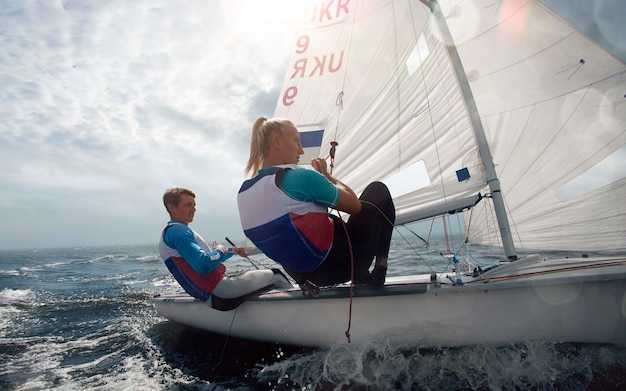
Start by checking apparent wind on every tack and trim sheets to match this vector, and adjust for the next course so sailboats stay responsive.
Apparent wind is the wind you feel on a moving boat. It equals the true wind plus the boat’s velocity, expressed as a single vector with speed and direction. In practice, this apparent wind results from the density of air meeting the boat’s motion and creates the load that sails notice above the deck.
On waters where breezes shift, the apparent wind directions change as you accelerate or slow. The edge of the sails responds to these changes; the main and the jib react by altering shape and tension in sails to maintain drive. This acting on the sails helps steer the boat and sets the next move.
In thick air, air density increases lift, so apparent wind can feel stronger for the same true wind. This density effect means you may adjust tension in sheets and the main less aggressively to avoid overpowering the keel. For sailboats, this interaction drives control and navigation in gusts.
To improve handling, trim the main first, then the sheets to balance the boat against the apparent wind. When you adjust, you create a smooth sail shape along the edge and reduce gust-induced instability. Sheet tension plays a key role in keeping the sail set correctly, even if the wind shifts directions.
Certain drills help you read the vector quickly: watch the boat speed, measure the angle between the bow and apparent wind, and adjust main and sheets to keep a steady drive. Though gusts vary, a consistent trim improves the keel’s lift and keeps you moving toward the target heading.
Next, practice on gusts by keeping a small angle to the apparent wind and using coordinated steering to navigate. As you gain feel, you can use this to maintain speed on all directions and to avoid stalling on close reaches and beat passages.
| True wind direction | True wind speed (knots) | Boat speed (knots) | Apparent wind speed (knots) | Apparent wind direction | Practical action |
|---|---|---|---|---|---|
| NE | 12 | 6 | 13 | 26° from bow | Trim main and sheets to maintain balanced lift |
| WS | 8 | 4 | 6 | 70° from bow | Check for power and keep sails snug |
| SE | 15 | 7 | 16 | 50° from bow | Ease sheets a touch to avoid overpowering |
How Apparent Wind Changes with Boat Speed and Heading
Keep the apparent wind around 45 degrees off the bow on a reach; steer to hold that angle as you accelerate. Apparent wind is the vector difference between true wind and boat velocity, a function of physics, and these inputs move a curved wind vector that changes with speed and heading. These changes are significant for sail trim and boat speed, and being able to read the wind vector quickly helps you move smoothly through the water. The density of air being roughly constant means the main driver is velocity; but density shifts with temperature and altitude can alter the feel of wind here and there.
Key effects on wind angle and speed
On a close-hauled course, the apparent wind remains ahead; as you increase boat speed, the apparent wind curve moves toward the bow and can rotate forward within the wind cone. If the boat speed approaches or exceeds true wind speed, the apparent wind can swing toward the side or even aft, changing how the sails load the keel and the hull. The hydrodynamic shape of the hull and sails works in conjunction with speed to shape lift and trim; this interplay is the core mechanism that lets you accelerate cleanly while steering. In practice, you will see the wind indicator animation change angle in real time as you steer and trim here, with these shifts matching changes in wind and velocity.
Practical steering and trim tips
Here are concrete steps to manage apparent wind while sailing. Start by aiming for a sensible apparent wind angle around 45 degrees on a reach; steer to hold that angle as you accelerate, then trim sails so load stays balanced along the curved wind vector. In close-hauled, if the apparent wind moves forward toward the bow, slightly ease the course and adjust the jib to maintain a curved, steady sail shape; if the wind shifts toward the side or behind, steer slightly toward the wind to keep sails properly powered. Use the keel’s hydrodynamic design to maintain efficiency and reduce drag; the conjunction of sail trim, steering, and speed is what lets you reach the wind smoothly. For light air, keep speed just enough to keep the apparent wind ahead; in stronger wind, depower gradually and maintain control to avoid overpower. Use instruments that show wind direction with animation to verify the vector on your display; adjust heading so the wind stays on the desired side of the boat.
Reading Apparent Wind with Tell-Tales and Body Position
Tell-tales attached to the sail stream smoothly; this lets you read apparent wind quickly and find the best angle and shape for your sail. Keep your front shoulder toward the wind, bend your knees, and maintain your balance as you sail. Move your hips away from the sail to keep the flow clean and reduce resistance, ensuring the wind works with the edge of the sail and your body’s shape; it feels steady.
Acceleration from gusts shifts apparent wind, and they alter the flow over the sail. Read the tell-tales to determine if you need to adjust the sheet or your stance. If the top tell-tale streams and the bottom stalls, ease the sail just slightly–or twist–to keep the angle from becoming too flat; this effectively maintains control. If both tell-tales stream, you maintain power and the result is forward speed. Keep weight centered, but when the wind shifts you may move away from the center to align with the true wind. Always watch how they respond to the change in wind speed.
Across vessels of different sizes, the same method works. A successful trim comes from a stable edge, a balanced front-to-back angle, and a twist that preserves sail shape. They can feel the difference: the sailor feels the change as you adjust, and the shape changes, the resistance falls, and the vessel accelerates. Just focus on keeping the tell-tales streaming and the flow attached, and you maintain true sailing performance even in gusts. This approach always yields better speed, and the wind effectively propels the boat. You’ll notice acceleration rise when you keep the wind-attached flow near the edge of the sail and maintain the right shape.
Sail Trim Tactics for Light Winds: Twist, Draft, and Angle

Trim the mainsail fuller and add a modest twist to keep the flow attached when velocities are light. Use the outhaul to set a broader draft, boosting energy without over-stressing the rig, so sailors stay ahead in calm conditions.
Twist control shapes the upper sail. In light airs, ease the mainsheet and allow a small twist with the vang; the goal is a clear difference between the lower and upper panels so the flow remains attached and the top works toward higher speed without stalling.
Draft management matters. A deeper draft increases lift in light winds, but too much draft adds drag. Adjust tightness of the luff with the Cunningham and fine-tune the mainsail arc, keeping the mid-sail broad enough to catch air before it stalls.
Angle to the wind. Keep a favorable angle by heading for a bit more beam than close-hauled when possible, but avoid heading too far from the wind. If headed, ease the mainsail and adjust the centerboard to maintain flow on both sails.
Genoas strategy. Genoas designed for light winds respond well to a broader arc and slightly looser sheets. This keeps the broad area of sail energy catching flow, and the difference in load between genoa and mainsail remains balanced; the effect was found advantageous in steady light air.
Centerboard and balance. A centered stance reduces leeway; drop the centerboard just enough to keep the hull tracking true in light air, then fine-tune trim to keep good alignment with the flow. The result is smoother flow, less weather helm, and more energy to drive the boat.
Practical tips for sailors. Before each tack, check tightness and twist, and adjust to the wind shift. Always test small changes at a slow speed, and watch the difference in speed as you vary the sheet tension between the mainsail and genoas. Being systematic helps you stay ahead in varying conditions.
Sail Handling in Strong Winds: Reefing, Flattening, and Sheeting
Reef early and stay prepared; reefing before gusts arrive is the fastest way to keep the sail controlled and maximizing safety across windy weather, aiding navigation and keeping the boat moving true to plan.
- Reefing in strong winds
- When winds reach windy levels and gusts arrive across the race of a day, go to one reef on the mainsail. The front reef point reduces sail area, helping the vessel remain balanced with the jib still attached for steering agility.
- Ask a crew member to help and move forward to the mast step so you can manage the reefing line and the tack. This keeps the process smooth and reduces the chance of snags.
- Ease the halyard slightly to release the reefing point, pull the reef line to snug the new foot, and secure the reef points with the cleats. Check that the luff is flat along the mast and that the new tack is snug against the boom.
- Re-trim the mainsail with the outhaul and halyard so the sail lies cleanly across the boom; set a moderate sheet angle to maintain progress without overloading the rig.
- Flattening the sail for power control
- Flatten the sail to reduce draft and weather helm: tighten the outhaul to pull the foot flat, and ease or cruise the halyard to keep the luff taught.
- Use the vang (or a mid-range downhaul) to flatten the top of the sail, which reduces draft in gusty wind and helps with better angle control across the boat.
- Adjust the Cunningham to lessen the middle draft; a flatter sail resists heeling and improves upwind performance in stronger breeze.
- Reposition the traveler and mainsheet to keep the center of effort forward of the rudder; that balance decreases weather helm and makes steering more controlled.
- Sheeting and sail angle management
- Sheet in and out to find the best angle to the wind; in strong winds, aim for a deeper angle than in light air to maintain speed without excessive heel.
- Keep the sail’s angle to wind between roughly 30° and 40° off the wind on most boats; adjust gradually as gusts drop or rise to maintain a steady course.
- Move the jib or genoa sheet to balance the boat; if the helm goes light, trim the sheet more; if it racks to windward, ease slightly to maintain an even course across the water.
- Check the front of the sail’s profile; as gusts roll in, a controlled sheet change here will maintain momentum while preventing the sail from stalling or pumping.
- Keep lines attached and ready for another adjustment; a prepared crew can react in seconds when wind shifts, saving speed and gaining confidence in navigation.
- Practice short, deliberate tweaks rather than large corrections; the true purpose is to maintain forward motion with minimal loss when conditions spike.
Learn to read the wind, practice the sequence, and publish a simple management routine for your crew. With true awareness of wind speed, angle, and boat response, reefing, flattening, and sheeting become fast, reliable actions rather than hesitation. Here, preparation and calm execution alter the outcome across a range of weather and routes, keeping you going with confidence.