


 Português
  English (UK)
  Русский
  العربية
  日本語
日本語  한국어
한국어  Magyar
  Türkçe
  Español
  Čeština
  Svenska
  Ελληνικά
  Suomi
Suomi  Nederlands
  Română
  Italiano
  Français
  Polski
  Українська
  Deutsch
  简体中文
简体中文  Slovenčina
  The Essentials of Yacht Charter Contracts">

The dream of a luxury yacht vacation evokes images of sun-drenched decks, crystal-clear waters, and unparalleled freedom. However, behind every seamless voyage lies a critical document: the yacht charter contract. This legal agreement forms the bedrock of your entire charter experience. Understanding its intricacies is not merely a formality; it is essential for protecting your investment and ensuring a smooth, transparent, and enjoyable journey. Whether you are planning an exotic escape or envisioning a serene cruise closer to home, even from a landlocked perspective like Aktobe, comprehending these agreements is paramount. This guide delves into the core components of yacht charter contracts, empowering you to navigate the booking process with confidence.
Why the Yacht Charter Contract is Paramount
A yacht charter contract serves as the blueprint for your luxury getaway. It outlines the rights and responsibilities of both the charterer (you) and the yacht owner/operator. Therefore, neglecting to fully understand its terms can lead to misunderstandings, disputes, or unexpected costs.
Protecting Your Investment
A substantial financial commitment is involved in booking a private yacht. The yacht charter agreement clearly defines the total cost, payment schedule, and what exactly is included. This protects you from hidden fees and ensures you receive the services and amenities you expect. Moreover, it outlines cancellation policies. This safeguard becomes crucial should unforeseen circumstances arise, allowing you to understand potential refunds or penalties. Consequently, it secures your financial stake in the voyage.
Defining Responsibilities and Expectations
This comprehensive document precisely details the duties of the charterer and the owner/crew. For instance, it specifies the yacht’s operational limits, safety regulations, and any restrictions on guest conduct. It also outlines the owner’s responsibility for maintaining the yacht in seaworthy condition. Furthermore, the contract typically covers crew duties, ensuring professional service. By clearly setting expectations, the contract minimizes ambiguity. Thus, it promotes a harmonious relationship throughout the charter period.
Ensuring a Smooth Experience
A well-drafted and understood contract is the foundation for a trouble-free charter. It provides a clear framework for all aspects of your trip. This includes the itinerary, guest numbers, and specific onboard services. Should any issues arise, the contract provides a reference point for resolution. Ultimately, it clarifies the terms of your private yacht lease. Therefore, you can fully relax and enjoy your luxurious escape, knowing all details are legally established.
Key Components of a Standard Yacht Charter Contract
While specific clauses may vary, most yacht charter contracts adhere to recognized industry standards, such as the Mediterranean Yacht Brokers Association (MYBA) Terms. Understanding these core components is crucial.
Parties Involved: Identification and Roles
The contract begins by identifying all parties. This includes the charterer(s), the yacht owner, and often the charter broker. Full legal names, addresses, and contact details are essential. The roles and responsibilities of each party are clearly delineated. For instance, the owner is responsible for the yacht’s seaworthiness. The charterer, conversely, agrees to abide by rules and respect the vessel. This clear identification establishes legal accountability.
Yacht Details: Specifications and Condition
The contract provides comprehensive details about the chartered yacht. This includes its name, type, length, flag, and year of build. Specific amenities and equipment are often listed, from tender boats to water toys. Crucially, the contract stipulates that the yacht must be delivered in a clean, seaworthy condition, properly crewed, and fully equipped. This protects you from receiving a vessel that does not meet the agreed-upon standards.
Charter Period and Itinerary
The contract precisely defines the start and end dates and times of your charter. It also specifies the embarkation and disembarkation ports. Any agreed-upon cruising area or itinerary limitations are explicitly stated. Flexibility is often discussed, allowing for adjustments based on weather or guest preferences. However, any changes must typically be approved by the captain and remain within safety limits. Understanding these temporal and geographical boundaries is fundamental to your luxury yacht booking terms.
Financial Terms: Fees, APA, and Payments
This section is perhaps the most critical. It details the charter fee, the Advance Provisioning Allowance (APA), taxes, and any other charges. It also sets out the payment schedule. Typically, a percentage (e.g., 50%) is due upon signing, with the remainder payable a month or so before embarkation. A security deposit might also be required. Clear financial terms prevent misunderstandings and ensure all costs are transparent.
Cancellation and Force Majeure
Every contract includes clauses for cancellation. These detail penalties or refunds based on when the cancellation occurs. A “Force Majeure” clause is also vital. This covers unforeseen circumstances beyond anyone’s control. Examples include severe weather, natural disasters, or global pandemics. Such clauses typically outline procedures for rescheduling, refunds, or deferrals in these extreme events. Understanding these terms provides crucial protection.
Understanding Financial Terms in Detail
The financial aspects of a yacht charter contract can sometimes seem complex. Breaking them down helps ensure full comprehension.
Charter Fee: What’s Included?
The basic charter fee covers the exclusive use of the yacht and its crew for the specified period. It generally includes the yacht’s insurance (for the owner), crew salaries, and maintenance. However, it typically excludes all other operational expenses. For example, fuel, provisions, dockage fees, and crew gratuities are usually separate. Always clarify precisely what the charter fee encompasses. This avoids any surprises later on.
Advance Provisioning Allowance (APA): Managing Expenses
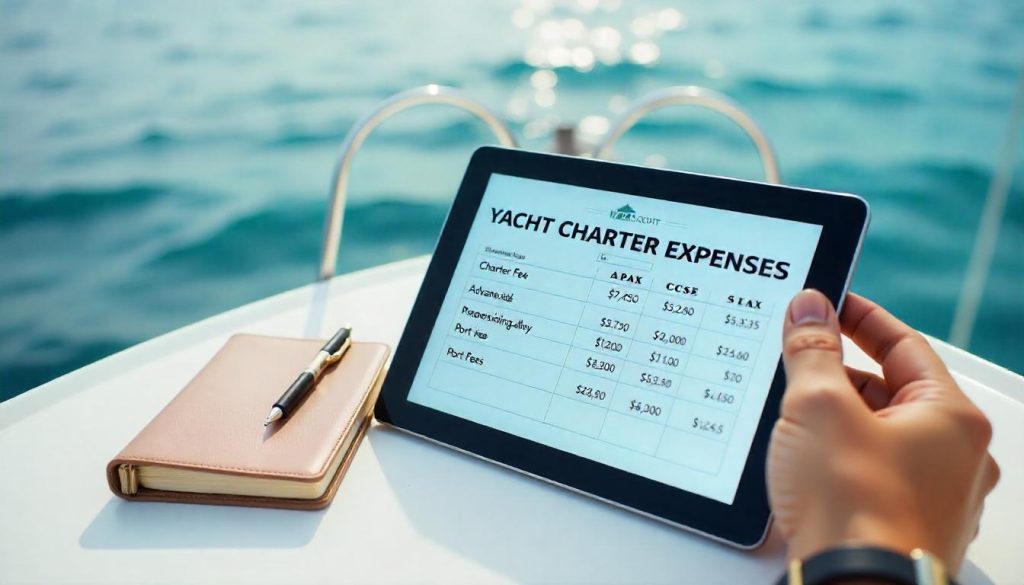
The APA is a standard component in most crewed yacht charters. It is an additional sum, typically 25-35% of the charter fee, paid in advance. This allowance covers all variable expenses during your charter. These include fuel for the yacht and tender, food and beverages, port fees, customs charges, communications, and special requests. The captain manages the APA. They keep detailed accounts, providing you with receipts. Any unused APA is refunded at the end of the charter. If expenses exceed the APA, the charterer must top it up. This system ensures seamless payment for day-to-day operational costs. It is a crucial aspect of your charter party agreement.
VAT, Taxes, and Other Charges
Depending on the cruising area and the yacht’s flag, Value Added Tax (VAT) or local taxes may apply to the charter fee. These percentages vary significantly by region. For instance, some Mediterranean countries apply VAT, while others have different systems. Port fees, customs duties, and potentially local cruising taxes are also separate. Always confirm all applicable taxes and charges upfront with your broker. Ensure they are clearly itemized in the contract.
Payment Schedule and Security Deposit
The contract will outline a clear payment schedule. Typically, an initial deposit (e.g., 50% of the charter fee) is due upon signing the yacht charter contracts. The remaining balance, including the APA and any applicable taxes, is usually due 30-60 days before embarkation. A security deposit, distinct from the APA, may also be required. This covers potential damages beyond normal wear and tear. It is typically refunded after the charter, following a damage inspection. Adhering to these deadlines is crucial to secure your booking.
Important Clauses for Your Protection
Beyond the core financial and operational details, several clauses offer crucial protection for the charterer. Review these carefully.
Dispute Resolution: How Conflicts are Handled
Should a dispute arise, the contract outlines the agreed-upon method for resolution. This might involve mediation, arbitration (often under recognized maritime bodies), or legal proceedings in a specified jurisdiction. Understanding this clause is vital. It dictates how potential conflicts will be managed. For instance, it clarifies the applicable law governing the boat rental terms.
Insurance Coverage: Yours and Theirs
The yacht owner typically insures the vessel for hull and machinery, and third-party liability. However, this insurance usually does not cover the charterer’s personal liability, belongings, or trip cancellation. Therefore, charterers should always obtain their own comprehensive travel insurance. This policy should cover medical emergencies, personal accident, personal effects, and, crucially, charter cancellation. Confirming both parties’ insurance coverages helps prevent unexpected financial burdens.
Delivery and Redelivery Conditions
This clause specifies the exact conditions for the yacht’s delivery and redelivery. It confirms the yacht will be in seaworthy condition at the start of the charter. It also outlines expectations for its condition upon return. This includes cleanliness and any damages beyond normal wear and tear. Adhering to these conditions protects your security deposit. It ensures a smooth handover process.
Guest Conduct and Safety Rules
O contrato detalhará regras sobre a conduta dos hóspedes a bordo. Isso inclui proibições de atividades ilegais, ruído excessivo ou danos ao iate. Também cobre regulamentos de segurança, como o uso de coletes salva-vidas e a operação de botes. Estas regras estão em vigor para a segurança de todos os hóspedes e a preservação da embarcação. Cumprir com elas é uma obrigação contratual.
O Papel do Seu Corretor de Contratos de Aluguel
Seu corretor de chárter serve como seu principal defensor durante todo o processo. Sua experiência é inestimável ao navegar por assuntos complexos. yacht charter contracts.
Expertise e Negociação
Um corretor de charter respeitável possui um conhecimento profundo da frota de charter global e das práticas do setor. Eles podem identificar iates que correspondem precisamente às suas preferências e orçamento. Além disso, eles atuam como intermediários, negociando termos e condições com o proprietário do iate ou seu agente central. Sua experiência ajuda a garantir cláusulas favoráveis e esclarecer quaisquer ambiguidades. Essa expertise garante que você obtenha o melhor possível yacht charter agreement.
Revisando o Contrato de Aluguel de Iate
Um corretor competente revisará meticulosamente o contrato em seu nome. Eles explicarão jargões legais complexos e garantirão que todos os termos acordados sejam refletidos com precisão. Eles podem identificar quaisquer cláusulas incomuns ou potenciais armadilhas, aconselhando-o sobre as alterações necessárias. Sua orientação é crucial para entender suas obrigações e direitos antes de assinar. Isso oferece uma camada adicional de proteção.
Suporte Pós-Estatuto
Um bom serviço de corretor vai além da reserva. Eles podem ajudar com quaisquer problemas que possam surgir durante ou após o charter, como disputas sobre o APA ou danos menores. Eles atuam como intermediários, ajudando a resolver questões de forma justa e eficiente. Seu suporte contínuo garante uma experiência geral positiva, desde a consulta inicial até o desembarque final.
Antes de Assinar: Due Diligence e Dicas
Assinar um contrato de charter de iate é um compromisso significativo. Portanto, reserve um tempo e siga estes passos críticos.
Leia Cada Palavra Cuidadosamente
Não tenha pressa. Leia todo o contrato cuidadosamente, seção por seção. Preste atenção especial aos termos financeiros, políticas de cancelamento e cláusulas de responsabilidade. Se algo não estiver claro, não hesite em pedir esclarecimentos. Lembre-se, um contrato assinado tem validade legal.
Esclarecer todas as perguntas
Compile uma lista de todas as suas perguntas e preocupações. Aborde estas questões com o seu corretor de seguros. Certifique-se de receber respostas satisfatórias para cada questão antes de assinar o documento. Nenhuma pergunta é pequena quando se trata de entender o seu boat rental terms.
Procure aconselhamento jurídico (se complexo)
Para contratos de fretamento particularmente complexos ou de alto valor, considere a possibilidade de um advogado marítimo independente rever o contrato. Eles podem fornecer aconselhamento imparcial e garantir que seus interesses estejam totalmente protegidos de acordo com a legislação marítima relevante. Esta camada adicional de escrutínio oferece tranquilidade.
Documente Tudo
Mantenha um registro abrangente de todas as comunicações. Isso inclui e-mails com seu corretor, quaisquer alterações ao contrato e recibos de pagamentos. Caso surja qualquer disputa, esta documentação detalhada será inestimável. Ela fornece uma linha do tempo e um registro claro dos acordos.
Em conclusão, compreender os essenciais de yacht charter contracts é fundamental para uma experiência de navegação de luxo bem-sucedida e agradável. Embora o fascínio do mar aberto seja inegável, o arcabouço legal fornecido por um contrato abrangente garante tranquilidade. Ao rever diligentemente os termos, aproveitar a expertise de um corretor respeitável e fazer perguntas informadas, você pode embarcar em sua aluguel de iates dos sonhos com confiança, sabendo que sua viagem está protegida.