


 Português
  English (UK)
  Русский
  العربية
  日本語
日本語  한국어
한국어  Magyar
  Türkçe
  Español
  Čeština
  Svenska
  Ελληνικά
  Suomi
Suomi  Nederlands
  Română
  Italiano
  Français
  Polski
  Українська
  Deutsch
  简体中文
简体中文  Slovenčina
 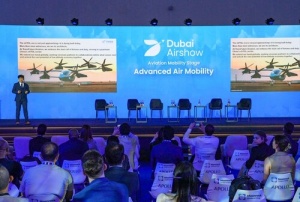 TransFuture Unveils Fully Tilt-Rotor eVTOL Concept at Dubai Airshow 2025">

A Bold Step Into the Future of Urban Air Travel
At the Dubai Airshow 2025, TransFuture Aviation showcased a revolutionary vision for urban mobility with the debut of its fully tilt-rotor electric vertical takeoff and landing (eVTOL) aircraft named Honghu. Positioned as a frontrunner in the growing low-altitude urban air mobility market, this unveiling highlights advanced technology and ambitious plans to reshape personal and regional flight across the globe.
Leadership and Innovation Driving New Flight Technologies
TransFuture Aviation, founded to change the way air transport is approached, combines cutting-edge science with rich aerospace expertise. Under CEO Bai Zhiliang, a veteran innovator in electric vertical flight technology, and co-founder Zhang Wei, chief scientist, the company gathers talent from leading aviation institutions to create a strong foundation in flight control, propulsion, and safety.
This team leverages decades of experience from institutions renowned for aircraft design and engineering excellence, including collaborations with major aerospace organizations like AVIC and Honeywell. Their joint focus lies in developing not only safe and efficient aircraft but also scalable urban air mobility infrastructures.
The Evolution From Early Aviation to Modern eVTOLs
TransFuture traces its inspiration back through aviation history, from the original Wright Flyer right through to tilt-rotor aircraft like the V-22 Osprey. Their approach represents the latest chapter in mankind’s quest for airborne freedom—integrating sustainability, safety, and accessibility. After years of experiments with various VTOL configurations, the fully tilt-rotor design was selected for its unmatched mix of aerodynamic efficiency and vertical takeoff versatility, ideal for urban and regional flights alike.
The Advantages of Fully Tilt-Rotor and Distributed Electric Propulsion (DEP)
Built on pioneering Distributed Electric Propulsion technology introduced in 2017, TransFuture’s eVTOL spreads thrust across multiple small motors, enhancing redundancy and flight safety while reducing mechanical parts. This innovation promises smoother transitions between hovering and forward flight, optimizing lift and drag.
The aircraft’s design is further refined by aerodynamic simulation techniques such as Lattice Boltzmann modeling, allowing precise airflow management. Inspiration is also drawn from nature through biomimicry: just as birds adjust wing position for balance and efficiency, the Honghu uses adaptive wing structures to improve control and stability across varied flight conditions.
From Concept to Airborne Prototype
In December 2024, the Honghu prototype completed its inaugural flight in Changsha, marking a significant technological milestone. This achievement places TransFuture alongside a select group of global innovators leading the fully tilt-rotor eVTOL sector, particularly as the first such prototype in China. Validation of their intelligent flight control systems and streamlined airframe design underlines the maturity of their approach.
Progress continued with the official acceptance of the Honghu’s Type Certification application by China’s Civil Aviation Administration in September 2025—a regulatory first for fully tilt-rotor eVTOLs in the region, laying groundwork for future certifications and commercial use.
Dubai as a Crucial Hub for eVTOL Urban Air Mobility
While rooted in China, TransFuture’s ambitions are global, with Dubai highlighted as a prime market for early deployment. Dubai’s regulatory environment fosters innovation, making it an ideal testing ground for integrating eVTOLs into cityscapes and tourism.
eVTOLs offer drastic reductions in travel times for short-to-medium routes, rivaling ground transport efficiencies but with a fresh aerial perspective. A striking example involves aerial tourism over the iconic Palm Jumeirah, where existing helicopter services could be superseded by eVTOLs, potentially boosting passenger capacity tenfold and amplifying tourism revenue significantly.
| Travel Time Reduction | Operating Cost Comparison | Passenger Capacity Increase | Tourism Revenue Potential (AED) |
|---|---|---|---|
| Up to 70% | Comparable to driving | From 100,000 to over 1,000,000 passengers | From 200 million to 2 billion |
Collaboration and Vision for a Low-Altitude Economy
TransFuture emphasized the necessity of international cooperation to cultivate a thriving low-altitude economy, which includes urban passenger transport, aerial logistics, and emergency services. Recognizing eVTOL’s trillion-dollar potential, the company seeks partners across continents to expand this frontier responsibly and efficiently.
Technological and Strategic Alliances
During the Dubai Airshow, TransFuture’s CEO engaged with leading figures in the eVTOL field such as Joby Aviation’s founder and senior advisors from MIT. Discussions centered on tilt-rotor advantages and emerging hybrid aircraft designs, reflecting a vibrant exchange of ideas necessary for this evolving sector.
Historical Context of Tilt-Rotor Aircraft and Urban Mobility
The tilt-rotor concept has had a fascinating evolution, combining helicopter-like vertical takeoff with the efficiency of airplane-style forward flight. Early 20th-century pioneers paved the way, with machines like the 1907 Cornu helicopter and later the V-22 Osprey shaping public and military perceptions. Despite the Osprey’s hybrid gas-powered drawbacks, its operational versatility set a precedent for electrified successors like the Honghu.
The move to electric propulsion marks a paradigm shift, promising quieter, cleaner, and more accessible urban air taxis that meld into city skylines. This transition reflects broader technological trends in aviation, including advanced materials, simulation tools, and sustainable power systems.
The Rising Importance of Urban Air Mobility in Global Transportation and Tourism
Urban air mobility promises to alleviate traffic congestion, reduce emissions compared to traditional transport, and open unexplored vistas for tourists and commuters. As cities like Dubai embrace these innovations, the ripple effects extend to marinas, waterfronts, and coastal resorts where yachts and sailing activities thrive, enhancing destination appeal.
Incorporating eVTOLs into urban and regional transport networks doesn’t just shorten travel time; it integrates new layers of connectivity with existing modes such as boat charters and sailing excursions. This fusion encourages diverse tourism activities and greater accessibility while fostering high-tech job markets and infrastructure upgrades.
Perspectivas futuras
While some hurdles remain—certification, infrastructure readiness, and public acceptance—the momentum behind eVTOLs signals a turning point in how people will experience travel. Urban air mobility stands to complement traditional tourism and boating, expanding destination reach and creating seamless intermodal journeys around lakes, gulfs, and seaside resorts.
Conclusion: Bridging Air and Water Travel Innovations
TransFuture Aviation’s unveiling of the Honghu fully tilt-rotor eVTOL at Dubai Airshow 2025 marks a substantial leap toward a future dominated by efficient, sustainable, and accessible urban air mobility. Combining sophisticated electric propulsion, biomimetic aerodynamic design, and advanced flight control, this innovation redefines expectations for vertical flight.
By advocating for global partnerships and targeting pioneering markets like Dubai, TransFuture is shaping the low-altitude economy, which promises significant benefits for passenger mobility, tourism, and high-tech industries alike. This new era of flight enhances traditional boating and yachting destinations by providing quicker, more dynamic access to beaches, marinas, and coastal experiences.
For travelers and adventurers looking to expand their horizons both on sea and in the air, services like GetBoat.com provide an invaluable marketplace for sailing boats and yacht rentals, perfectly complementing the evolving landscape of aerial mobility and waterfront leisure.