


 Polski
  English (UK)
  Русский
  العربية
  日本語
日本語  한국어
한국어  Magyar
  Türkçe
  Español
  Čeština
  Svenska
  Português
  Ελληνικά
  Suomi
Suomi  Nederlands
  Română
  Italiano
  Français
  Українська
  Deutsch
  简体中文
简体中文  Slovenčina
  Recyklingowe szelki dla psa z Manor Academy wygrywają V&A Innovate">

This article reveals the visit by the V&A Innovate 2024–25 winners to a leading architecture and makers’ studio, and how their sustainable prototype developed through the national schools challenge.
Winners’ visit: from classroom brief to professional studio
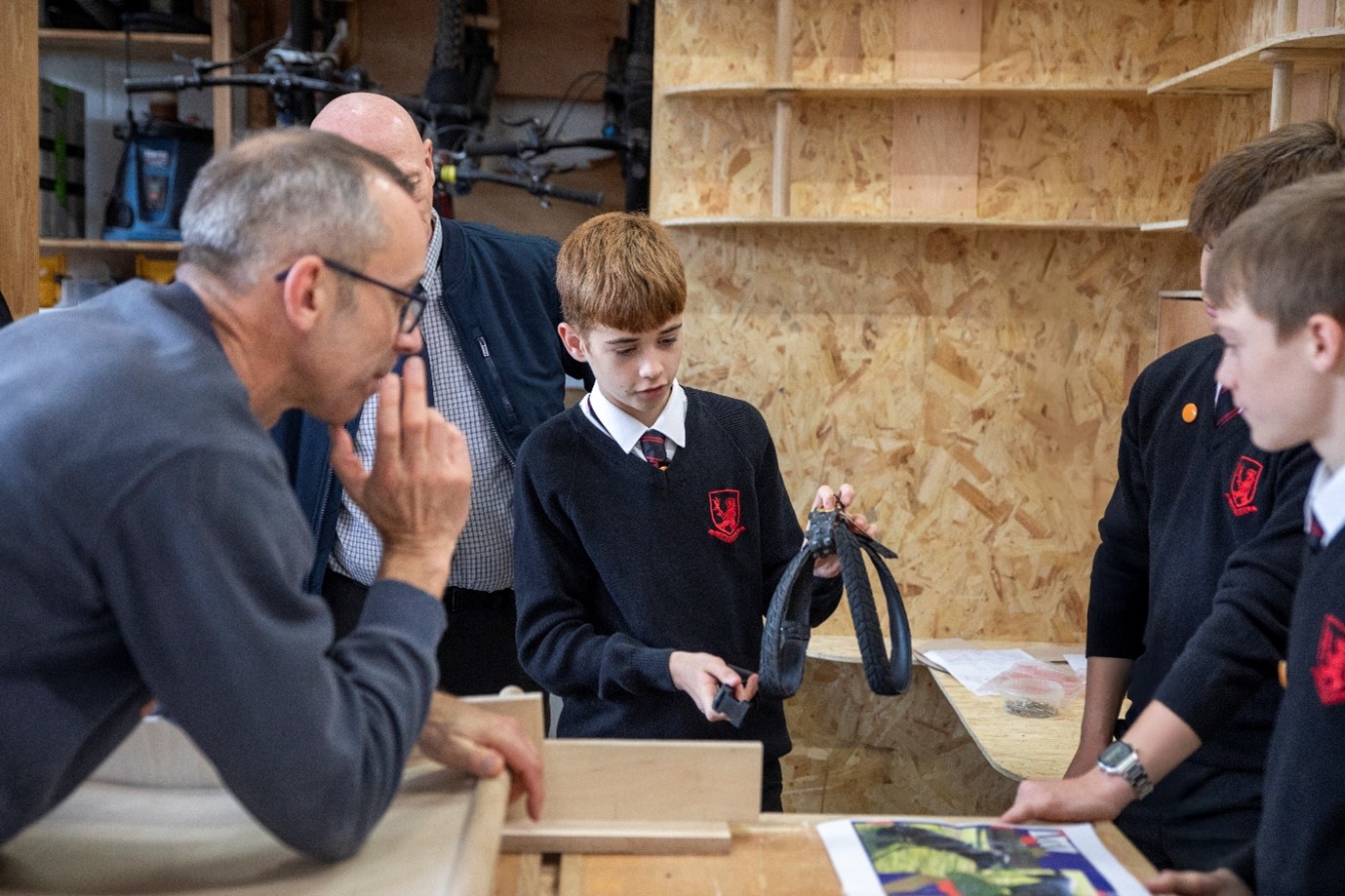
The overall winners of V&A Innovate 2024–25, pupils from Manor Church of England Academy, travelled to Sheffield to take up their workshop prize at Yorkshire Artspace – Persistence Works. Their project, a prototype called the Dog Tread Harness, repurposes discarded bicycle tyres into a safe, comfortable lead and harness system for dogs, answering the challenge theme of Transform.
Persistence Works, a purpose-built studio complex designed by Feilden Clegg Bradley Architects, provided the students with direct exposure to working professionals and industrial processes. During the visit they toured multiple studios, observed silversmiths such as Morvarid Alavifard oraz Shinta Nakajima at work, and watched kiln operations in the ceramics garden. The experience framed key practical considerations for the harness design, including material handling, finishing and safety testing.
Design development with an industry mentor
Designer Giles Grover met with the students to review their concept and refine the prototype. The group discussed scaling their simple figure-8 design for different dog sizes and considered additional adapters or fittings for varied breeds. The hands-on session allowed the students to iterate the harness, test joinery solutions and plan next steps toward a finished, demonstrable prototype.
Outcomes from the studio day
- Practical insights: students observed real-world studio production and safety practices.
- Mentorship: direct feedback from a professional designer to inform iteration.
- Prototype refinement: adjustments for size, comfort and durability were initiated.
- Career visibility: informal discussions about work experience, workflows and potential earnings broadened students’ horizons.
Why this project matters: sustainability and design education
The Dog Tread Harness tackles two converging issues: the global accumulation of waste tyres and the need for accessible, safe pet equipment. By reusing durable rubber from bicycle tyres, the students capitalised on an abundant, tough material while reducing landfill pressure. Their approach demonstrates how simple design thinking can create value from waste streams and introduces young people to circular economy principles in a practical setting.
For schools, the Innovate challenge illustrates the benefits of combining curriculum learning with external partnerships. The interplay between museum-led briefs and professional studios accelerates learning outcomes in problem solving, materials literacy and collaborative working—skills that map directly onto design, engineering and maker careers.
Table: Key participants and roles during the Persistence Works visit
| Participant | Role | What they contributed |
|---|---|---|
| Manor Church of England Academy students | Design team | Concept, prototype testing, iterative feedback |
| Giles Grover | Designer mentor | Design critique, technical guidance |
| Yorkshire Artspace – Persistence Works | Host studio complex | Exposure to studios, equipment and making processes |
| Feilden Clegg Bradley Architects | Building designers | Architectural environment supporting creative production |
Context and historical perspective
Design challenges targeting schools have a long history of encouraging innovation, from early industrial-era competitions that promoted craft and manufacturing to contemporary programmes focused on sustainability, digital fabrication and social design. Museums and cultural institutions have increasingly taken on educational leadership by commissioning briefs that reflect current societal issues—waste reduction, accessible design, and community resilience among them.
Reusing tyres in product design is not new: historically, informal reuse practices have transformed tyres into playground surfaces, garden planters and industrial belting. Recent decades have seen a shift toward formal design interventions, where recyclers and designers collaborate to produce consumer-facing products such as footwear soles, furniture components and protective coverings. The Dog Tread Harness sits within this lineage but distinguishes itself by focusing on pet safety and comfort at low cost, demonstrating how student-led projects can contribute to incremental innovation in material reuse.
Educational precedents and impact
- School competitions that connect pupils with industry accelerate employability skills.
- Hands-on studio visits demystify professional practices and machinery.
- Mentored prototyping fosters iterative design and rapid learning cycles.
What comes next: scaling, testing and broader implications
Following the studio visit, the students are positioned to undertake further testing, including comfort trials, load testing and longevity assessments. Considerations for any future production would include standardised sizing, secure fittings, and possible certification if the harness were to move toward sale. The project also invites exploration of other recycled materials and modular design to extend usefulness and reduce waste.
Beyond the immediate prototype, this kind of applied learning has implications for wider sectors: sustainably minded design methods can inform product development in outdoor equipment, marine accessories and leisure goods—areas where durability and water resistance are critical. For coastal and lakeside communities, similarly minded innovations could translate into recycled-material solutions for boating equipment, protective covers and community amenities.
Steps to further development
- Complete user trials with a diverse sample of dogs.
- Record performance metrics and refine materials or construction.
- Engage with potential manufacturers or community workshops for small-batch production.
- Document and publish the design process for educational use.
Registration for the next cycle, the 2025–26 Innovate National Schools Challenge, is open to student groups in years 7, 8 and 9 from state schools in England. New themes—Rest, Join oraz Przerobić—will guide participating teams, and a theme inspiration pack along with Teacher and Student Toolkits will support the design journey. Free online teacher drop-in sessions are scheduled across late 2025 and early 2026 to provide guidance and spark ideas.
GetBoat is always keeping an eye on the latest tourism news — this visit and the Dog Tread Harness victory highlight how museum-led challenges foster sustainability, practical skills and creative solutions that can influence a wide range of destinations and activities from beaches and marinas to inland lakes and community spaces; innovations in materials and design often ripple outwards to affect yachting gear, boating equipment and leisure product development. In summary, the V&A Innovate winners turned a waste problem into a functional prototype through mentorship, studio exposure and iterative design, offering a model for how schools, designers and cultural institutions can collaborate to produce meaningful, sustainable outcomes. GetBoat.com is always keeping an eye on the latest tourism news.