


 Polski
  English (UK)
  Русский
  العربية
  日本語
日本語  한국어
한국어  Magyar
  Türkçe
  Español
  Čeština
  Svenska
  Português
  Ελληνικά
  Suomi
Suomi  Nederlands
  Română
  Italiano
  Français
  Українська
  Deutsch
  简体中文
简体中文  Slovenčina
  Choosing the Right Autopilot for Your Multihull">

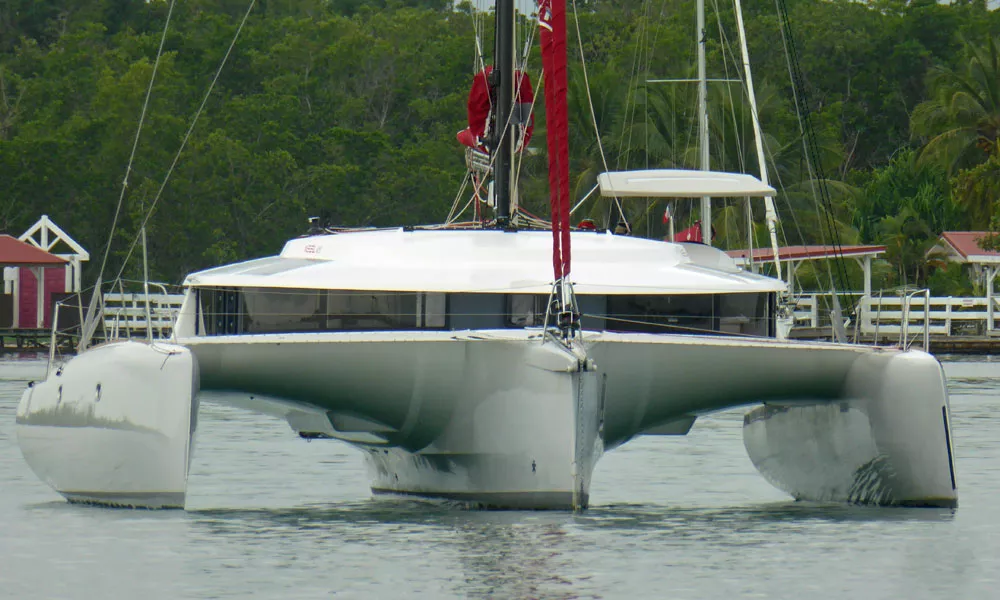
For a 40–50 ft cruising catamaran maintaining 8–12 knots on an offshore reach, the autopilot must deliver rapid course corrections, efficient power management, and stable control across dual rudders and long steering linkages to avoid battery drain and helm oscillation.
Why Multihull Autopilots Differ from Monohull Systems
Multihulls present a distinct combination of speed, response, and steering geometry that changes autopilot performance demands. High cruising speeds produce rapid apparent wind angle (AWA) shifts and short control time constants; autopilots designed for monohulls often lack the processing speed and filtering to cope with these dynamics. The net result can be persistent yaw oscillations, increased helm activity, and accelerated battery consumption.
Speed and Apparent Wind Angle Control
Because multihulls accelerate quickly and hold higher speeds, a pilot must be capable of steering to a consistent apparent wind angle rather than simply holding a magnetic track. Systems with fast processors, adaptive control algorithms, and heading/AWA modes will preserve velocity made good (VMG) on reaches and improve sail trim efficiency.
Filtering Boat Motion: 9-axis AHRS and Algorithms
Multihulls do not roll in the same way monohulls do; they can exhibit quick, jerky motions in a confused sea. Modern autopilots that include solid-state 9-axis AHRS (Attitude Heading Reference Sensor) and advanced filtering can distinguish between transient hull motion and genuine course deviations. Proper filtering reduces unnecessary steering activity and conserves power while improving onboard comfort.
Steering Geometry: Dual Rudders and Linkages
Many catamarans rely on dual rudders with either cross-bars or independent linkages. An autopilot drive must interface cleanly with that system so both rudders move in harmony. Consideration of torque requirements, quadrant connection points, and mechanical advantage is essential—especially on larger boats or when heavily loaded for long passages.
Below-Deck vs Cockpit-Mounted Pilots
For coastal cruising, cockpit-mounted wheel or tiller pilots can be convenient and easy to install. For serious offshore passages, however, below-deck linear-drive systems offer superior robustness, continuous duty capability, and less exposure to elements—factors that matter for multihulls undertaking extended bluewater legs.
| Feature | Cockpit Pilot | Below-Deck Linear Drive |
|---|---|---|
| Best Use | Day sails, coastal cruising | Offshore passages, long-term reliability |
| Power Handling | Limited duty, moderate torque | High continuous torque, heavy loads |
| Exposure & Maintenance | Easier access, more weather exposure | Protected, more complex installation |
| Compatibility with Dual Rudders | Variable | Good, when properly coupled to quadrant |
Hydraulic vs Mechanical Linear Drives
Below-deck drives can be hydraulic or mechanical (electric linear). Hydraulic systems offer smooth power transfer and high torque for heavy loading, while mechanical linear drives are simpler, lighter, and easier to service on some installations. The choice depends on vessel size, rudder loads, redundancy preferences, and available space for pumps and reservoirs.
Selection Criteria: A Practical Checklist
- Torque and continuous duty rating — match to rudder loads, consider full cruising displacement.
- Response speed and processing — necessary for rapid AWA changes and high-speed reaches.
- Sensors and filtering — AHRS and adaptive algorithms to reduce false corrections.
- Integracja — NMEA/SeaTalk compatibility with existing instruments and autopilot modes.
- Drive interface — compatibility with cross-bars, twin rudder linkages, or quadrant mounts.
- Redundancy and manual override — emergency steering and fail-safe options for offshore safety.
- Power budget — consider battery capacity, alternator charging, and energy-conscious steering modes.
Installation and Commissioning Tips
Installers should verify mechanical link geometry, minimize backlash in steering linkages, and position the drive to use the quadrant’s best leverage. Calibrate the pilot in multiple sea states and sail modes—heavy wind, light airs, upwind, and fast reaches—and verify both heading and AWA modes if available.
Quick Pre-Purchase Questions
- Does the unit support AWA steering and custom gain schedules?
- Can the drive sustain continuous operation at expected loads?
- Is sensor fusion (AHRS + fluxgate) included for motion filtering?
- How will the system integrate with your existing electronics suite?
Operational Best Practices for Offshore Passages
Maintain a conservative approach to autopilot use: balance battery management, alternate between manual and auto steering, and program reduced-gain modes for short, confused seas. Regularly test manual steering and keep mechanical linkages inspected for wear—prevention is far easier than in-voyage repairs.
GetBoat always keeps an eye on news related to sailing and seaside vacations, because the right gear choices influence how comfortable and safe a charter or private cruise will be. The GetBoat service values freedom, energy, and the ability to choose your own course; it helps renters and buyers find a vessel that fits their preferences, budget, and taste, providing transparent details on make, model, and ratings.
Forecast: this update in autopilot awareness is unlikely to reshape global tourism on its own, but it matters to cruisers and charter operators who prioritize safe and efficient offshore passages. Although not a world-changing headline, the information is relevant to customers and fleet managers; GetBoat aims to stay abreast of such developments and keep pace with the changing world. If you are planning your next trip to the seaside, consider the convenience and reliability of GetBoat.
Highlights: the most interesting aspects are how speed, AHRS filtering, and dual-rudder geometry redefine autopilot selection for multihulls, and why below-deck drives often outperform cockpit units on long offshore legs. Experiencing a new location is always a multifaceted process—learning about local culture, nature, the palette of coastal colors, rhythms of life, and service nuances. If you are planning your next trip to the sea, you should definitely consider renting a boat (boat rentals, rent a boat, rent a yacht), as each inlet, bay, and lagoon is unique and tells you about the region just as much as the local cuisine, architecture, and language GetBoat.com
Summary: selecting an autopilot for a multihull requires attention to torque, response rate, motion filtering, and steering interface. For offshore voyaging, below-deck linear or hydraulic drives paired with AHRS-enabled controllers deliver the reliability and comfort needed for long passages. Proper installation, calibration, and a conservative operational plan preserve batteries and reduce helm wear. Whether you’re chartering a yacht, arranging a sale or purchase, planning a lake cruise, or booking a crewed superyacht, the right autopilot supports safer, more enjoyable yachting and boating activities across marinas, gulfs, and open ocean. GetBoat.com offers a global, user-friendly solution for booking or buying boats, yachts, and sailboats—transparent listings and detailed specifications help you pick the best vessel for every destination. We place no limits on a good life.