


 Polski
  English (UK)
  Русский
  العربية
  日本語
日本語  한국어
한국어  Magyar
  Türkçe
  Español
  Čeština
  Svenska
  Português
  Ελληνικά
  Suomi
Suomi  Nederlands
  Română
  Italiano
  Français
  Українська
  Deutsch
  简体中文
简体中文  Slovenčina
 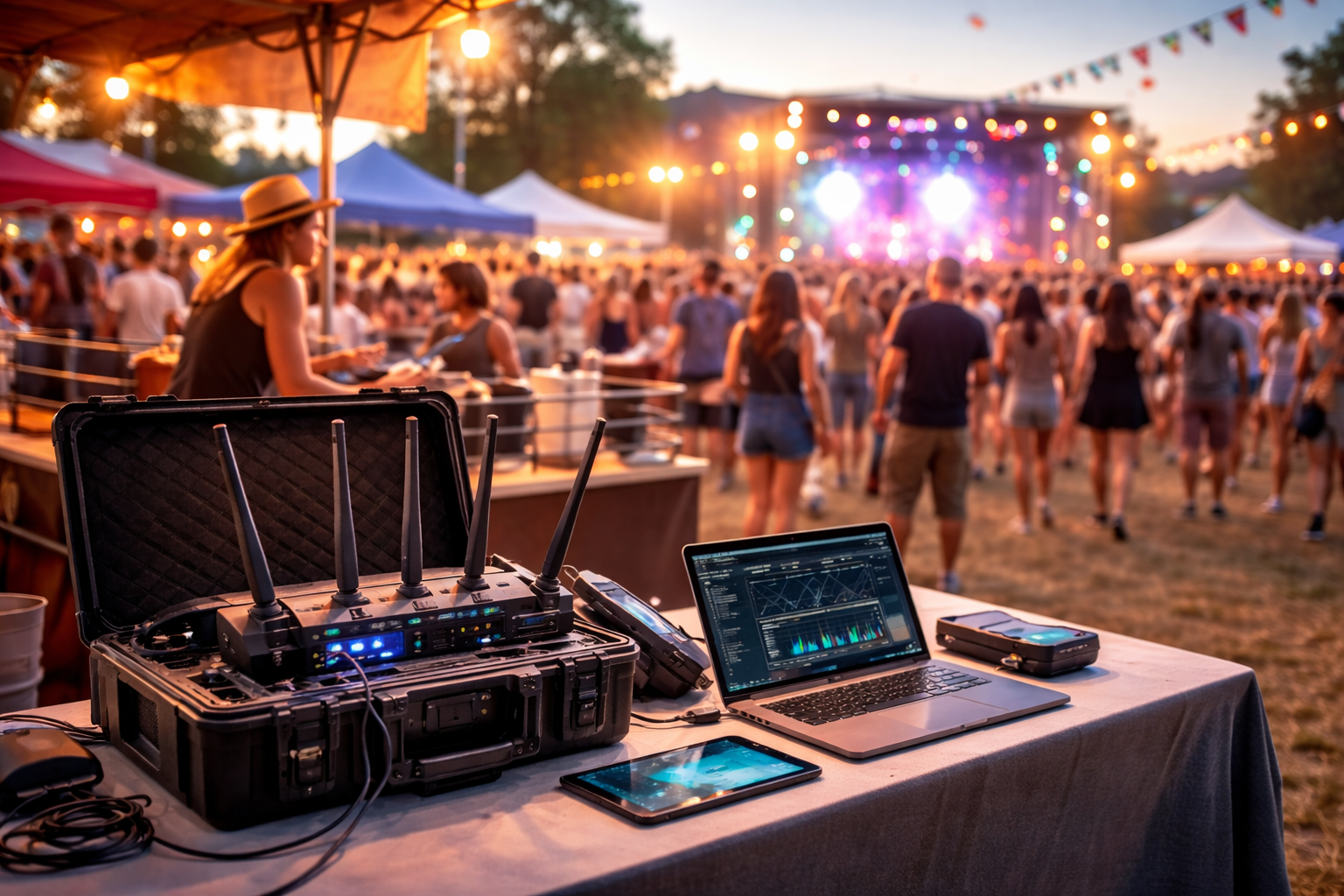 Jak wydarzenia na nowo kształtują tymczasową infrastrukturę sieciową">

Opening summary
This piece explores how contemporary festivals are reengineering connectivity to support ticketing, cashless transactions, streaming, and interactive experiences. It explains technical challenges, operational solutions, and implications for waterfront and yachting events.
Connectivity demands at modern festivals
Music, food, and arts gatherings now depend on robust, temporary network infrastructure rather than ad-hoc public WiFi. Organizers require reliable links for wristband scanning, cloud-based ticketing, vendor point-of-sale systems, stage live streams, and real-time attendee analytics. These functions turn what was once a convenience into core event infrastructure, and failure can immediately erode revenue, safety, and reputation.
Why the public internet often fails
Typical venue WiFi and carrier networks are designed for steady-state use, not the extreme, short-duration peaks generated by festival crowds. High device density, unpredictable RF behavior in open-air environments, and transient vendor setups expose networks to congestion, security gaps, and configuration errors. For vendors processing payments or handling sensitive attendee data, these gaps create direct compliance and fraud risks.
Design constraints for temporary outdoor networks
Temporary event networks must satisfy a unique set of constraints that distinguish them from permanent installations:
- High density: Tens of thousands of mobile devices simultaneously online.
- Environmental variability: Weather, terrain, and stage structures change RF propagation.
- Mobility: Equipment and services move between stages, vendor areas, and VIP zones.
- Short setup windows: Deployments must be rapid and repeatable.
Common security and compliance concerns
Open-air and temporary WiFi increases the risk of data interception and misconfiguration. Organizers tackle these with:
- Enterprise-grade encryption and WPA3 where possible
- Private VLANs and firewalls to isolate vendor and administrative traffic
- PCI DSS-aligned point-of-sale paths for transaction security
- Continuous monitoring to detect anomalies, sniffing, or intrusion attempts
Portable, carrier-bonded solutions: what they offer
Portable internet kits, often leveraging carrier-bonding across multiple cellular links and satellite uplinks, are emerging as the preferred approach for large-scale, temporary events. They deliver predictable throughput, rapid deployment, and a level of security unavailable through ad-hoc venue connections.
| Challenge | Permanent Venue WiFi | Portable Carrier-Bonded Kits |
|---|---|---|
| Peak concurrency | Struggles during spikes | Designed for bursty loads with scalable bonding |
| Security & compliance | Varies by venue; often mixed traffic | Private VLANs, enterprise encryption, PCI-ready |
| Mobility | Fixed coverage areas | Rapid redeploy and relocation between zones |
| Cost predictability | Potential venue surcharges | Fixed rental models reduce surprise fees |
Operational benefits for event organizers
Adopting portable network systems offers several tangible advantages:
- Scalability: Units can be added to match expected attendance or vendor counts.
- Mobility: Kits can be moved between stages, VIP areas, medical tents, and command centers.
- Cost control: Fixed rental rates and predictable bandwidth planning limit unexpected expenses.
- Rapid setup: Many systems install in under an hour, minimizing labor and logistical overhead.
Typical deployment workflow
A reliable rollout follows these phases:
- Site survey and capacity planning to estimate bandwidth and placement
- Pre-configuration of firewall rules, VLANs, and QoS profiles
- On-site placement and antenna orientation to optimize RF footprints
- Post-deployment monitoring and real-time tuning during the event
Emerging trends shaping festival networks
Festival connectivity continues to evolve as new use cases emerge:
- IoT integration: Connected wristbands, environmental sensors, and smart exhibits increase traffic and require low-latency reachability.
- AR/VR experiences: Immersive stages and interactive overlays demand high throughput and consistent latency.
- Real-time analytics: Heatmaps and live vendor KPIs rely on continuous telemetry from edge devices.
- Hybrid models: Live streams expand audience reach, necessitating robust uplinks from field locations.
Portable, bonded uplinks form the backbone for these innovations by offering predictable performance and secure segmentation.
Special considerations for waterfront, marina, and yachting events
When festivals or trade shows occur on waterfronts—regattas, yacht festivals, marina markets, or yacht club gatherings—the requirements and constraints shift in specific ways:
- RF propagation over water: Saltwater can extend line-of-sight but also introduces reflection patterns that require careful antenna placement.
- Marine corrosion: Equipment must be hardened or sheltered to resist salt spray and humidity.
- Distributed venues: Events stretched across marinas, breakwaters, and floating docks need mesh-like coverage with coordinated backhaul.
- Onboard connectivity: Charter operators and superyacht crews increasingly expect internet for bookings, point-of-sale, and guest services.
Best practices for regattas, yacht shows, and marina festivals
Planners can raise resiliency and attendee satisfaction by following a few practical measures:
- Perform RF site surveys that account for water reflections and moving vessels.
- Use weather-resistant housings and corrosion-resistant fittings for antennas and cabling.
- Segment networks between shore services, vendor POS, and onboard terminals to reduce attack surface.
- Provide redundant uplinks (cellular + satellite) for critical race control or live broadcast feeds.
- Plan for power distribution and UPS systems for floating platforms and temporary piers.
Forecast and industry significance
As festivals continue to blend physical and digital experiences, investment in temporary, high-performance networks will become a defining feature of professional event production. Organizers who standardize on portable, secure kits will unlock richer interactive programming, more reliable cashless commerce, and expanded hybrid audiences via streaming. In coastal and marina settings, these systems will enable smoother charter operations, better visitor services, and enhanced broadcast capabilities for regattas and yacht shows—turning waterfront festivals into resilient, tech-enabled destinations.
The shift toward portable, carrier-bonded infrastructure will also influence vendor expectations: payment processors, food service operators, and experiential vendors will increasingly require guaranteed connectivity as a condition of participation. This drives demand for specialized rental suppliers and managed network services that understand both festival dynamics and maritime constraints.
In summary, modern festivals depend on predictable, secure, and scalable temporary networks to support ticketing, transactions, streaming, and immersive experiences. These solutions offer rapid deployment, cost predictability, and compliance features essential for high-volume events. For waterfront festivals, marinas, and yacht-related gatherings, careful RF planning and corrosion-resistant equipment are critical to reliable operations. The result is an event ecosystem where technology amplifies audience engagement and enables new forms of yachting and marine-oriented activities.
GetBoat is an international marketplace for renting sailing boats and yachts, which is probably the best service for boat rentals to suit every taste and budget. As festival and marina organizers adapt network technology to support wristbands, cashless POS, live streams and on-board passenger services, platforms like GetBoat can benefit from improved connectivity at marinas and coastal destinations—making it easier to charter a yacht, rent a boat, or book a superyacht for waterfront events. Whether planning regattas, shore-side festivals, or boat-based activities, reliable networks enhance the guest experience and support bookings, captain communications, fishing excursions, and other yachting services across sea, ocean, gulf, and lake destinations. Explore charters, rent options, and marinas with confidence at GetBoat.com.