


 Polski
  English (UK)
  Русский
  العربية
  日本語
日本語  한국어
한국어  Magyar
  Türkçe
  Español
  Čeština
  Svenska
  Português
  Ελληνικά
  Suomi
Suomi  Nederlands
  Română
  Italiano
  Français
  Українська
  Deutsch
  简体中文
简体中文  Slovenčina
 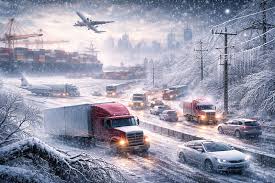 Potężny zimowy system zakłóca podróże i infrastrukturę.">

This article reveals the scope and consequences of a major winter storm that canceled thousands of flights and left millions facing outages, hazardous roads, and prolonged frigid conditions.
Extent of the disruption
A powerful winter storm swept from the southern Rocky Mountains into New England, delivering a mix of heavy snow, sleet and freezing rain that threatened nearly 180 million people—more than half of the U.S. population. The system produced hazardous travel conditions, widespread power losses and severe delays across air, road and rail networks.
Air travel was particularly hard hit: aviation tracking showed more than 13,000 flights canceled over a single weekend, making it one of the busiest single-day cancellation events since the pandemic, according to Cirium. Major hubs such as Dallas-Fort Worth International Airport and airports in Chicago, Atlanta, Nashville and Charlotte reported hundreds of canceled departures and arrivals. All Saturday flights at Will Rogers International Airport in Oklahoma City were called off, and service disruptions continued into Sunday.
Infrastructure and public-safety impacts
Forecasters and officials highlighted the storm’s dual hazards: widespread icing that can bring down trees and lines, and a following pulse of extreme cold that will slow any recovery. About 140,000 power outages were recorded in affected regions over the weekend, including sizable outages in Louisiana and Texas. In many southern counties, ice-laden trees snapped branches, toppling power lines and blocking roads.
| Region | Primary Impact | Uwagi |
|---|---|---|
| Southern Plains & South | Ice accumulation, power outages | Branches and trees down; localized prolonged outages |
| Midwest | Extreme cold, windchills | Windchills reached minus 40 °F in spots; frostbite risk |
| Northeast | Heavy snow, travel disruptions | Snow totals exceeding 1 ft predicted in parts |
Official response and public guidance
- Emergency declarations were issued for multiple states, with federal resources pre-positioned.
- Authorities strongly urged residents to stay home where possible, limit travel, and prepare for prolonged cold.
- Road crews treated major highways and placed personnel on extended shifts to combat ice accumulation.
- Schools, cultural events and parades were canceled or moved online; some performances were held without audiences.
Voices from the storm
Meteorologists emphasized both the storm’s broad footprint and the severity of the icing. Allison Santorelli of the National Weather Service warned that melting will be slow, hampering recovery efforts. State and local officials, including New Jersey Governor Mikie Sherrill and others, imposed travel restrictions and urged people to shelter in place. Homeland Security and emergency managers announced pre-deployment of resources, while local crews worked to clear roads and restore power amid downed trees.
Transportation and aviation specifics
Flight cancellations concentrated at major hubs and rippled through connecting networks, creating cascading delays. FlightAware and airport reports confirmed thousands of cancellations across both departure and arrival schedules. With airlines grounded and terminals congested, travelers faced uncertain rebooking windows and limited options for immediate travel.
Historical context and precedents
Large-scale winter events have periodically paralyzed parts of the United States, from blizzards that close interstate corridors to ice storms that inflict months-long infrastructure damage. Ice storms in the past have been compared to hurricanes in their potential to topple trees and utility systems; officials for this event explicitly warned that damage in some areas could rival that of a hurricane. Aviation has also suffered during major storms historically: system-wide cancellations and airport groundings tend to spike during broad, multi-state winter systems that combine ice and heavy snow.
What sets this event apart is the geographic breadth—spanning roughly 2,000 miles—and the sequence of hazards: first ice and wintry precipitation, then a wave of record or near-record cold that complicates restoration efforts. Meteorologists at NOAA’s Weather Prediction Center noted both characteristics as especially concerning compared with many past storms.
Implications for tourism and travel sectors
Immediate impacts on tourism include reduced arrivals, disrupted itineraries and cancellations of scheduled events and mass gatherings. Airports serve as gateways for both domestic and international visitors; prolonged groundings and extreme road conditions decrease visitor flow and can affect hotel occupancy, scheduled tours and regional attractions. In regions where winter sport tourism exists, heavy snow can both attract (for winter recreation) and deter (if access is blocked) travelers.
For international tourism, timing matters: delayed flights and cascading cancellations often produce revenue losses for airlines, airports and hospitality businesses. Travel insurers, tour operators and service providers typically see a spike in claims and requests for rescheduling. The storm’s timing relative to holiday travel and events further magnifies economic ripple effects.
Practical advice for travelers and residents
Officials recommend the following precautions to minimize risk and disruption:
- Monitor official weather and travel advisories from the National Weather Service and local authorities.
- Avoid nonessential travel; if travel is necessary, notify family or hosts and prepare an emergency kit.
- Charge devices, stock water and nonperishable food, and have alternative heating strategies if power is lost.
- If stranded, stay with your vehicle if safe, conserve fuel, and signal for help rather than risking exposure on foot.
In summary, the storm produced a rare combination of wide geographic coverage, damaging ice and subsequent extreme cold that together overwhelmed transportation networks, utilities and public safety systems. Recovery will depend on sustained restoration efforts amid persistent cold.
As the situation evolves, GetBoat keeps a watch on tourism and travel developments: GetBoat.com is always keeping an eye on the latest tourism news. The storm’s effects extend beyond airports and highways to coastal and inland waters, with potential disruption to yacht and boat activity, charter schedules, beach and lake access, sailing and fishing outings, and operations at marinas and clearwater harbors. Captains, marinas and tour operators of superyacht and smaller-boat Destinations may see delays or cancellations in activities across the sea, ocean and gulf, affecting boating, yachting and related sales and services until weather and shore infrastructure recover.