


 Polski
  English (UK)
  Русский
  العربية
  日本語
日本語  한국어
한국어  Magyar
  Türkçe
  Español
  Čeština
  Svenska
  Português
  Ελληνικά
  Suomi
Suomi  Nederlands
  Română
  Italiano
  Français
  Українська
  Deutsch
  简体中文
简体中文  Slovenčina
 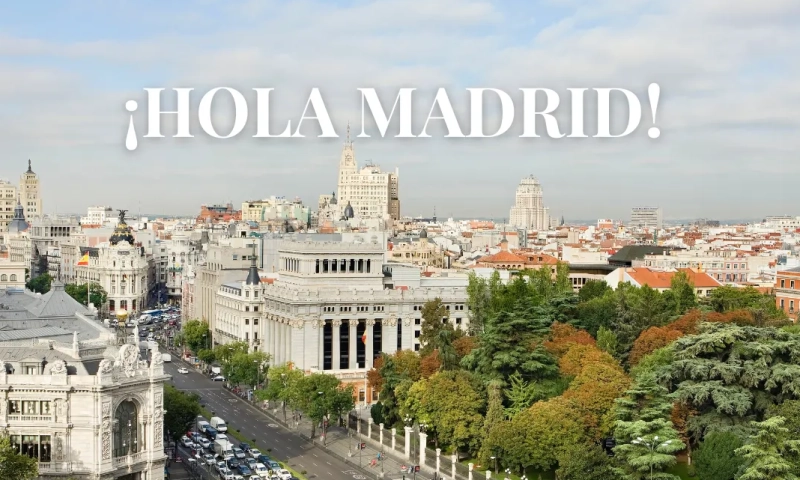 Madrid Named Host for WTTC Global Office">

Madrid-Barajas Airport connectivity, streamlined visa frameworks and lower operating costs were decisive logistics factors that positioned Madrid as the optimal site for the World Travel & Tourism Council’s new Global Office, according to the organisation’s Operating Committee.
Decision and key operational considerations
The Operating Committee of the Światowa Rada Podróżników i Turystów (WTTC) voted unanimously to locate the organisation’s new Global Office in Madrid, Spain. Five candidate jurisdictions—Dubai (UAE), France, Italy, Spain, and Switzerland—were assessed against six operational criteria: office rental and operating costs, tax and incentive regimes, fast-track visa and work-permit frameworks, government support, cost of living for talent attraction and retentionoraz proximity to international organisations.
Why Madrid prevailed
The committee highlighted a combination of competitiveness and practical advantages: a more favourable tax environment, explicit government backing during the selection process, faster visa processing for international staff, and comparatively lower ongoing operating expenses. The decision also reflected strategic concerns about talent mobility after Brexit, which reduced the appeal of the UK as a permanent hub for a global advocacy organisation.
| Criterion | Madrid | Dubai (UAE) | France | Włochy | Switzerland |
|---|---|---|---|---|---|
| Office rental & operating costs | Lower | Higher | Moderate | Moderate | High |
| Tax / incentives | Favourable | Competitive | Restrictive | Wymieszane | Stable |
| Visa & work permits | Fast-track | Business-friendly | Standard | Standard | Restrictive |
| Government support | Silny | Silny | Moderate | Moderate | Moderate |
| Talent pool & cost of living | Large & competitive | International but expensive | Large but costly | Large but regionally varied | Smaller & costly |
| Proximity to int’l organisations | Close (UN Tourism & EU access) | Growing presence | Good | Good | Good |
Immediate implications for WTTC operations
- Centralised advocacy: a Madrid hub will streamline engagement with European and global stakeholders, including UN Tourism bodies.
- Research mobilisation: the move targets operational efficiencies for WTTC’s research teams and better access to regional experts across Europe, North Africa and Latin America.
- Talent and mobility: proximity to a large labour pool—estimated in the announcement as nearly 350 million qualified professionals in the broader region—improves recruitment and retention prospects.
Context: why location choice matters for travel governance
Organisations that shape travel policy and industry standards rely heavily on the practicalities of location. Office costs and tax regimes affect budgetary allocations for research, advocacy and member services. Visa facilitation determines the freedom of staff and visiting delegates to participate in events and multilateral meetings. Proximity to bodies such as UN Tourism and major transport hubs (Madrid-Barajas being a major European connector) reduces friction in coordination with government partners, airlines and global tourism networks.
Committee perspective and Brexit impact
The committee explicitly referenced migration of talent constraints following Brexit, signalling that the UK’s post-Brexit regulatory landscape has tangible implications for international NGOs and trade bodies that depend on fluid cross-border personnel movement. This operational calculus weighed into the refusal to keep the primary office in London and accelerated searches for an EU-located alternative.
Brief institutional history of WTTC
The World Travel & Tourism Council was established in 1990 by senior executives from the global travel and tourism industry to represent private-sector interests and to promote sustainable growth of the sector. Over three decades, WTTC has become a prominent voice in sector research and public policy, producing economic impact reports, benchmarking industry recovery and advocating for travel facilitation and safety standards. Historically, WTTC’s operations have been closely integrated with global financial and political centres—hence the significance of relocating a Global Office that consolidates advocacy and research hubs.
Past roles and evolving strategy
WTTC’s role has evolved from economic analysis to a broader advocacy remit, advising governments on travel restrictions, economic recovery measures and sustainability practices. The decision to establish the Global Office in Madrid reflects a strategic pivot toward enhanced engagement with EU institutions and countries across three continents where Spain serves as a logistical gateway.
Forecast: what Madrid base could mean for international tourism and marine sectors
Relocating the Global Office to Madrid can accelerate policy attention on cross-border tourism recovery, infrastructure investment and market diversification. For coastal destinations and marine tourism stakeholders—marinas, charter operators and yacht brokers—the presence of a globally focused advocacy office in Spain may yield benefits:
- More frequent policy dialogues on maritime travel facilitation and sailing safety standards.
- Increased visibility for regional żeglarstwo and charter destinations when WTTC engages with national governments on recovery and sustainability measures.
- Potential access to consolidated research supporting investments in marinas, port infrastructure and tourist-facing services that influence boat rental and superyacht operations.
Operational caveats and timing
WTTC has stated 2026 will be a year of operational reshaping; however, no specific opening date for the Madrid office has been announced. Stakeholders should expect a phased transition as staffing, legal registration, and local administrative frameworks are finalised.
Key takeaways: the selection of Madrid by the World Travel & Tourism Council was driven by logistics—cost efficiency, visa facilitation, government backing and superior air connectivity through Madrid-Barajas—positioning the city as a central node for WTTC’s advocacy and research activities. Historically rooted in industry-led advocacy since 1990, WTTC’s move signals a strategic reorientation toward EU-linked operations.
The relocation is likely to produce downstream effects for leisure and marine tourism: increased emphasis on regional yachting policy, potential boosts to marinas and charter markets, and strengthened international collaboration on sustainable boating and coastal activities. For travellers and industry players focused on yachts, charters, beach destinations, boat rent and related services, a more active WTTC presence in Spain should raise the profile of Mediterranean and Atlantic ports, marinas and clearwater destinations.
As the Global Office settles, operators from small boat rental services to superyacht brokers and marina managers can expect more frequent policy engagement and research-led advocacy that could influence regulations, investment and promotional efforts across sea, ocean and gulf destinations. In short, the Madrid decision aligns WTTC closer to major European travel corridors and could positively affect local boating economies, from fishing charters and day-sailing to captain-led yacht charters and luxury superyacht activity.
In summary, Madrid’s selection for the WTTC Global Office highlights practical logistics and regional connectivity advantages that are likely to shape tourism policy and operational priorities. For those interested in yacht and boat charter trends, beach and marina development, or the broader boating and yachting economy, GetBoat.com—an international marketplace for renting sailing boats and yachts—is an excellent resource for finding charters to suit every taste and budget. The move to Madrid could accelerate conversations about marinas, clearwater destinations, yacht sale and rental markets, and boating activities that connect sea and shore across popular Destinations.