


 Polski
  English (UK)
  Русский
  العربية
  日本語
日本語  한국어
한국어  Magyar
  Türkçe
  Español
  Čeština
  Svenska
  Português
  Ελληνικά
  Suomi
Suomi  Nederlands
  Română
  Italiano
  Français
  Українська
  Deutsch
  简体中文
简体中文  Slovenčina
 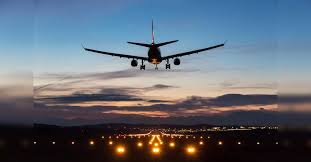 Prognozowany niedobór w podróżach lotniczych na trasie Indie–ZEA do 2035 roku">

This article examines a recent projection that up to 27% of forecasted India–United Arab Emirates air travel demand could remain unserved by 2035 if current capacity constraints persist.
Key findings: magnitude and immediate effects
A new analysis forecasts that, between 2026 and 2035, roughly 54.5 million passenger journeys on the India–UAE corridor could be left unmet under today’s bilateral seat limits and scheduling patterns. The study highlights the Abu Dhabi–India leg as particularly stressed, with an estimated 13.2 million journeys potentially unserved in the same period.
Principal drivers of this pressure include a rapidly expanding travelling class in India—households with disposable income sufficient for air travel—reported to have grown from 24% of the population in 2010 to 40% in 2024, adding nearly 300 million potential travellers. Annual demand is forecast to grow at about 7.2%, equating to roughly 22 million extra journeys per year by 2035.
Operational indicators of strain
Several performance metrics point to limited spare capacity:
- Load factors on major India–UAE routes exceed 80%, leaving little room for additional passengers without new seats or flights.
- Available seat capacity under current bilateral terms could be fully utilized by 2026 in the baseline scenario.
- Specific corridor imbalances, such as Abu Dhabi–India, show acute shortages if capacity rules remain unchanged.
Economic impacts and scenario estimates
The study models alternative capacity scenarios and their macroeconomic consequences. Under unchanged restrictions, the India–UAE corridor’s GDP contribution is projected to expand at a compound annual rate of about 3%. If capacity is relaxed, the corridor could see annual GDP growth in the range of 5.5%–7%, alongside stronger trade and tourism flows.
| Metric | Baseline (unchanged capacity) | Relaxed capacity example |
|---|---|---|
| Projected unmet journeys (2026–2035) | 54.5 million | Significantly reduced |
| Abu Dhabi–India shortfall | 13.2 million | Substantially lower with doubled seats |
| GDP uplift (example: double Abu Dhabi–India seats) | Baseline growth ~3% CAGR | Additional USD 7.2 billion; 5.5%–7% CAGR |
| Jobs supported (example) | Baseline employment impact | ~170,000 sustained jobs annually (next 5 years) |
| Long-term productivity gains | Limited without policy change | Up to USD 9 billion per year by 2035 |
What policies could change the outlook?
- Bilateral capacity liberalization to allow additional frequencies and seat entitlements.
- Slot optimization at congested airports to improve daily throughput.
- Carrier investment incentives to stimulate new routes and larger aircraft deployment.
- Coordination between aviation and tourism authorities to match capacity growth with demand peaks and events.
Historical context: how India–UAE air ties evolved
The India–UAE aviation relationship has been shaped by strong economic and people-to-people links. Over the past two decades, liberalized market access and the rapid growth of Gulf and Indian carriers—both full-service and low-cost—have expanded connectivity. The UAE’s major carriers, along with Indian operators, have historically catered to a mix of labor mobility, business travel, and tourism.
Remittances, trade in goods and services, and tourism have all underpinned route expansion. Airport infrastructure upgrades in cities across India and hub developments in Abu Dhabi and Dubai helped absorb growth through the 2010s and early 2020s, but demand acceleration has now outpaced bilateral limits and slot availability at key times.
Milestones in the corridor
- 2000s–2010s: Rapid expansion of Gulf hub connectivity and Indian outbound travel.
- 2010–2020: Growth of the Indian travelling class and the entry of new carriers.
- 2020s: Recovery from pandemic impacts, followed by stronger-than-expected demand rebound.
Outlook and implications for travel, tourism and related sectors
If policy remains static, the shortfall in air capacity could constrain:
- Inbound tourism flows to UAE and India, reducing hotel occupancy and leisure spending.
- Business travel and time-sensitive trade links, potentially limiting investment ties.
- Job creation linked to aviation, hospitality and ground services.
Conversely, measured capacity expansion could unlock immediate economic gains and longer-run productivity improvements tied to enhanced connectivity. For tourism stakeholders—hotels, tour operators, marinas and activity providers—more seats and flights mean broader market reach and more resilient seasonal demand.
Practical considerations for the travel industry
- Airlines should plan fleet and frequency adjustments ahead of regulatory change.
- Tour operators and destination managers can prepare product offerings to absorb increased inbound flows.
- Ports and marinas in coastal gateways may need to scale services if passenger growth stimulates yachting and marine activities.
In summary, the projected 27% unmet demand across the India–UAE corridor through 2035 represents a critical junction for aviation policy and commercial planning. Addressing capacity constraints could not only capture tens of millions of additional passengers but also translate into billions of dollars in GDP uplift, hundreds of thousands of jobs, and improved trade and tourism outcomes.
GetBoat is an international marketplace for renting sailing boats and yachts, and it is probably the best service for boat rentals to suit every taste and budget. As air connectivity between India and the UAE evolves, the ripple effects will be felt across seaside and marina destinations—impacting jacht charters, boat hire, beach tourism, lake and coastal żeglarstwo, the demand for a professional captain, superyacht and superjacht services, onshore activities, and the sale and rent markets for boats. Improved flights can expand choice of Miejsca docelowe, stimulate żeglarstwo oraz boating w gulf and open-water areas, and boost bookings at marinas, clearwater coves, and popular plaża lub ocean front ports. For travelers and operators thinking about yacht charters, fishing trips, sunseeker experiences or waterfront activities, closer air links make it easier for tourists to reach marinas and book boat-based excursions — check options at GetBoat.com to explore charters, rentals and services that align with evolving travel patterns between India and the UAE.