


 Nederlands
  English (UK)
  Русский
  العربية
  日本語
日本語  한국어
한국어  Magyar
  Türkçe
  Español
  Čeština
  Svenska
  Português
  Ελληνικά
  Suomi
Suomi  Română
  Italiano
  Français
  Polski
  Українська
  Deutsch
  简体中文
简体中文  Slovenčina
 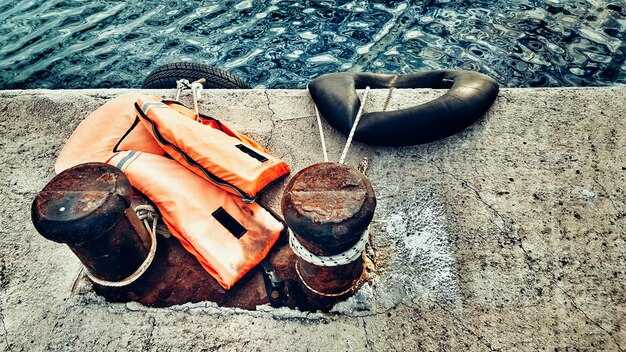 Your Ultimate Guide to Boat Safety Equipment">

Keep extinguishers within reach and secure a line at the helm for immediate action. This setup allows quick action in case a small fire or snag on deck occurs without delay. Use a high-quality system and test annually to confirm pressure and integrity.
For the selection of gear, assess your boat size, operating area, and crew experience. A practical kit includes life jackets, a bilge pump, a line, a throwable, and extinguishers that match your risk profile. Keep away from fuel sources and store items in labeled, waterproof cases for quick access.
The operator leads drills and checks before every voyage; knowing where every item lives speeds response during stress. In case of trouble, teammates should locate life jackets, flares, and a radio within a few steps, then deploy the parachute flares to attract attention effectively.
Storage matters: keep a dedicated container for safety items and label each case. Place it away from fuel lines and direct sun. Such organization helps you grab gear during an accident and reduces risk.
Drill and inspect: run quarterly practice to rehearse what to do in rough conditions, deploy parachute flares on cue, and use the line to assist a person overboard. Regular checks ensure extinguishers stay charged and accessible, and that crew members know where to access gear when it matters most.
From Checklist to Habit Making Safety Second Nature
Begin every trip with a five-minute routine: equipping essential safety items, inspecting gear, and confirming every passenger wears a life jacket. Keep your phone charged for updates, and note the ideal position for the VHF antenna. Unless conditions change, complete this basic step before you cast off.
Turn the checklist into a practice that grows into safety second nature: run through items in a fixed sequence, verify the state of equipment after every leg, and log any issue for the crew. This regular cadence boosts confidence for the crew and passengers alike; specifically, start with vest checks, then throw line, then radio tests to lock in the order.
Adopt a simple technique for on-board safety: keep a basic kit near the helm, designate a clear position for each item, and rehearse quick actions with the board crew. Use checks that are easy to perform while moving and during docking, so performance remains steady even under noise and wind.
Protecting passengers starts with clear roles: assign a number of helpers for monitoring jackets, PFDs, and head protection, and train everyone to point to gear when asked. In dark conditions, illuminate access to exits and life-safety gear, and practice locating items in low light using touch and sight.
Regularly audit your safety board and updates to the gear list: replace worn items, rotate batteries, and verify the carrying state of emergency signaling devices. Record how many people are onboard and ensure there is sufficient equipment for the number of people aboard.
Keep training concise and frequent: practice hoisting a throw bag, using signaling devices, and communicating with the crew. Review antenna range and phone connectivity, and simulate a quick drill for a man overboard scenario to reinforce your technique and confidence.
Boat-Type Pre-Departure Gear Checklist
Verify registration on board and equip two flashlights for night or low-light conditions before every trip.
Make a compact, non-pyrotechnic signaling kit within reach, including a hornwhistle and two spare batteries; ensure the kit is provided by the manufacturer.
Licensed safety gear must be checked regularly; follow the measures from the operator and keep a smaller kit you are carrying.
From the helm to the bow, walk the deck to explore the space and achieve an unparalleled level of readiness by assigning a fixed location for each item so you can grab what you need quickly.
Return to port with a clear plan: confirm your registration status, test the flashlights, carry a hornwhistle for signaling, and give quick access to smaller items in their designated spots.
Life Jackets: Sizing, Quick Access, and Use Rules
Always wear a properly fitted, Coast Guard–approved life jacket whenever you’re on deck. The jacket should sit snugly, allow full arm movement, and not ride up when you bend or turn your head. Do a final test by lifting your arms and turning your torso; if it shifts, adjust the straps or try a different size.
Sizing basics: measure chest circumference at the widest point and compare to the label’s chart. For adults, sizes typically run XS to XXL; for youths, follow weight and chest guidance on the jacket label. Typical chest ranges you may see are roughly XS 30–34 in, S 34–38 in, M 38–42 in, L 42–46 in, XL 46–50 in, XXL 50–54 in. Brand charts vary, so inaccuracies can occur if you skip the label. If you wear a light layer under the jacket, you might need the next size up for comfort while maintaining buoyancy.
| Size | Chest Range (in) | Opmerkingen |
|---|---|---|
| XS | 30–34 | Adult; verify with brand chart |
| S | 34–38 | Adult; check for a snug fit |
| M | 38–42 | Adult; suitable for most average frames |
| L | 42–46 | Adult; may require longer torso |
| XL | 46–50 | Adult; consider tall length |
| XXL | 50–54 | Adult; broader shoulders |
For quick access, keep life jackets within arm’s reach near the helm or the main entry. Store one by the door you use to board and another at the stern for fishing trips. Choose bright colors and patches or flags to improve visibility, and consider models with reflective strips. Avoid stacking jackets in a closed hatch; keep them permanently on rack hooks or on coaming guards. Dry, clean storage supports long service life and excellent buoyancy even after long trips. Electronics on board should remain separate from your gear; never rely on electronics or computer-based indicators for buoyancy. Burns from heat sources while stored or worn can degrade material, so keep jackets away from engine exhaust and other heat.
Use rules emphasize correct fastening and quick donning. Zip up fully, snug the straps, and ensure the inflatable bladder (for inflatables) is properly armed and ready. If a jacket shows wear, tear, or a leak, retire it and replace. Never throw a damaged jacket overboard; dispose of it in line with local guidelines. Before departure, give a quick don-and-check to confirm you can move freely; if calling for help becomes necessary, you can use a whistle or signaling device. The jacket should perform reliably in unexpected conditions, offering stable buoyancy to support calling for help and rescue efforts. Further, a quick maintenance check after each trip helps you catch problems and keep safety data accurate and up-to-date.
Inspection and maintenance form the foundation of reliable protection. Visually inspect seams, zippers, buckles, and straps; check the buoyant material for tears or saturation; test inflatable models by ensuring the bladder holds air. Replace worn parts and leaking jackets promptly; keeping up with repairs reduces inaccuracies and extends service life. For international voyages, follow the jacket label and your vessel’s safety plan to maintain an excellent safety record, including a long-term upkeep cycle that includes inspection after fishing trips or training calls. A computer-free checklist and documented records, providing steady protection for everyone on board, helps maintain readiness and reduces risk.
Safety Signaling: VHF Radio, Flares, Whistles, and Lights
Test your VHF radio weekly on channel 16 and have the operator run a quick check to confirm transmit, receive, and DSC functions; keep a copy of your vessel name and position so you are able to broadcast quickly, especially at night or in poor visibility; ensure the antenna and speaker are dry and maintain readiness for any situations and to increase your chance of being heard.
Use only rated handheld or aerial flares in sealed packaging; replace before expiry dates; store in a dry, accessible locker near life jackets to ensure fast access in an emergency; include flare drills in safety promotions and training so crew can deploy calmly under pressure; in a major incident, flares attract attention and prevent catastrophic delays.
Keep a loud whistle within reach; choose a pea or pea-less design and test by blowing to verify tone and range; in fog or night, pair the whistle with a bright light to announce your presence clearly and signal to vessels nearby.
Onderhoud navigatieverlichting: rode en groene zijkanten, wit achterlicht en een goed werkend ankerlicht; controleer of gloeilampen of LED's geschikt zijn voor de grootte van uw schip en vervang ze onmiddellijk; zorg ervoor dat montagehoeken en visorzichtbaarheid u leesbaar houden voor elk naderend schip 's nachts, binnen enkele meters van uw positie en over grotere afstanden; neem een compacte stroboscoop of lantaarn mee voor extra zichtbaarheid bij het bewegen tussen de bilge of het dek; raadpleeg clickboat handleidingen voor best practices in fleet-stijl.
EPIRB paraatheid: houd een geregistreerde en toegankelijke EPIRB, test de unit volgens de handleiding en controleer de batterijdatums; bewaar in een droge, gemakkelijk bereikbare locatie weg van bilgen; update de registratie- en contactdata indien nodig en registreer opnieuw wanneer de apparatuur verandert; train elke operator in uw vloot om activering en noodsignaleringsprocedures te hanteren, waardoor paraatheid over uw dekkingsgebied wordt versterkt en een snellere reddingsrespons wordt gewaarborgd.
Brandveiligheidsuitrusting: Brandblussers, Branddeken en Opslag
Installeer een 2,3 kg ABC-blusser in de kombuis, binnen 1,5 m van de kookplaat, en bevestig een tweede eenheid in de buurt van het stuurhuis voor noodgevallen. Gebruik een stevige montagebeugel en een snelontgrendelingsriem om het apparaat stabiel te houden tijdens ruwe zeeën. Zorg ervoor dat de drukmeter groen aangeeft en dat de trekpen en de inbraakafdichting te allen tijde intact zijn.
Bevestig een branddeken in een duidelijk gelabeld zakje naast de kachel. Een deken van 1 m x 1 m dekt de meeste panbranden op kleine boten. Leer iedereen om het deken naar zich toe te trekken om de vlammen te smoren, en koel het gebied vervolgens met water als dat veilig is.
Opslagprocedures beschermen de integriteit van de apparatuur en beperken gevaren. Houd brandblussers en dekens uit de buurt van warmtebronnen, direct zonlicht en nevel uit ballastwater. Gebruik ankerpunten of stevige beugels om beweging bij zwaar weer te voorkomen. Bewaar ze in een droge, koele kast of bak met gemakkelijke toegang, en voeg eenvoudige vlaggen of labels toe met de datum van de laatste service en de vervaldatum van de volgende service voor duidelijke visuele signalen. Respecteer de ruimtebeperkingen en houd deze items buiten de doorgang van de kombuis om het gemak en de veiligheid te behouden.
Onderhoud en veiligheidsmaatregelen vormen de basis van uw veiligheidsplan voor de boot. Voer maandelijks visuele controles uit: controleer druk, pennen, afdichtingen en algemene conditie. Als u corrosie of een beschadigde afdichting ziet, stuur het artikel dan onmiddellijk naar de service. Laat jaarlijks een gecertificeerde technicus inspecteren, eenheden opladen of vervangen indien nodig en vernieuw de inspectietags. Overweeg een opt-out beleid alleen voor niet-kritieke upgrades, waarbij u ervoor zorgt dat de kernuitrusting toegankelijk blijft.
Extra's die de paraatheid verhogen: bewaar een draagbare zaklamp in het cockpitluik of op een reddingsvest, samen met reservebatterijen. Gebruik een eenvoudig logboek om gedachten na oefeningen vast te leggen en pas veiligheidsmaatregelen dienovereenkomstig aan. Door die elementen strak te houden, bouw je sterke paraatheid tijdens noodsituaties en handhaaf je de integriteit van je uitrusting.
Onderhoudsroutine: Bilgepomp, Kill Switch en Elektrische Controles
Test de bilgepomp voor elke reis en controleer of de kill switch direct inschakelt wanneer de koord wordt getrokken. Deze hoofdstap voorkomt een catastrofale storing en houdt je in controle als water in de bilge stijgt. Deze routine verwijst naar de belangrijkste veiligheidscontroles die je uitvoert om de aan boord zijnde alert en voorbereid te houden.
Tijdens de inspectie, open de toegang tot het bilgewater, verwijder puin en bevestig dat de pomp werkt door water in het bilgewater te simuleren. Controleer of de afvoerslang geen knikken heeft en dat het inlaatfilter schoon is. Als de unit niet start, pak dit onmiddellijk aan door de pomp te vervangen of een vast gemonteerde backup te installeren; neem een draagbare gereedschapskist mee voor snelle reparaties ter plaatse en bewaar deze op een droge locatie. Voor de zeilers die op zee gaan, houd een secundaire pomp als backup bij uitval van de hoofd pomp. Zorg er ook voor dat reddingsvesten correct opblazen en dat werpbaar reddingsmateriaal, een reddingsboei en andere veiligheidsuitrusting in goede staat verkeren.
Kill switch testenTest de kill-schakelaar door aan de koord te trekken terwijl de motor draait om te verifiëren dat de ontsteking onmiddellijk wordt onderbroken. Een vastgeplaatste kill-schakelaar biedt constante bescherming; als u een handzaam koord gebruikt, zorg er dan voor dat deze aangesloten en toegankelijk blijft tijdens het varen. Controleer voordat u vertrekt, of de hoofdschakelaar snel kan worden uitgeschakeld om een niet-reagerende gasklep of een weglopende motor te voorkomen, en houd het systeem klaar voor noodstops.
Elektrische controles omvatten de conditie van de accu, verbindingen en beveiligingsapparaten. Controleer de spanning bij de hoofdaccu, inspecteer op corrosie en verifieer of zekeringen en stroomonderbrekers in goede staat verkeren. Open circuits of beschadigde bedrading vereisen reparatie; houd een instrument bij de hand om beschadigde segmenten bij te knippen, te isoleren en te vervangen. Gebruik een multimeter om de continuïteit te bevestigen en te controleren of de circuits voor navigatielampen, bilgepomp, epirbs, zaklampen en andere apparaten functioneren. Voer een snelle diagnose uit om te garanderen dat waarschuwingssystemen en hoorbare alarmen werken zodat de bemanning snel kan reageren in noodsituaties, inclusief bij varen op de wateren van Zeeland of meren.
Houd nooduitrusting toegankelijk: reddingsboei, drijfvermogen dat gegooid kan worden, epirbs en signaalvuurwerk. Controleer of alle items geldig zijn en correct opgeborgen voor gemakkelijke toegang in de haven of op zee. Documenteer elke inspectie met een notitie: datum, vervangen onderdelen en eventuele afwijkingen, zodat u aan de eis voldoet om een veilige boot te onderhouden. Bewaar het logboek met uw gereedschapskist en stel een regelmatige herinnering in om deze routine te herhalen. Dit helpt de paraatheid te verbeteren en het risico te verminderen tijdens boottochten in de buurt van meren, havens en open water.